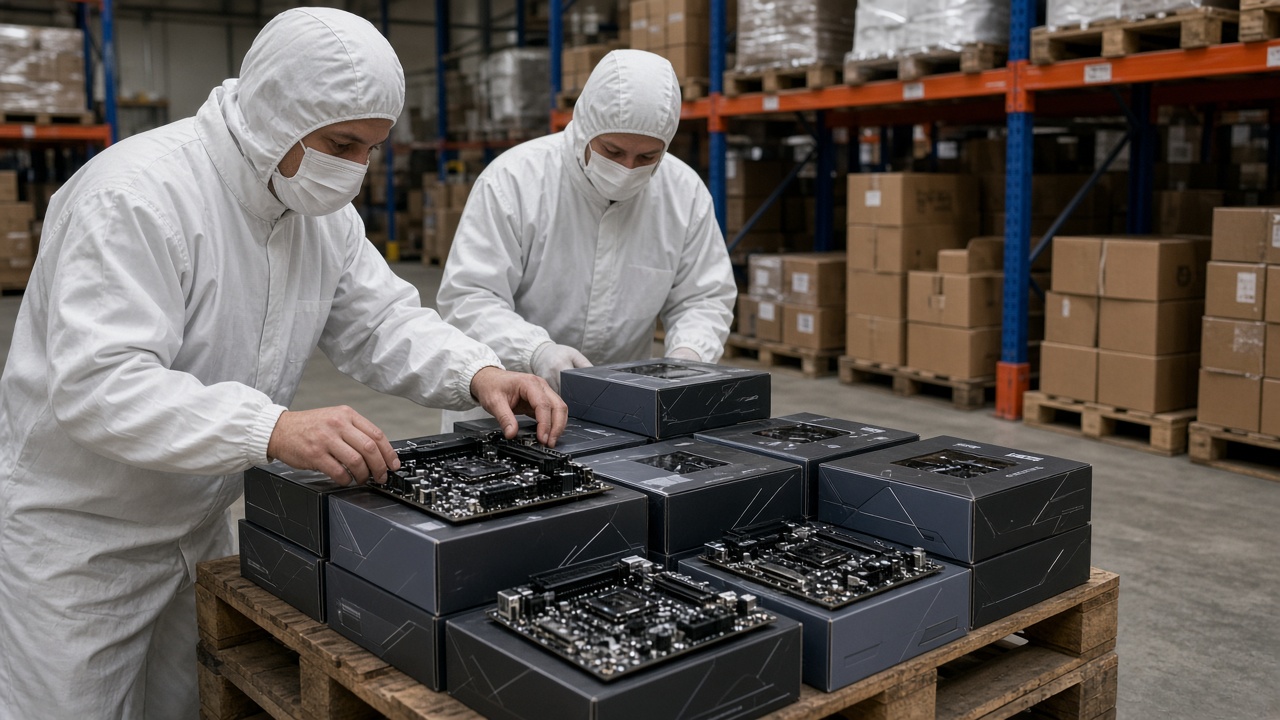
Micro-Star International Co., the Taoyuan-listed PC maker known as MSI, said consolidated sales in the third quarter rose on shipments of high-end gaming motherboards and graphics-card partners, even as mainstream notebook orders from brand clients remained uneven.
What the filing emphasized
In an exchange filing released Friday, the company pointed to strong demand for Intel and AMD gaming platforms in North America and Europe, where distributors restocked ahead of year-end promotions. Motherboard average selling prices held up because buyers favored boards with reinforced power stages and PCIe 5.0 slots aimed at mid-tier discrete GPUs rather than entry chips.
Notebook revenue, by contrast, grew only modestly. Micro-Star executives told analysts on a post-filing call that several education and thin-and-light projects slipped into the fourth quarter after OEM customers trimmed build schedules following a volatile September in consumer electronics channels.
Margin mix matters
Gaming boards carry higher gross margins than commodity notebooks, which helped offset freight and component costs that ticked up when the New Taiwan dollar strengthened against the U.S. dollar in late September. The company did not raise full-year guidance but said inventory at distributors looked healthier than at the start of the summer, when channel checks showed double-ordering on GPU bundles.
Investors on the Taipei call pressed management about AI server opportunities. Micro-Star reiterated that rack-scale AI remains a small share of revenue compared with consumer gaming, though it is qualifying liquid-cooled chassis with a handful of regional cloud integrators.
Competitive backdrop
Peer Asustek Computer and Gigabyte Technology also leaned on gaming in recent filings, reflecting a Taiwan ODM cluster that still depends on enthusiast PC cycles even as smartphone growth flatlines. Analysts at KGI Securities said Micro-Star’s brand recognition in e-sports sponsorships continues to pull share in Europe, while China remains price competitive.
Supply of high-bandwidth memory for graphics cards tightened in the quarter, but Micro-Star said allocation from partners improved in October after NVIDIA and AMD refreshed mid-range SKUs. The firm kept capital spending focused on automated surface-mount lines at its Zhonghe campus rather than expanding notebook capacity.
What shareholders watch next
October revenue figures, due in the first week of November, will show whether motherboard momentum carried into the holiday quarter. Dealers said retail promotions in Taiwan’s Guanghua Digital Plaza moved RTX 50-series bundles faster than expected after the TAIEX selloff, a sign that local gamers still spend even when the broader index falls.
Foreign ownership in Micro-Star ticked down in September according to TWSE data, consistent with the month-end rotation that hit heavyweights across the board. The stock finished Friday down with the broader market but outperformed pure notebook assemblers that lack a gaming anchor.
Outlook
Management warned that U.S. tariff rhetoric and currency swings could still whipsaw component costs, but said long-term agreements with key capacitor suppliers should limit spot-market spikes. For now, the story is straightforward: when GPU platforms launch, Micro-Star’s motherboard line still sets the pace for group revenue more than corporate laptops ever did.