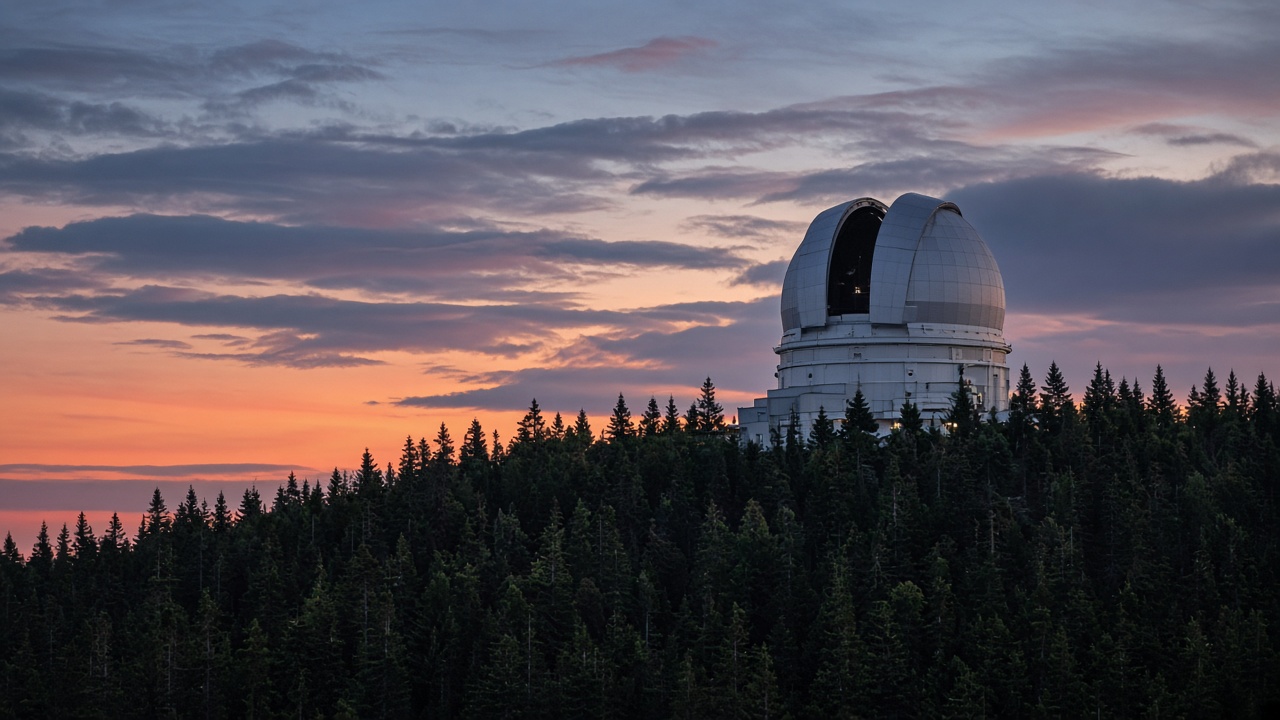
Astronomers at Nagoya University traced a narrow debris stream from Comet 1P/Halley that produced an unusually sharp Orionid peak on October 21, using a wide-field camera installed this summer at an observatory in Gifu Prefecture.
What the camera caught
The MUONCam system recorded 4,812 meteors over six nights, triple the tally from the university’s prior setup. Tracks clustered in a six-hour window when Earth crossed a filament ejected from Halley in 986 CE, according to orbital models the team published Sunday.
Lead researcher Yui Matsuda said the filament’s density was twice what models predicted, explaining why amateur observers reported zenith hourly rates above forty despite a nearly full moon washing out fainter trails.
Why Orionids matter locally
Japan’s autumn meteor calendar draws school groups and tourism operators to dark-sky parks in Nagano and Ishikawa. Accurate peak predictions help municipalities schedule shuttle buses and control headlamp use without crowding fragile habitats.
The Gifu station sits far enough from Nagoya’s light dome to detect magnitude +6 trails, yet close enough for undergraduates to operate overnight shifts without lodging costs.
Method and validation
Researchers triangulated trails with a partner camera on Shikoku, measuring entry speeds consistent with Halley’s retrograde orbit. Spectroscopy on three bright fireballs showed sodium and magnesium lines typical of cometary dust, ruling out sporadic background meteors.
Data will feed the International Meteor Organization’s public database, helping global forecasters refine future Orionid windows as Halley’s 2061 return approaches.
Broader comet science
Halley’s nucleus last visited the inner solar system in 1986; Earth now plows through multiple centuries of ejected dust lanes. Mapping those lanes tests whether comets lose mass steadily or in episodic bursts when they near the sun.
Nagoya’s team argues the 986 CE knot supports burst models, because historical Chinese records note a bright comet that year, aligning with a sudden dust dump.
Public viewing ahead
Although the Orionid peak has passed, the cameras stay active for sporadic Taurid activity in November. The university will livestream composite images on its YouTube channel during clear nights, with commentary in Japanese and English.
Planetariums in Nagoya and Osaka plan updated shows incorporating the filament map, giving domestic audiences a local angle on a shower usually marketed with generic Northern Hemisphere graphics.
Funding and next steps
The project runs on a three-year grant from JSPS with supplemental support from Gifu Prefecture’s science tourism fund. Matsuda’s group wants to deploy a second MUONCam in Hokkaido next year to capture dual-station data on winter Quadrantids, which are harder to observe from central Japan because of weather.
If funding holds, undergraduate students will publish open datasets alongside peer-reviewed papers—a model other Japanese universities are copying as they compete for STEM enrollment.
Education outreach
Local boards of education booked planetarium visits for November science weeks, requesting simplified filament diagrams teachers can print without copyright fees. Matsuda’s team agreed to release diagrams under Creative Commons licenses next month.
Weather forecasts suggest only two more clear nights in Gifu before monsoon fronts arrive, pushing researchers to prioritize data reduction over additional observation hours.
Camera maintenance
Engineers will recalibrate MUONCam lenses after typhoon dust coated sensors last week, ensuring November Taurid observations are not blurred by scratched glass.