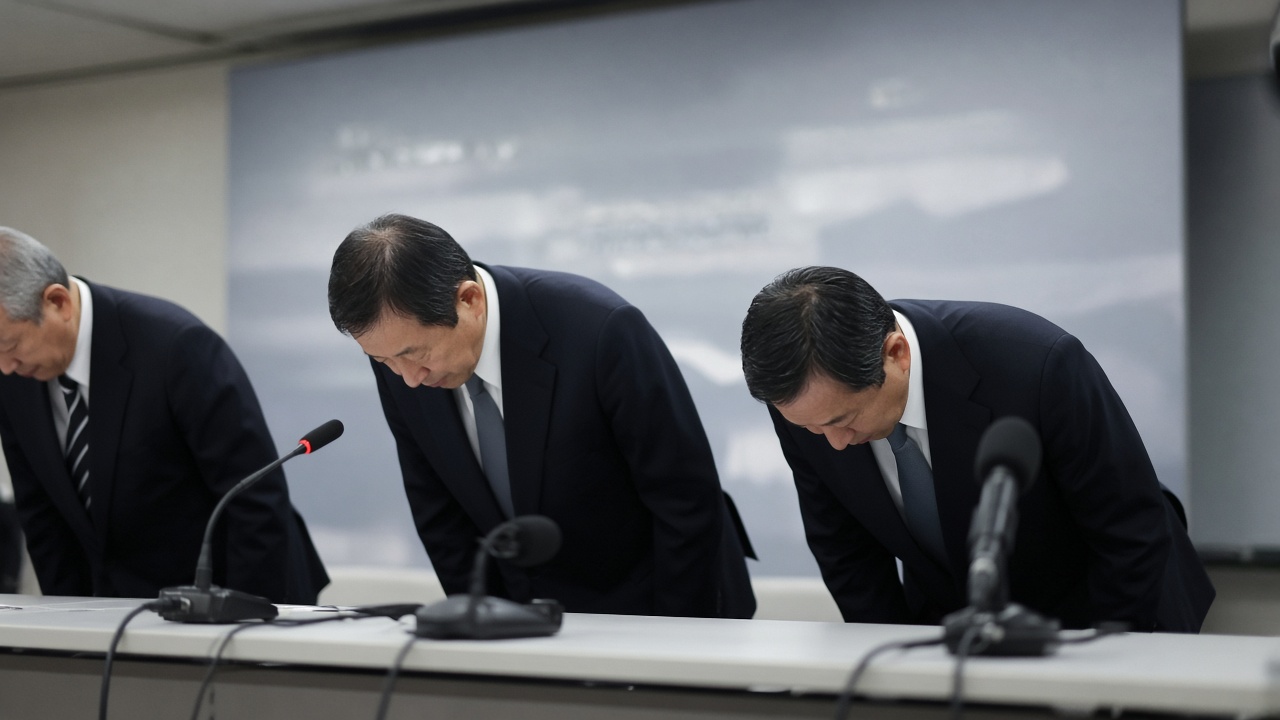
GMO Internet Group chief executive Masatoshi Kumagai apologized Monday at the company’s first news conference since unauthorized access triggered a customer data leak last month, conceding that the Tokyo-based group had left a known security weakness unaddressed for more than two years. Kumagai said internal reviews confirmed auditors warned the firm in 2024 about a flaw in its external-facing systems, yet remediation stalled while attackers eventually exploited the gap.
The breach has rattled Japan’s online brokerage and hosting ecosystem because GMO units serve retail investors, domain registrants, and cryptocurrency clients who expect rapid disclosure when credentials or balances are at risk. Kumagai did not release a full victim count Monday, but he acknowledged “damage to customers’ assets” and pledged to accelerate third-party audits across subsidiaries that share authentication infrastructure.
Pay cuts and accountability
GMO said Kumagai and three other executives will take pay cuts effective this month, a rare public penalty for a Japanese tech holding company outside a formal regulatory order. The company did not specify percentages, yet the move signals board pressure to show contrition before the Financial Services Agency and the Personal Information Protection Commission finish their reviews.
Investors sold the parent’s shares in Tokyo morning trade, extending losses that began when the unauthorized access first surfaced in October. Analysts said the market is pricing not only direct remediation costs but also higher cyber-insurance premiums and the possibility that enterprise clients pause migrations to GMO cloud services until independent testers certify clean segmentation between legacy and new platforms.
What regulators will probe
Japanese authorities typically ask three questions after a financial-technology breach: whether the firm met its own incident-response timeline, whether customer notifications matched the scale of exposure, and whether executives certified controls they knew were incomplete. GMO’s admission that a 2024 audit finding lingered gives investigators a concrete trail—email chains, ticket closures, and budget lines—that can determine if the group violated its legal duty to protect personal data.
Competitors moved quickly to distance themselves, emphasizing zero-trust architectures and segregated key management for crypto wallets. Industry groups warned that Japan’s push to digitize securities settlement and tax reporting will stall if retail users lose confidence in hosted platforms that consolidate too many services behind one login screen.
Customer remediation and next steps
GMO promised forced password resets, expanded two-factor requirements, and fee waivers for users who suffered unauthorized trades, though Kumagai said compensation frameworks would vary by subsidiary. The company is hiring external forensics teams to map lateral movement inside its network and to determine whether stolen tokens could still activate dormant accounts.
For Japan’s broader tech sector, the briefing is a case study in how delayed patching becomes a governance story, not just an IT ticket. Kumagai’s apology may buy time with customers, but regulators and institutional partners will want evidence that the 2024 warning finally produced closed findings—not another slide deck that sits in a shared drive while attackers walk through the same door.