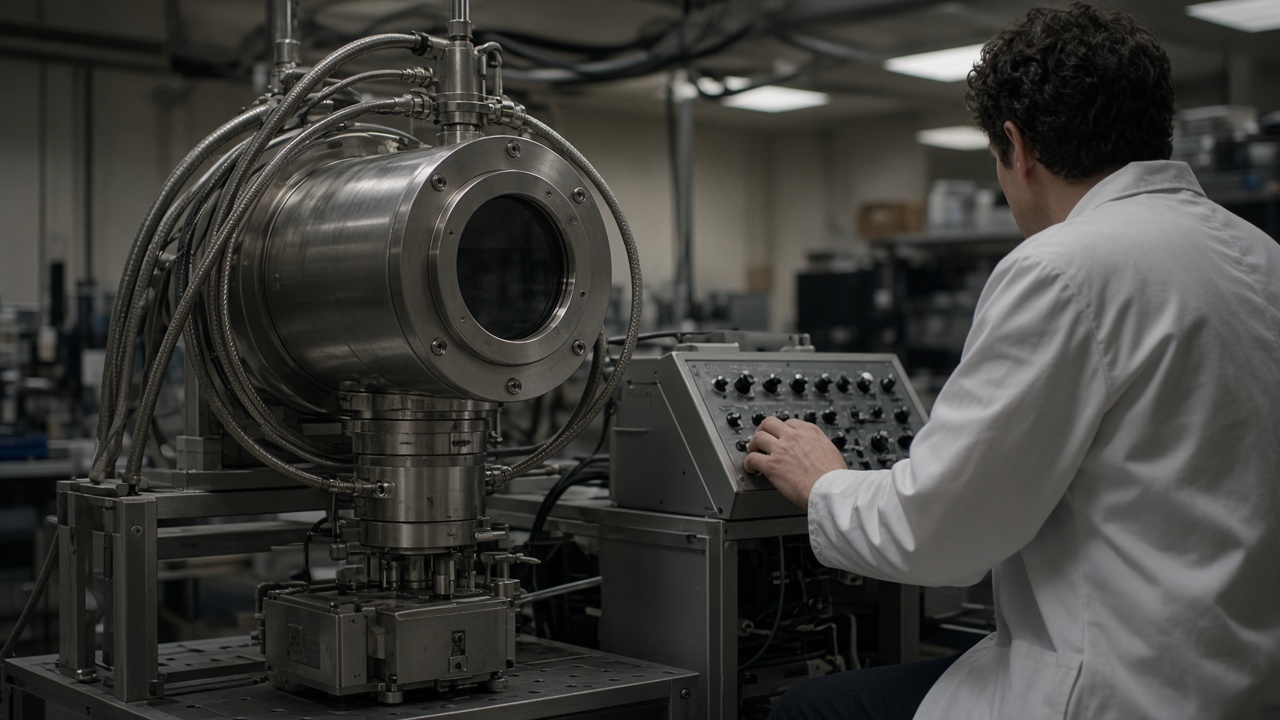
Scientists at the Korea Basic Science Institute recorded lithium dendrite nucleation inside a dry electrode cell stack using a femtosecond X-ray camera, publishing frames that show how needle-like growth begins under fast-charge conditions relevant to next-generation batteries.
The experiment ran at a Pohang beamline adapted for battery operando imaging. Researchers cycled a prototype pouch cell with limited liquid electrolyte—an architecture several Korean cell makers explore for safety—and triggered dendrites by stepping charge current beyond design limits while the camera captured microstructural changes every few femtoseconds in averaged snapshots.
Why femtosecond timing matters
Earlier lab tools missed the instant dendrite seeds formed because resolution was too slow or required disassembly that disturbed surfaces. Femtosecond pulses let teams distinguish mechanical cracking from lithium plating at the separator interface, a debate that split labs for years. The KBSI group said their sequences show plating precedes visible cracks in the dry stack they tested, though chemistry differs in fully liquid cells.
Links to industry pilots
Korean battery firms fund KBSI through joint grants tied to solid-state and semi-solid programs. None of the corporate partners were named as sponsors of this paper, but reviewers included academics consulting for major cell makers. If dendrite seeds appear earlier than models predicted, production lines may tighten formation protocols or add inline impedance checks.
Limits and next experiments
The published stack used lab-scale electrodes thicker than mass-production rolls. Scaling effects remain unknown. KBSI plans hotter and colder chamber runs to mimic winter fast charging on highways, collaborating with transportation safety researchers who test packs after recalls.
Fundamental science will not shorten EV charging next quarter, but it gives engineers a visual fault tree. When dendrite birth is visible, prevention targets become less guesswork—and Korea’s battery supply chain, betting heavily on next-gen chemistries, needs that clarity.
Beam time and collaboration rules
Beam time at the Pohang facility is allocated by committee; battery projects compete with semiconductor and materials groups. KBSI said the dendrite run consumed nine shifts over two weeks, with calibration losses when operators paused for safety checks after unexpected scatter spikes. Graduate students from two universities co-authored the paper under data-sharing agreements that limit commercial use for twelve months.
Policy makers want more industry-facing beam hours under the national research budget. If this study influences formation protocols at major cell plants, KBSI will cite it in funding renewals; if not, expect louder calls to privatize instrument slots.
International reviewers asked for longer cycling data before endorsing claims about dry-stack behavior; KBSI will run extended experiments in December with slower charge profiles resembling home overnight charging rather than lab stress tests.