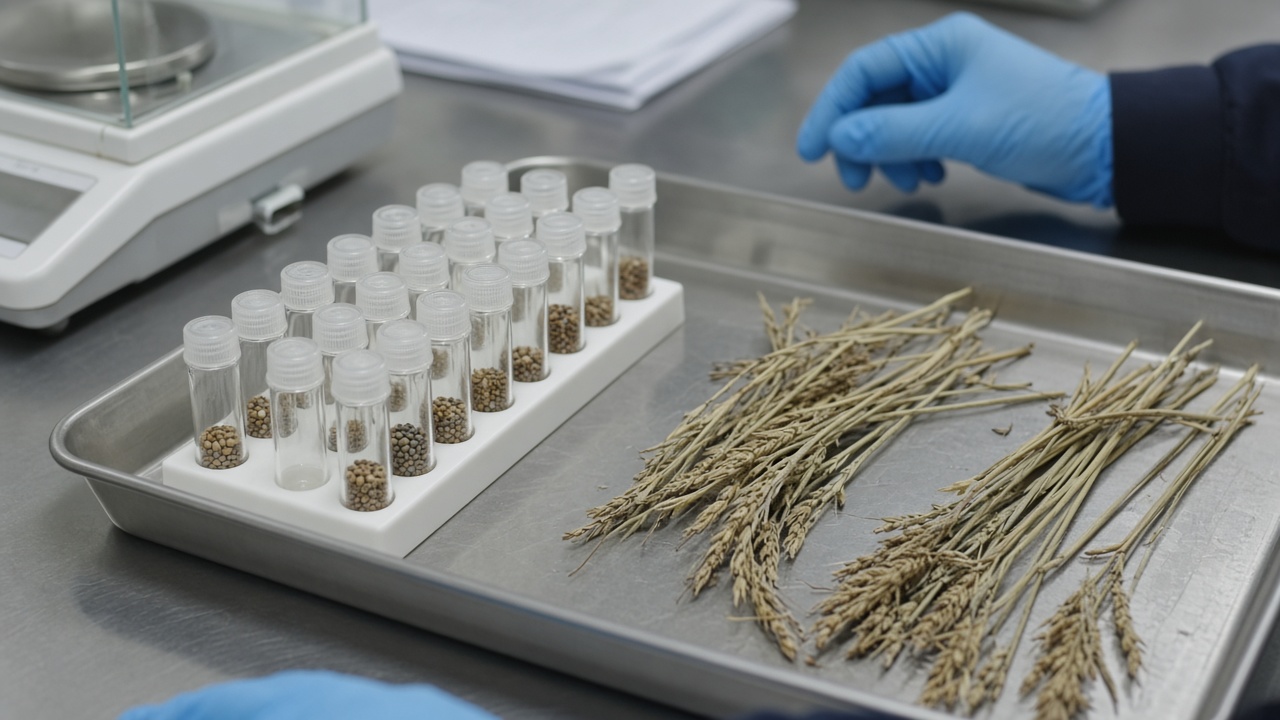
Conservationists at Kew’s Millennium Seed Bank at Wakehurst deposited a record batch of native wildflower species on Monday after an unusually dry autumn let field teams complete chalk downland collections ahead of schedule.
The intake, dominated by kidney vetch, horseshoe vetch and scarce orchid companions, arrives as Plantlife warns that fragmented roadside verges lose genetic diversity when councils cut early for safety. Banking seeds preserves options for climate-adapted reintroductions if southern England faces another drought cycle like 2022.
Why the weather helped
Low October rainfall kept seed heads intact on slopes in the South Downs and Salisbury Plain, reducing mould risk during drying. Met Office county summaries show soil moisture deficits across Hampshire and Wiltshire, tough for farmers but workable for collectors who need crisp seed pods before winter gales.
Teams timed sweeps between dew lift and midday heat, then shipped material to Wakehurst within 24 hours—a logistics chain honed during COP-linked biodiversity pledges.
What the bank does with the material
Each accession is cleaned, x-rayed for viability and stored at minus 20 degrees Celsius with duplicate holdings in partner banks abroad. Researchers can withdraw samples decades later for restoration projects on former arable margins or solar farm biodiversity offsets.
Public funding from Defra’s species survival programme covers staff, but volunteer recorders from local wildlife trusts supplied GPS-tagged location data that speeds licensing.
Broader significance
Wildflowers support pollinators that underpin soft fruit yields in Kent and Herefordshire. Losing genetic lines silently erodes food security long before crops fail outright. Monday’s deposit is narrow science news with a wide agricultural tail.
Kew plans to publish germination test results in spring; failures would trigger a second field season. For now, the milestone is a rare bright spot in a year when river levels and reservoir stocks still worry water companies.
Partners on the ground
Downland graziers who maintain chalk habitats through conservation grazing contracts supplied access gates for collection teams. Without livestock keeping coarse grasses in check, many wildflowers would never set seed in quantities worth banking.
National Trust plots on the Isle of Wight contributed smaller niche species whose populations sit below IUCN thresholds but above local extinction risk. Each accession includes legal permissions from landowners, a paperwork burden that can delay deposits when deeds are fragmented.
Climate modelling tie-in
Kew scientists feed seed viability data into Met Office climate projections for southern England summers. If germination rates fall in lab tests, restoration planners may shift species mixes toward Mediterranean-type flora already appearing on some slopes—a controversial adaptation strategy farmers watch closely.