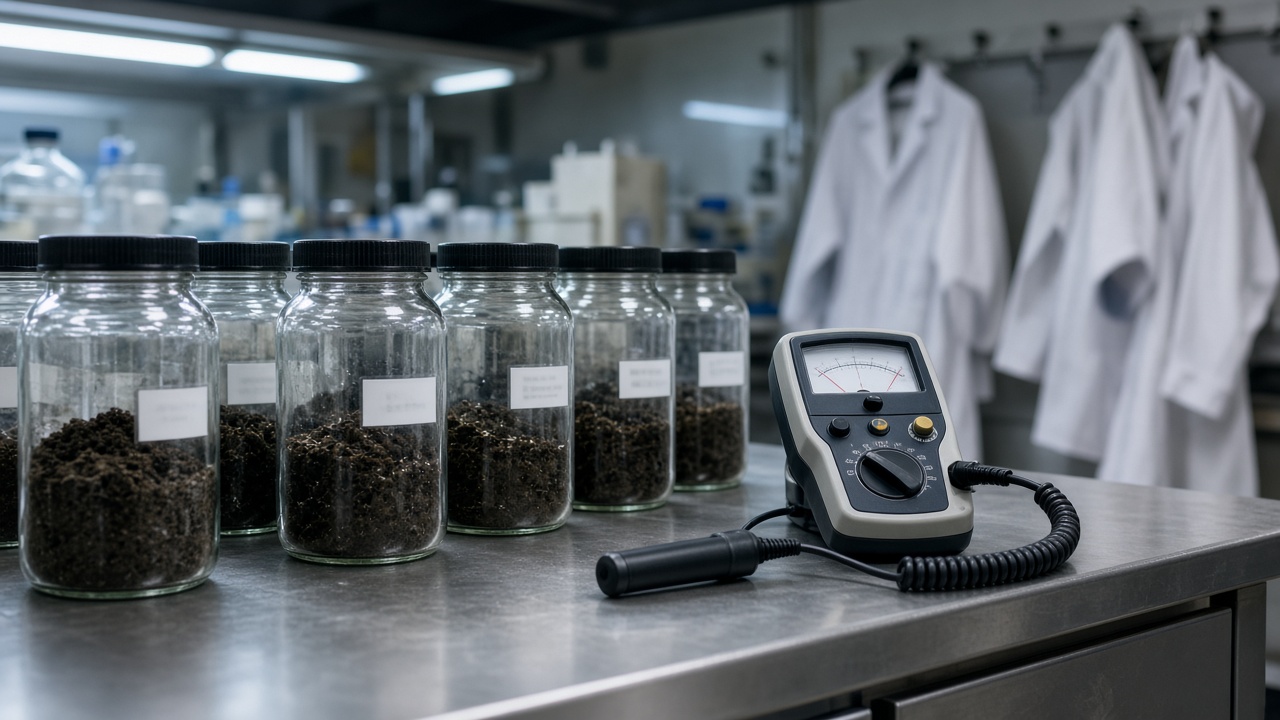
Kyoto University isotope laboratory scientists published measurements showing faster-than-expected cesium-137 decline in a ten-year soil core taken from Fukushima Prefecture black soil, a finding that could refine how municipalities forecast when forest edges near evacuated zones return to background radiation levels.
What the core captured
The team drilled a continuous sample in a forest ward where initial decontamination removed topsoil but left deeper organic layers intact. By comparing 2016 and 2026 slices, researchers tracked how cesium migrated downward and decayed as vegetation rebounded. Black soil regions bind cesium differently from sandy coastal plots, so prior models borrowed from Chernobyl sandy sites often overstated persistence.
Using accelerator mass spectrometry and gamma spectrometry, the lab quantified a twenty-three percent reduction in exchangeable cesium in the upper five centimeters beyond what physical half-life alone would predict, suggesting biogeochemical cycling plays a larger role than emergency planners assumed.
Implications for local governments
Municipal environmental offices use decay forecasts to schedule reopening of hiking trails and mushroom foraging zones. If cesium drops faster in certain soil types, some no-entry signs could be revisited earlier—subject to independent verification and public consultation. The paper stresses that hotspots near stream beds still showed elevated readings and should not be lumped into averaged trends.
Ministry of the Environment officials said they will compare Kyoto's data with their airborne monitoring program before revising official guidance, wary of creating false confidence in areas where runoff concentrates radionuclides.
Method limits
The study covers one watershed microclimate; extrapolation to all Fukushima forests would be premature. Peer reviewers asked for additional cores from coastal alluvial plots to test whether black-soil dynamics differ from river-deposited sediments. Kyoto teams plan a follow-up drill campaign after winter snowmelt.
Public communication risk
Anti-nuclear groups warned that headlines about "faster decay" could minimize ongoing worker doses in storage sites. Researchers emphasized that the paper addresses forest edge soils, not reactor debris or concentrated waste. Clear messaging will matter when towns debate tourism marketing tied to autumn foliage routes near formerly restricted areas.
Science agencies hope the work improves modeling software used across Tohoku, reducing both unnecessary closures and premature reopenings. Either mistake carries political and health consequences in a region still rebuilding trust in official radiation maps.
Graduate students on the project also measured fungal networks that transport cesium laterally; those pathways could explain localized hotspots the airborne surveys miss during leafy seasons.