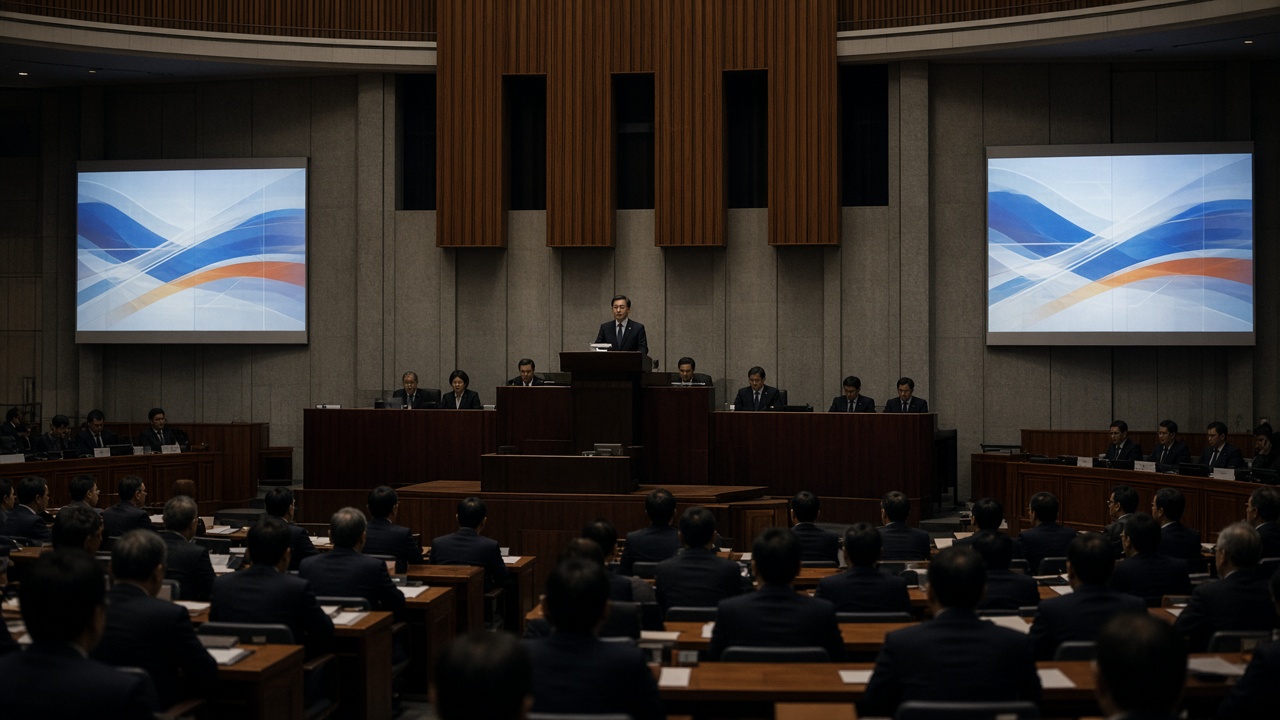
President Lee Jae-myung opened the annual budget debate in Seoul on Sunday with a call to replace what he described as growth for a narrow elite with “growth for everyone,” framing a 821 trillion won spending plan as the fiscal backbone of that shift.
Addressing the National Assembly in a televised policy speech, Lee said inequality and polarization still shadow the economy despite headline gains in exports and technology. He argued that South Korea must move beyond old debates pitting growth against redistribution, proposing instead a new formula suited to “changed times” in which more regions and workers share in expansion.
Record spending under scrutiny
The 2027 budget blueprint Lee defended is among the largest in South Korean history, reflecting heavy outlays on welfare, industrial policy and public investment that his administration says will stabilize households while keeping the country competitive in chips and advanced manufacturing. Opposition parties are preparing to challenge both the size of the package and its revenue assumptions, setting up a weeks-long fight in committees before a December deadline.
Lee asked lawmakers for cooperation to pass the plan, linking fiscal choices to his campaign promise to soften the sharp divides between Seoul-centric winners and struggling provinces. He did not detail every line item in the speech, but aides have previously flagged continued support for childcare, housing stress and small-business credit as priorities.
Markets watch fiscal tone
The address coincided with a volatile morning on the Kospi, where index futures slid more than 1 percent at the open as U.S. semiconductor shares sold off overnight, before chip heavyweights such as Samsung Electronics and SK hynix pared losses. Traders said Lee’s rhetoric mattered less intraday than global tech sentiment, but bond desks were already modeling how much additional debt the 821 trillion won envelope might require if tax receipts undershoot.
Political calendar
Lee’s speech lands two days before U.S. midterm elections, an external clock that Korean policymakers are watching because of trade, alliance and North Korea risks tied to Washington’s next moves. Domestically, the budget fight intersects with ongoing disputes over prosecution reforms and local election positioning, giving opposition leaders room to press for concessions in exchange for floor votes.
Finance ministry officials are scheduled to brief parliamentary panels on revenue lines and contingency reserves this week. Lee closed by repeating that fiscal policy must prove to voters outside the capital that the country’s semiconductor boom can translate into steadier jobs and public services — a test his government will face as the super-budget moves from speech to statute.