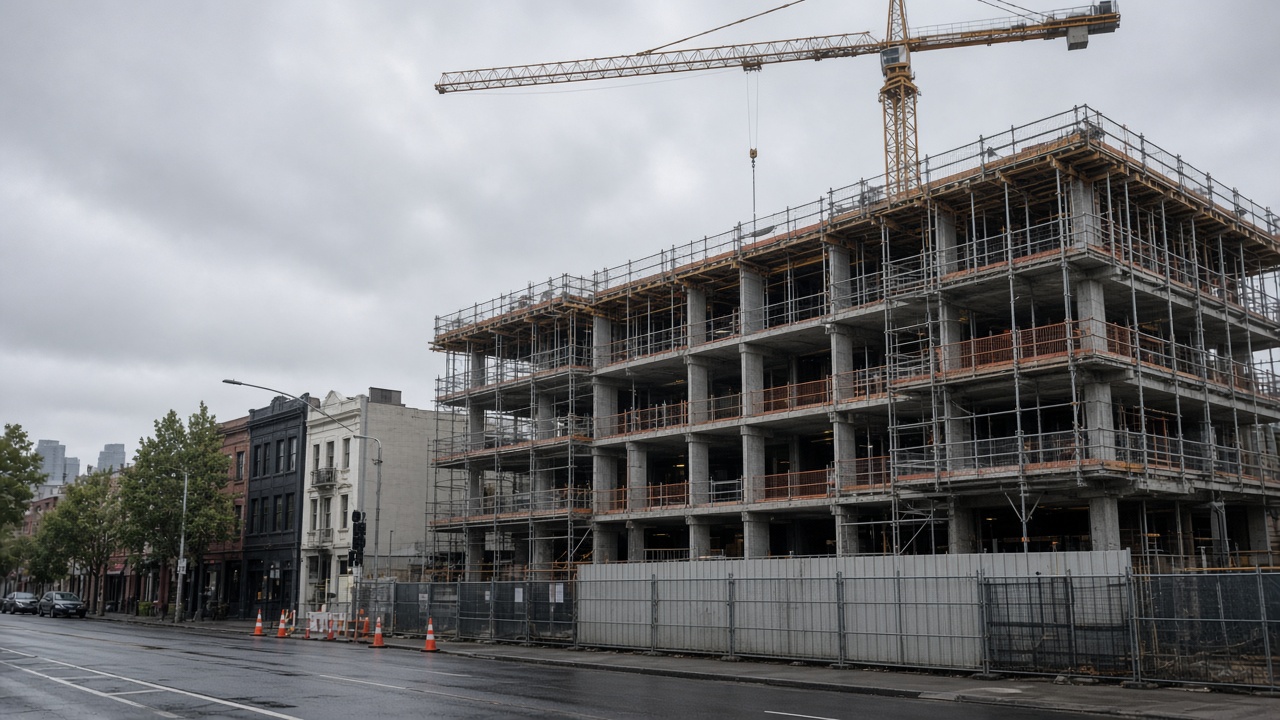
The Reserve Bank did its job on Tuesday by leaving the cash rate at 3.60 percent; it cannot do the job of state planning ministers who still decide how many homes fit on a suburban block.
We argued yesterday that holding rates until housing and productivity data converge was prudent. That hold is now fact. What it does not deliver is a pipeline of medium-density housing in the middle suburbs where nurses, teachers, and tradies can afford to live within a reasonable commute. Interest rates were never the only choke point, and pretending otherwise lets premiers off the hook.
Rates affect demand, not floor space
A pause in rate cuts keeps borrowing costs steady for recent buyers and cruel for those still renting. It does not convert a single detached-house lot into a triplex. Floor-space ratios, height limits, heritage overlays, and slow design-review panels sit with councils and state governments. The Board’s statement mentioned inflation; it cannot mention your local DCP clause because that is not its mandate.
Federal tax settings matter at the margin, but the blocking permits are overwhelmingly state and local. Until those move, a generation will keep paying Cup-week rent on houses while apartments approved near stations sit in objection limbo.
The objection we expect
Some readers will say higher density erodes neighbourhood character. Character is also a teacher commuting two hours because nothing was built near the line. The stronger objection to our argument is that supply takes years to affect prices even if planners accelerate today. That is true, which is why delay is expensive: every year of low approvals locks in tomorrow’s rent spikes.
What should happen next
States should publish monthly approval counts against declared housing targets with names attached when councils miss. The Commonwealth should tie infrastructure grants to those metrics, not photo opportunities. The Board should keep focusing on inflation; voters should keep focusing on planners. Conflating the two lets both institutions claim they are doing enough while neither fixes the missing middle.
Federal tools that actually move supply
Immigration settings for construction trades, faster Commonwealth environmental approvals on major projects, and tied grants for station-adjacent housing all sit with Canberra. They are slower than a rate cut headline but durable. Using the Board as the only story lets federal ministers avoid hard choices on those levers while renters still pay Cup-week premiums.
Readers in regional cities face a different bottleneck: land release on greenfield edges rather than missing middle near stations. The same principle applies: rate pauses do not sew new lot approvals through council chambers that fear backlash at local elections.