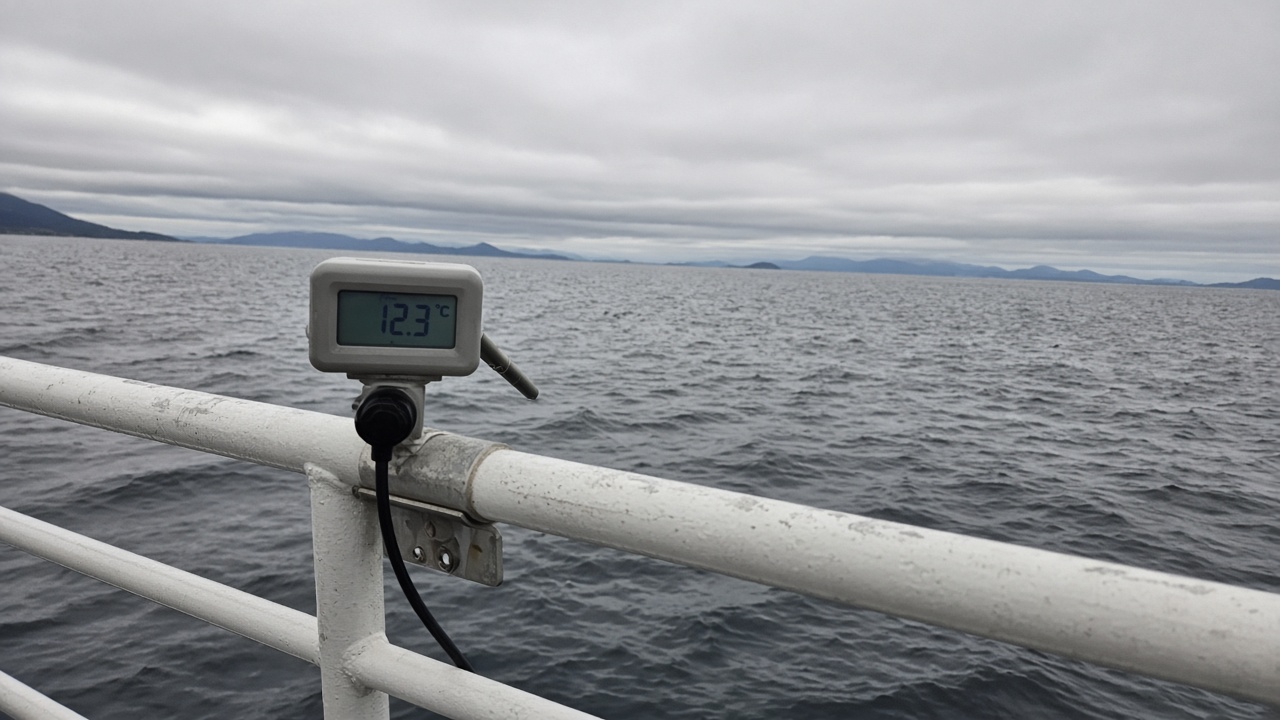
Hokkaido Fisheries Research Institute crews logged a sharp late-autumn cooling in the Tsugaru Strait surface layer this week, a temperature dip purse-seine fleets track before sardine schools shift toward Pacific winter grounds.
What the instruments showed
Weekly mooring data released Tuesday put the mixed layer at 11.2 degrees Celsius, down 1.8 degrees from the October mean. Satellite altimetry matched the in situ readings, showing a narrow cold filament along the Tsugaru coast rather than a basin-wide chill.
Biologists said the pattern resembles 2019 and 2022 seasons that delivered strong Hokkaido landings after schools condensed near Hakodate. They cautioned that subsurface warmth lingering below 50 meters could still scatter fish if storms mix the column.
Fleet decisions on Culture Day
With November 3 a holiday, cooperatives in Otaru and Hakodate held open meetings to decide whether to extend November trips or hold nets for December price spikes. Fuel costs remain elevated despite recent yen relief, making timing calls sensitive.
Processors warned that landings alone do not guarantee margins; wholesale auction floors still carry inventory from earlier Pacific catches.
Policy and climate context
National fisheries agencies continue stock assessments after years of poor sardine recruitment; institute scientists said this cooling event is favorable but not sufficient to revise quotas until spring trawl surveys finish.
Climate researchers note Tsugaru currents respond quickly to Hokkaido wind bursts, so another warm rain event could erase the filament within days.
Port logistics
Hakodate auction halls extended refrigerated storage hours in case landings spike on short notice. Trucking cooperatives warned that Culture Day driver shortages could delay Tokyo-bound shipments even if catches improve.
Research follow-ups
Institute vessels will redeploy moorings Friday to confirm whether the cold filament persists after forecast gales; results feed a public dashboard updated each Monday.
Reader and investor context
Holiday-thinned liquidity and overlapping macro headlines mean today’s moves can reverse quickly when full sessions resume. Desk editors should treat single-session swings as provisional until volume returns and official filings confirm corporate actions.
Institutional accounts said they kept hedge ratios unchanged through the Culture Day bridge, preferring to adjust positions after U.S. election results and domestic bond auction outcomes later in the week rather than chase opening prints.
Retail participation rose on online broker dashboards, a familiar pattern when national holidays align with global event risk and domestic policy calendars.