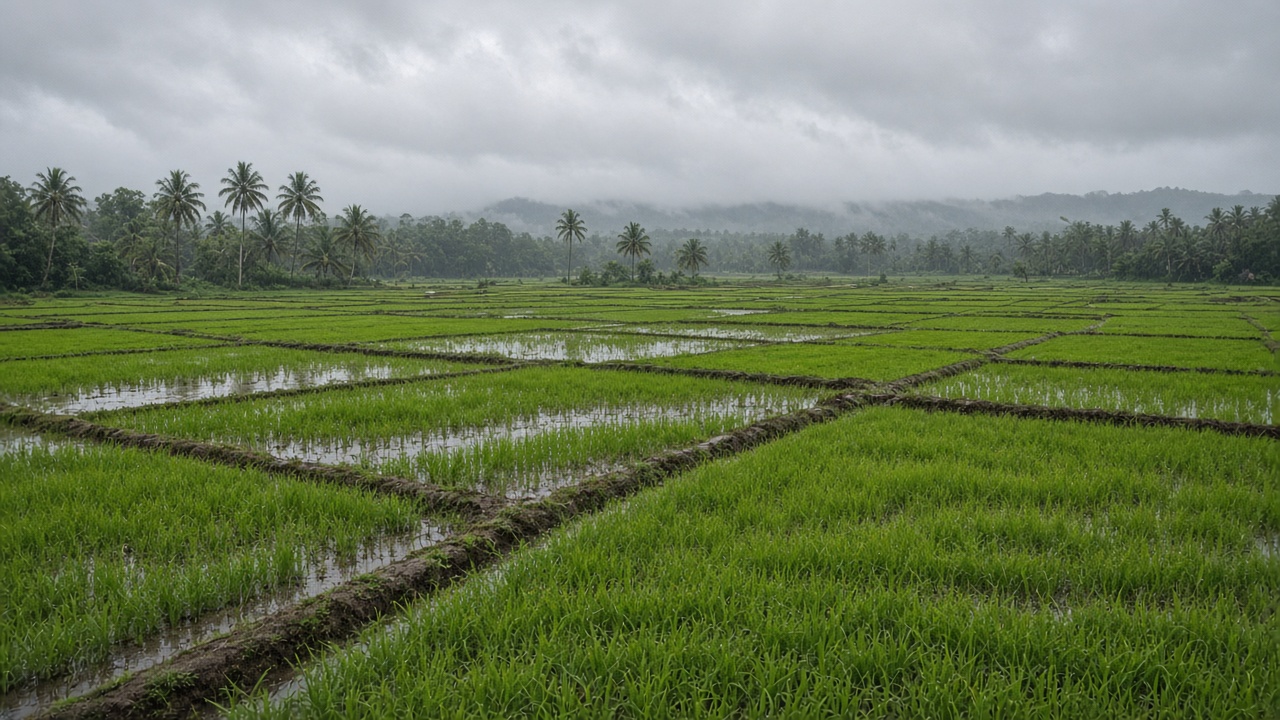
Microbiology researchers at the Indian Institute of Science released a monsoon-season soil map flagging melioidosis risk corridors across Kerala’s midland trough, correlating burkholderia pseudomallei DNA traces with fields inundated during Cyclone Murasu runoff events. The peer-reviewed dataset, published Monday, gives district health officers geotagged priorities for well-water testing where antibiotics prophylaxis guidelines remain uneven.
Method
Teams collected 412 surface samples after the retreating monsoon, amplifying bacterial signatures through quantitative PCR rather than culture-only methods that lag in humid labs. GIS layers overlay sample hits with land use: rubber estates, rice paddies, and peri-urban septic leakage zones showed distinct positivity rates. IISc authors caution the map is diagnostic, not predictive at household level.
Clinical link
Melioidosis presents as pneumonia or sepsis and kills quickly when misdiagnosed as tuberculosis. Kerala’s tertiary centres reported a post-flood case cluster in September; this study supplies environmental context clinicians lacked when sourcing exposure histories. ICMR surveillance bulletins already list melioidosis as under-reported nationwide.
Public-health use
State epidemiologists can target awareness campaigns at farmers barefoot in flooded plots and well-diggers without protective equipment. IISc offers open data downloads for municipal corporations integrating climate-health dashboards. No vaccine exists; early ceftazidime therapy remains the decisive intervention once physicians confirm exposure.
Data sharing
District collectors in Alappuzha and Kottayam received shapefiles to overlay with drinking-water quality tests scheduled for November. IISc graduate students will host webinars for primary-health-centre nurses on exposure questions to ask fever patients with agricultural occupations.
Research limits
Positive soil PCR does not prove infection route; authors warn against stigmatising entire villages flagged on maps. Follow-up culturing work continues at select sites to validate genetic markers against live bacteria isolation, the gold standard for environmental surveillance papers.