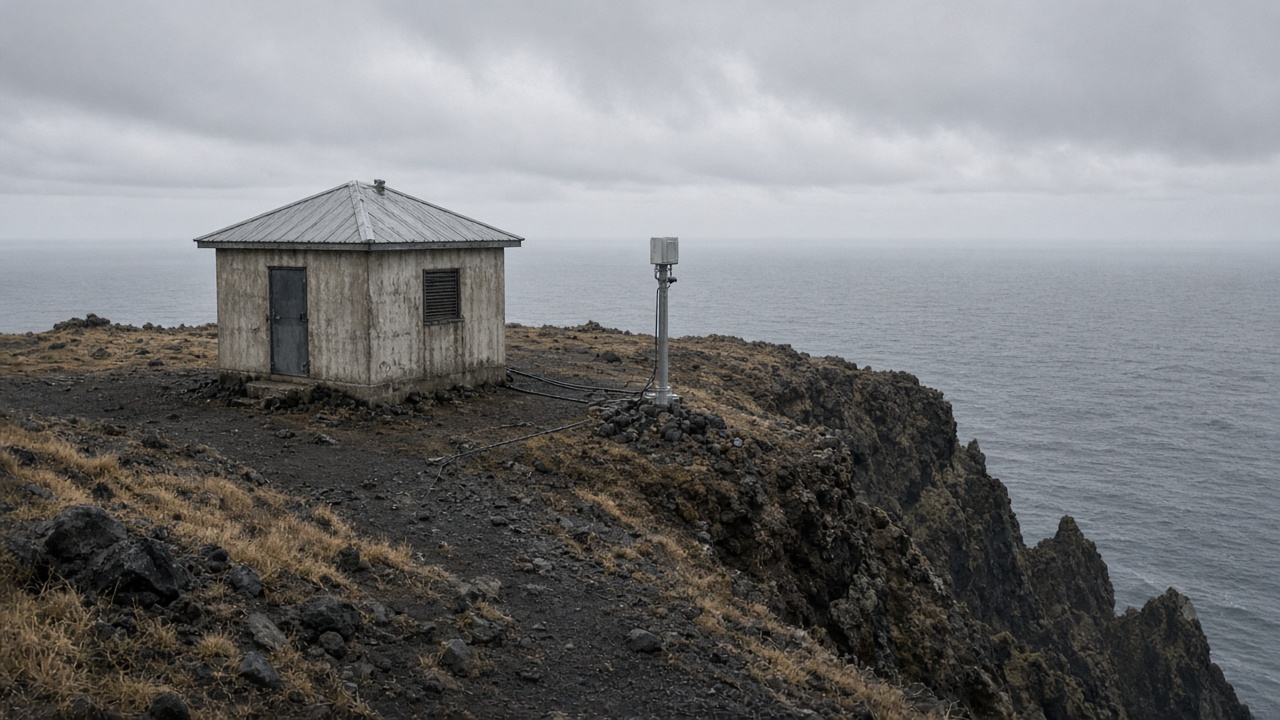
Sensors operated by the Korea Institute of Geoscience and Mineral Resources on Ulleung Island logged a cluster of microquakes beneath the East Sea over four days ending Monday, triggering informational bulletins for ferry operators without a tsunami warning or evacuation order.
Event characteristics
The largest event registered below magnitude 3.0, too weak to felt reports onshore according to the meteorological administration. Epicenters plotted along a known intraplate trend east of the island. Researchers said swarms sometimes precede tectonic release but often fade without larger follow-ups.
Monitoring network
Ulleung arrays feed real-time data to Daejeon analysis centers that auto-publish maps for civil agencies. KIGAM technicians checked battery backups after autumn storms to ensure continuous logging. Additional portable seismometers may deploy if frequency rises.
Maritime response
Ferry lines between Ulleung and Pohang maintained schedules while captains received hourly updates. Fisheries cooperatives paused near-bottom trawling in the densest epicenter zone as a precaution. Coast guard patrols reported normal traffic.
Research value
Microquake sequences help model stress transfer near volcanic edifices on Ulleung and Dokdo monitoring projects. Peer reviewers will compare the swarm with 2019 clusters that lacked major aftershocks. Graduate teams at Seoul universities requested waveform downloads for machine-learning denoising experiments.
Public communication
Officials avoided alarmist language after social media posts mislabeled the swarm as precursor to major tsunamis. Educational SMS linked to KIGAM explainer pages on East Sea tectonics. Tourism boards on Ulleung said hotels stayed booked through the long weekend.
Next steps
KIGAM will publish a preliminary report if events continue beyond the week. Parliament’s science committee may ask for budget to densify offshore sensors. For residents, the practical effect was heightened awareness and minor fishing adjustments, not emergency shelter orders.
Island logistics
Ulleung administrators said ferry ticket sales remained steady despite informational SMS alerts; tourism officials posted explainer videos at the pier. Helicopter medevac routes were unchanged because hospitals on the mainland remain the primary trauma centers. Volcano monitoring cameras on the island continued regular thermal scans unrelated to the tectonic swarm.
Scientific follow-up
KIGAM may deploy ocean-bottom nodes if the swarm persists, borrowing equipment from prior East Sea experiments. Graduate students already submitted conference abstracts previewing waveform similarity metrics across the sequence. Insurance actuaries said microquakes alone do not change property premiums without damaging events.
Education outreach
KIGAM staff planned school visits on Ulleung after students asked teachers about social media rumors. Lesson plans explain the difference between microquakes and tsunami-generating megathrust events along distant subduction zones. Museums in Seoul will host a traveling exhibit on East Sea geophysics using anonymized waveform animations from the swarm.
Data sharing
KIGAM uploaded anonymized event catalogs to a public portal within hours of each burst, a transparency practice adopted after earlier criticism of delayed bulletins. International researchers requested access to compare East Sea sequences with Japanese offshore arrays. The ministry said it will fund additional ship time if scientists propose joint deployments.