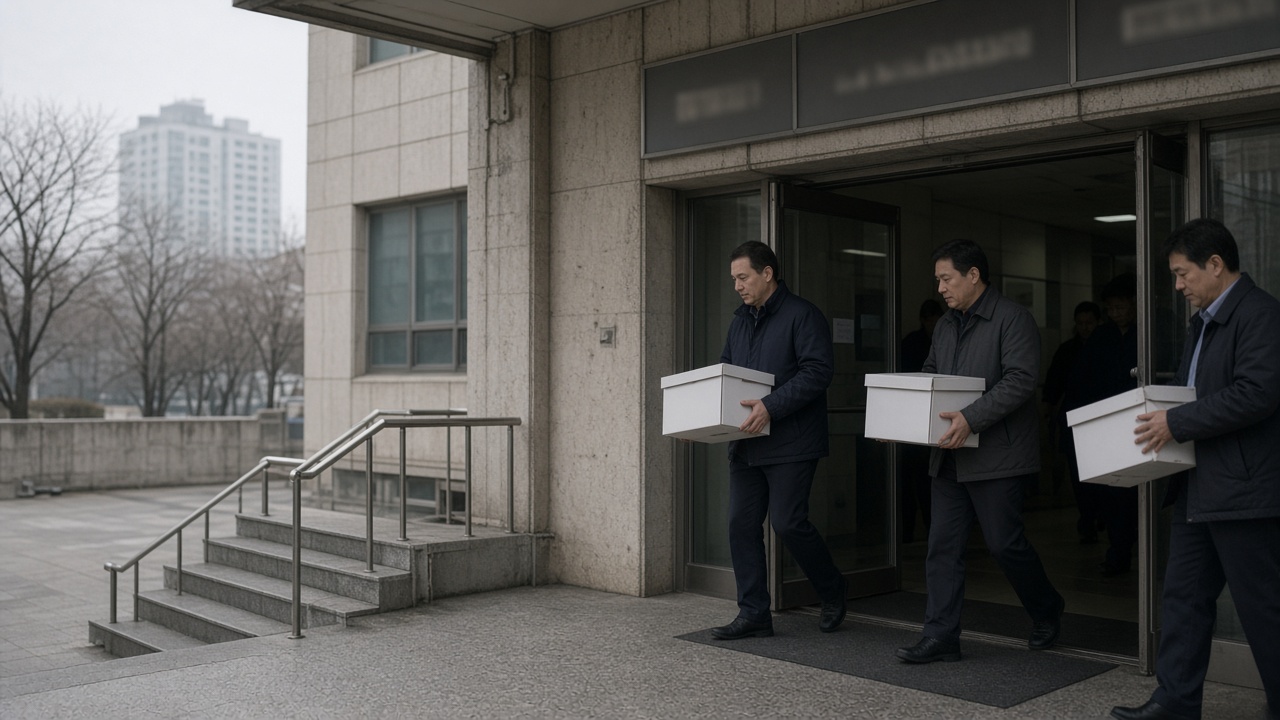
Investigators working for special prosecutor Lee Tae-han raided South Korea’s National Election Commission for a second consecutive day on Tuesday, seizing budget and payment records tied to monthly “fair election promotion activity” allowances paid to the chair and non-standing commissioners.
What the searches covered
Yonhap News Agency reported that 38 personnel, including two prosecutors and digital forensic staff, searched 11 NEC departments in Gwacheon, south of Seoul, after a larger Monday operation mobilized 65 people across 18 offices and the home of a former secretary general. The team is probing allegations of causing losses to the national treasury, abuse of authority and preparation of false official documents.
According to briefing materials cited by SBS and the Asia Business Daily, the allowances continued even after the Board of Audit and Inspection and the National Assembly questioned their legal basis. Investigators suspect the commission marked external audit findings as “not applicable” on budget filings from 2019 through 2022 while still allocating funds, then paid commissioners in 2024 and 2025 despite no dedicated budget line—reportedly by shifting money from other accounts.
Asia Business Daily said the team began Monday at roughly 9 a.m. at the former secretary general’s residence before moving through commission departments, explaining the two-day schedule as a function of volume rather than separate legal theories. Digital forensic staff imaged servers that track stipend approvals, according to the outlet’s law-enforcement sources.
Scale of the payments
The special counsel said nine commissioners received a total of 905.8 million won (about US$676,000) since 2020, with annual totals crossing 100 million won in several years—a threshold that triggers aggravated penalties for state-fund losses under Korean criminal law. The probe sits alongside Lee’s original mandate to examine ballot-paper shortages that disrupted June local elections, but Tuesday’s raids show the commission’s internal spending has become an equal focus.
Seoul Economic Daily, reporting on the first day of searches, listed yearly totals that peaked above 210 million won in 2021 before commissioners continued drawing payments even after the 2025 budget line was zeroed out. Commissioners are part-time appointees who oversee election integrity; prosecutors argue their stipends required explicit statutory authorization that auditors say was never satisfied.
Political stakes
The National Election Commission has defended its independence in past disputes with the executive, yet the allowance allegations strike at day-to-day governance rather than election-night mechanics. A team spokesperson told reporters the counsel will analyze seized material to determine who authorized payments and whether officials colluded to bypass audit warnings.
Opposition lawmakers who demanded accountability after the June ballot shortfalls are likely to cite any confirmed irregularities as evidence the watchdog cannot police elections while its own ledger is under criminal review. For now, the commission remains operational, but the back-to-back searches signal Lee’s team believes document trails inside Gwacheon—not just field offices—hold answers on how commissioners were paid when auditors said they should not have been.
Presidential aides have avoided commenting on Tuesday’s raids, leaving the special counsel’s statutory independence as the public face of the probe. If prosecutors secure indictments, the case could overlap with separate debates over restructuring the NEC’s appointment process—a reform push that would land in the National Assembly while Lee’s team is still tracing spreadsheets from the chairman’s office.