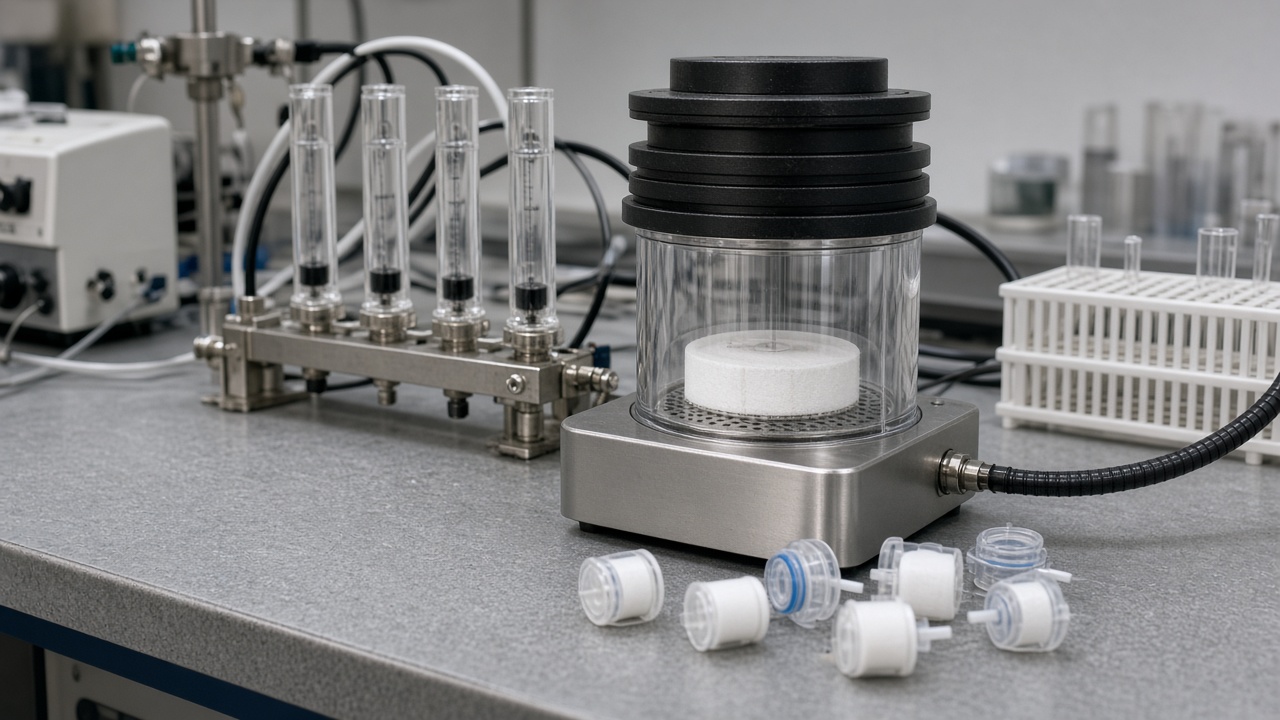
CSIR-National Physical Laboratory said its Gas Metrology section is running expanded calibration and provisional certification for manual PM2.5 and PM10 samplers used across the Indo-Gangetic plain, tying cutoff-size, flow and environmental sensor checks to Central Pollution Control Board acceptability guidelines so monitors in Delhi, Lucknow and Patna districts report particulate loads on comparable scales during smog season.
What NPL tests
According to NPL charge schedules updated in 2025, technicians calibrate flow from one to twenty-five litres per minute on five-point curves, verify absolute pressure and humidity channels, time totalisers, and calculate cutoff diameters for impactors feeding PM2.5 inlets. Provisional letters of confirmation for manual PM2.5 units follow CPCB guideline 102946/2023/AQMN-HO pass-fail bands on cutpoint sharpness, inlet geometry and sensor drift—criteria manufacturers must meet before state pollution boards deploy samplers in NCAP cities.
NPL’s facility also supports filter and mask testing, beta-attenuation monitor checks, and high-volume sampler work transferred to Indian MSME partners, including an indigenous high-flow PM unit the laboratory showcased on CSIR Foundation Day in October 2025. The science desk treats those transfers as capacity building, not marketing: traceability fails if every state buys uncertified clones once AQI headlines spike.
Why calibration matters in the plain
Indo-Gangetic monitors sit downwind of mixed sources—crop residue, brick kilns, thermal stacks and winter inversion traps. A two microgram drift on PM2.5 at one station can mis-rank hotspots GRAP teams target. NPL’s role is to keep hardware honest before IITM models ingest the readings CAQM sub-committees cite when invoking GRAP stages.
CPCB’s network mixes manual gravimetric samplers with continuous analysers; both need periodic flow and cutpoint validation. NPL staff participate in international comparisons on greenhouse and pollution gas mixtures, but the winter urgency is aerosol metrology—getting inlet cuts near 2.5 micrometres aerodynamic diameter within documented tolerance.
Who uses the service
State pollution control boards, district hospitals running exposure studies, and equipment makers seeking provisional certification before tender season submit units to NPL’s Environmental Sciences and Biomedical Metrology Division. Chhattisgarh and other states have sponsored project work on station data quality; NCAP dashboards depend on those labs sending samplers back when flow audits flag drift.
Researchers testing indoor PM controls or ventilation devices also route through the same benches, keeping academic trials aligned with regulatory methods rather than ad hoc optical counters that cannot be recertified mid-season.
Limits and next steps
NPL does not operate the national telemetry network—it certifies boxes others mount on rooftops. Turnaround during peak demand can stretch if multiple states queue recertifications after monsoon maintenance. CPCB has not mandated a single national recertification calendar; voluntary compliance still drives much of the plain’s hardware refresh.
For readers tracking Delhi’s very poor weeks, the policy chain runs monitor → certified sampler → CPCB average → GRAP stage. NPL sits early in that chain, turning particulate science into numbers supervisors can defend when construction crews ask why inspections tightened.
What remains open
Field intercomparison exercises between NPL-calibrated manual units and satellite-derived aerosol products are ongoing; NPL has not published a public scorecard for every NCAP city’s 2025 recertification status. Until that exists, calibration work stays the quiet prerequisite behind every headline AQI figure Indo-Gangetic residents check on their phones.