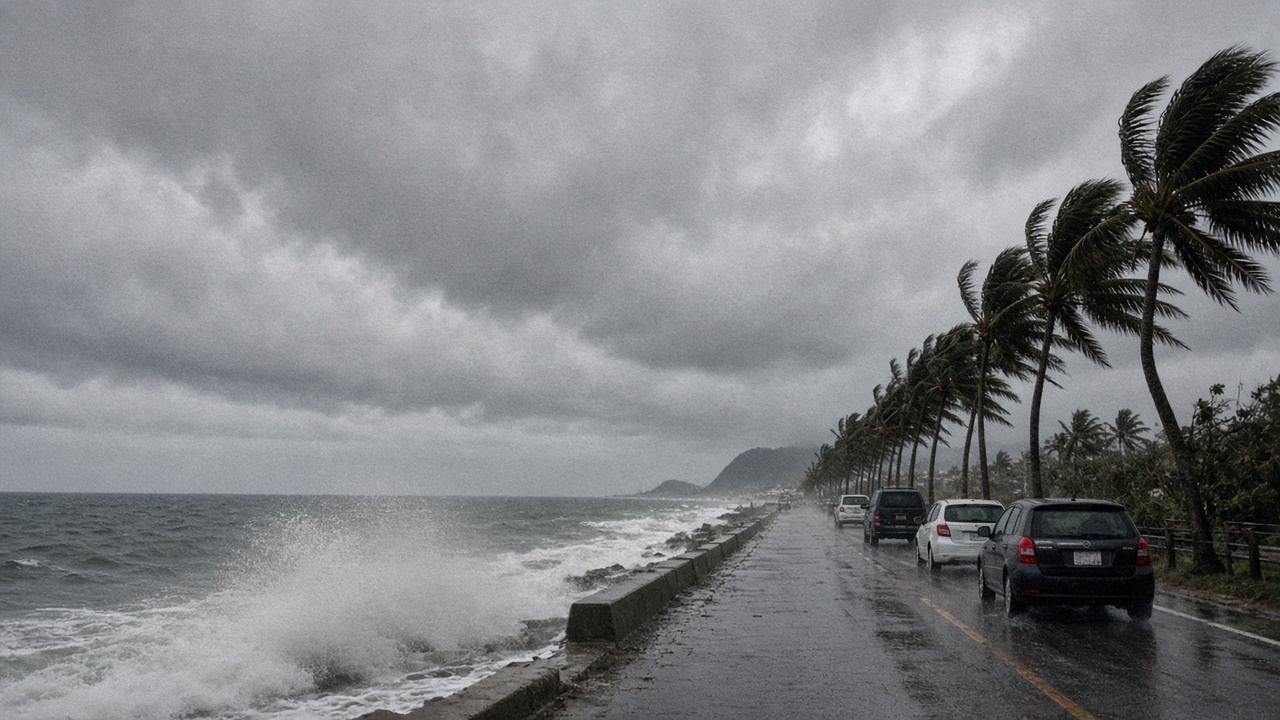
Typhoon Jangmi hammered Japan’s southern islands with gale-force winds and torrential rain on Tuesday, injuring more than ten people in Okinawa Prefecture and forcing airlines to cancel more than 300 domestic flights as the storm tracked northwest of the Amami archipelago. The Japan Meteorological Agency warned that conditions could worsen enough to trigger a Level 4 emergency alert—including evacuation orders for vulnerable communities—if the system’s outer bands continued to intensify.
Where the storm sits
JMA placed the typhoon northwest of the Amami island chain on Tuesday morning, feeding moisture into Okinawa and nearby prefectures while keeping sea lanes hazardous. Meteorological officials cautioned that landslides, coastal flooding, and high waves remained likely along exposed shorelines, particularly in low-lying and mountainous areas of southern Kyushu and the Ryukyu chain.
Local governments said material damage reports were still being compiled, but emergency services had already responded to wind-related injuries across Okinawa. Authorities urged residents to secure loose objects, avoid unnecessary travel, and monitor municipal disaster portals for shelter openings if rainfall rates climb overnight.
Transport and power
Airlines scrubbed more than 300 flights nationwide, according to domestic media tallies, with Okinawa’s Naha hub seeing the largest share of cancellations. Rail operators warned that some Shinkansen and limited-express services on Kyushu could face delays if wind thresholds exceed safety limits for overhead wiring.
Utility companies reported roughly 47,000 households without electricity in Okinawa and Kagoshima as gusts damaged distribution lines. Repair crews were prioritizing hospitals and pumping stations, but officials said restoration could slip into Wednesday if helicopters could not fly inspection routes in continuing squalls.
What officials watch next
JMA’s five-level disaster alert system escalates from advisories to mandatory evacuation when landslide or flood risk becomes imminent. Prefectural disaster managers said they were prepared to move to Level 4 in specific municipalities if river gauges cross critical marks or if soil saturation indices spike on radar.
Japan enters late typhoon season with warm sea surface temperatures still fueling tropical systems. Prefectural disaster coordinators said they were staging water and portable generators at community centers along the eastern coast of Okinawa’s main island, ready to open if overnight bands stall and dump more than 50 millimeters per hour in isolated cells.
Forecasters expect Jangmi to accelerate northeast along Japan’s southern periphery through Wednesday, but the agency stressed that the storm’s forward speed—not its peak wind—would determine whether evacuation orders expand to additional towns on Amami Oshima and Tanegashima. Fishing cooperatives in Naha suspended offshore trips until swell heights drop below safety thresholds set by the Okinawa prefectural government.