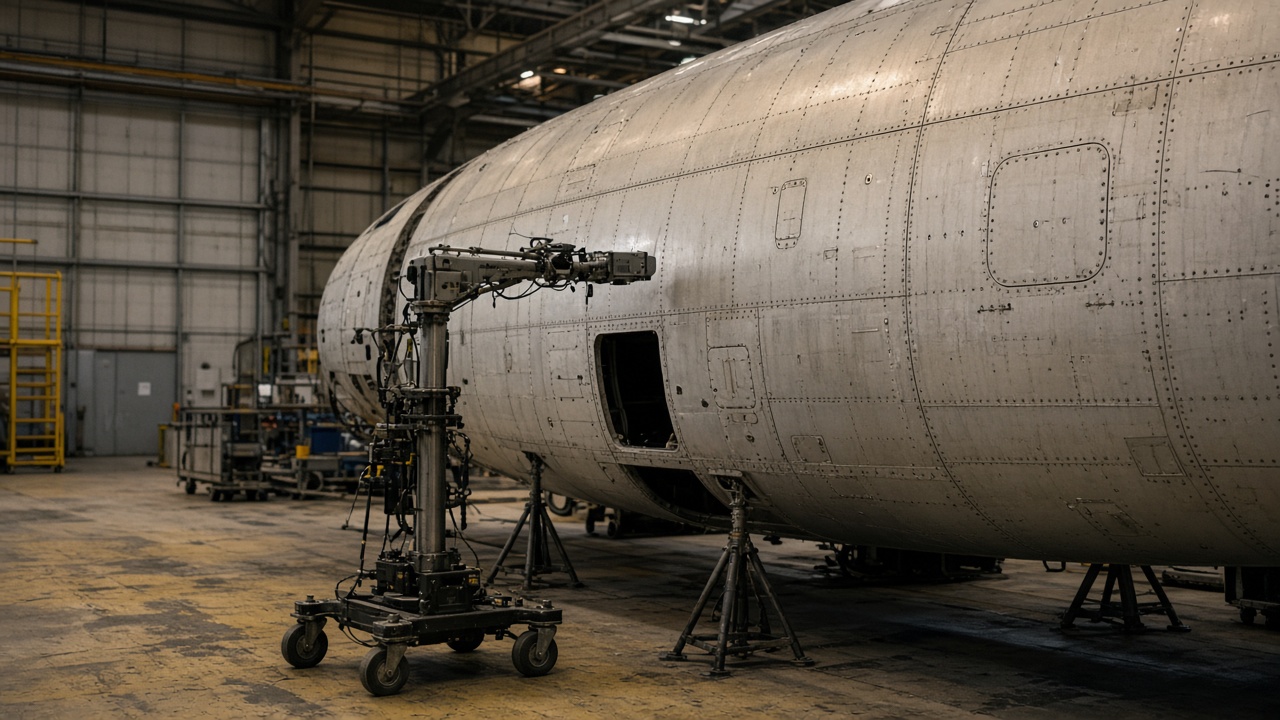
MediaTek’s Genio 510 edge AI platform is running automated visual inspection on airframe panels inside a Taoyuan aviation maintenance hangar, a pilot that pairs Taiwan chip design with MRO workflows usually dominated by manual borescope checks.
What the pilot tests
Evergreen Aviation Technologies, the maintenance arm affiliated with Evergreen Group, mounted Genio 510 modules on rolling camera rigs that scan rivet lines and sealant beads on Boeing 737-800 lower fuselage sections. The model flags crack signatures and loose fasteners, sending annotated frames to human inspectors on tablets.
MediaTek said inference runs at 25 frames per second on-device, avoiding cloud uploads of sensitive airframe imagery. The hangar trial covers non-destructive inspection steps that previously required two technicians per shift.
Why aviation MRO cares
Taiwan’s MRO sector handles transit maintenance for regional carriers and cargo operators. Labor shortages after pandemic retirements pushed shops toward automation, but FAA and Taiwan CAA certification paths for AI-assisted inspection remain strict.
Evergreen Aviation executives emphasized the pilot is not an approval substitute. Human sign-off stays mandatory for airworthiness releases. The AI layer reduces rescan rates on repetitive panel walks, not final liability.
Chip angle for MediaTek
Genio 510 targets industrial vision with modest power draw, competing with Nvidia Jetson and Qualcomm RB series in factory and logistics pilots. Aviation adds a credibility layer: vibration, lighting shifts, and metallic glare stress models more than warehouse barcode tasks.
MediaTek shares rose with the broader AI hardware complex Wednesday, though server CPU demand still drives most investor focus. Edge wins in MRO could diversify revenue if airlines adopt licensed models across fleets.
Next certification steps
The Civil Aeronautics Administration said it will review documentation if Evergreen seeks to expand AI-assisted checks beyond the trial bay. Export of training data offshore is prohibited under the trial’s data-handling agreement.
If the hangar pilot graduates to line maintenance, Taiwan would host another example of AI silicon moving from consumer gadgets to regulated infrastructure—slowly, and under human supervision.
Training data and limits
Evergreen Aviation said models train only on de-identified panel images captured in the trial bay, with augmentation for glare and shadow. MediaTek engineers sit on site twice weekly to tune thresholds when false positives spike on polished aluminum.
Competing MRO shops in Singapore and Guangzhou run similar pilots with different chip vendors; certification timelines remain measured in years, not quarters. Taiwan’s advantage is dense maintenance traffic through Taoyuan airport transit checks.
Insurance underwriters for MRO operators asked whether AI-assisted logs change liability splits; lawyers said human sign-offs remain the contract backstop until regulators publish explicit guidance.
Evergreen Aviation plans a second trial bay for narrow-body nose sections if false-positive rates stay below 5 percent through December. MediaTek would license model updates quarterly rather than shipping new silicon, a software revenue angle the chip designer wants to expand.
Commercial path
MediaTek sells Genio modules on board-level kits priced for industrial batches above 1,000 units. Aviation volumes are tiny compared with smart cameras, but reference wins help sales teams pitching factory automation on the island.