Handong Global University oceanographers published the first high-resolution heat map of the Tsushima Current’s meanders off Korea’s southeast coast, data offshore wind developers say they need before anchoring floating turbines in water deeper than 80 meters.
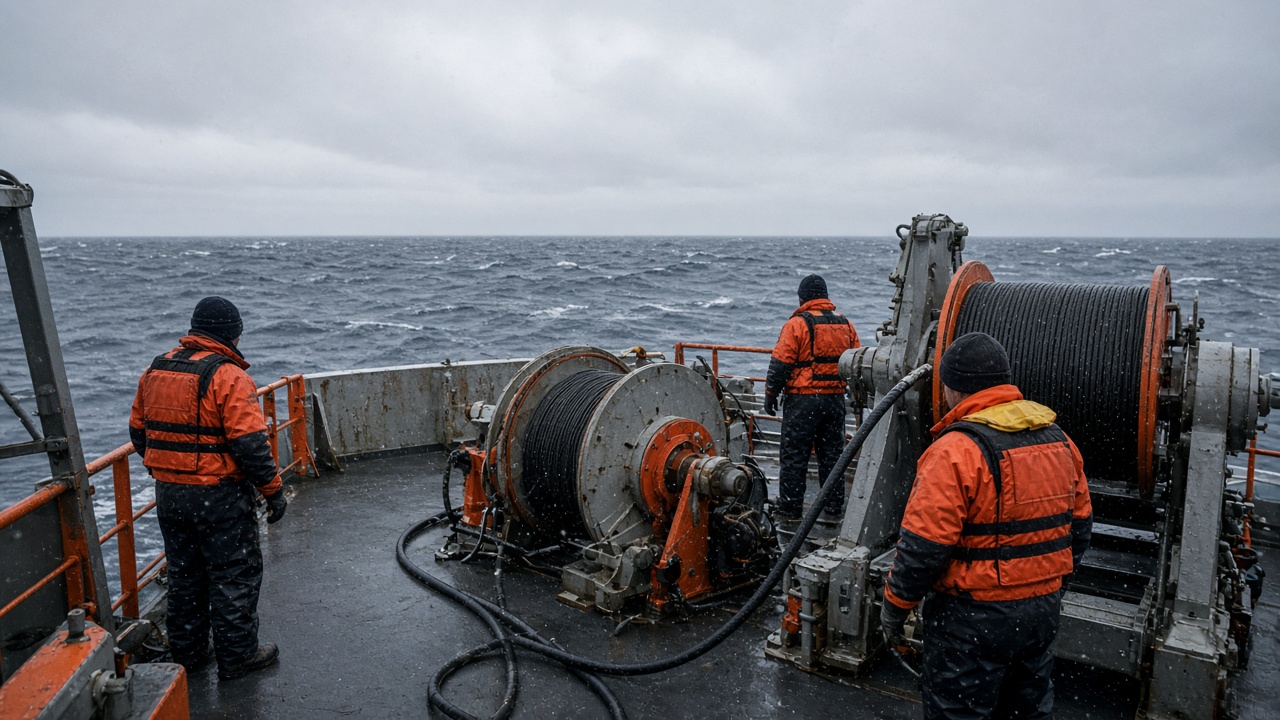
The team dropped autonomous profilers for six weeks from a research vessel operating between Ulsan and Pohang, capturing how warm Kuroshio filaments detach and push heat toward proposed lease blocks. Earlier models relied on satellite skin temperatures that missed subsurface spikes affecting cable burial depths.
Why current heat matters
Floating platforms use dynamic cables that fatigue faster in warm, turbulent layers. Developers planning 2028 auctions asked the Ministry of Oceans and Fisheries for localized current data after European projects faced costly redesigns when unseen eddies increased mooring loads.
Handong’s map shows a persistent warm tongue near 129.5 degrees east longitude that could shift turbine maintenance windows by two weeks each summer, the lead author said. “You cannot guess that from land-based wind models,” she added.
Policy links
Korea’s offshore wind roadmap targets 14.3 gigawatts by 2030, but local fishermen have protested siting near squid grounds. Handong researchers said their work does not pick winners among lease blocks but gives negotiators objective layers to discuss with communities.
Next research steps
The Korea Institute of Ocean Science and Technology will merge Handong’s profiles into its national marine atlas next quarter. Floating-turbine consortia including domestic shipbuilders and European utilities funded part of the cruise under a shared R&D grant.
Climate scientists unconnected to the project said the dataset will also help model typhoon intensification as warm currents feed storms tracking toward Japan and Korea. Offshore wind developers, though, are focused on the more mundane question of where anchors hold through monsoon seasons.
Fisher cooperatives in Gyeongbuk said they want Handong’s heat maps overlaid with squid catch data before endorsing any lease boundaries, a demand researchers said they could accommodate in a follow-on study funded by provincial grants.
Wind developers noted that mooring vendors from Europe requested the Tsushima profiles as part of insurance submissions due in January.