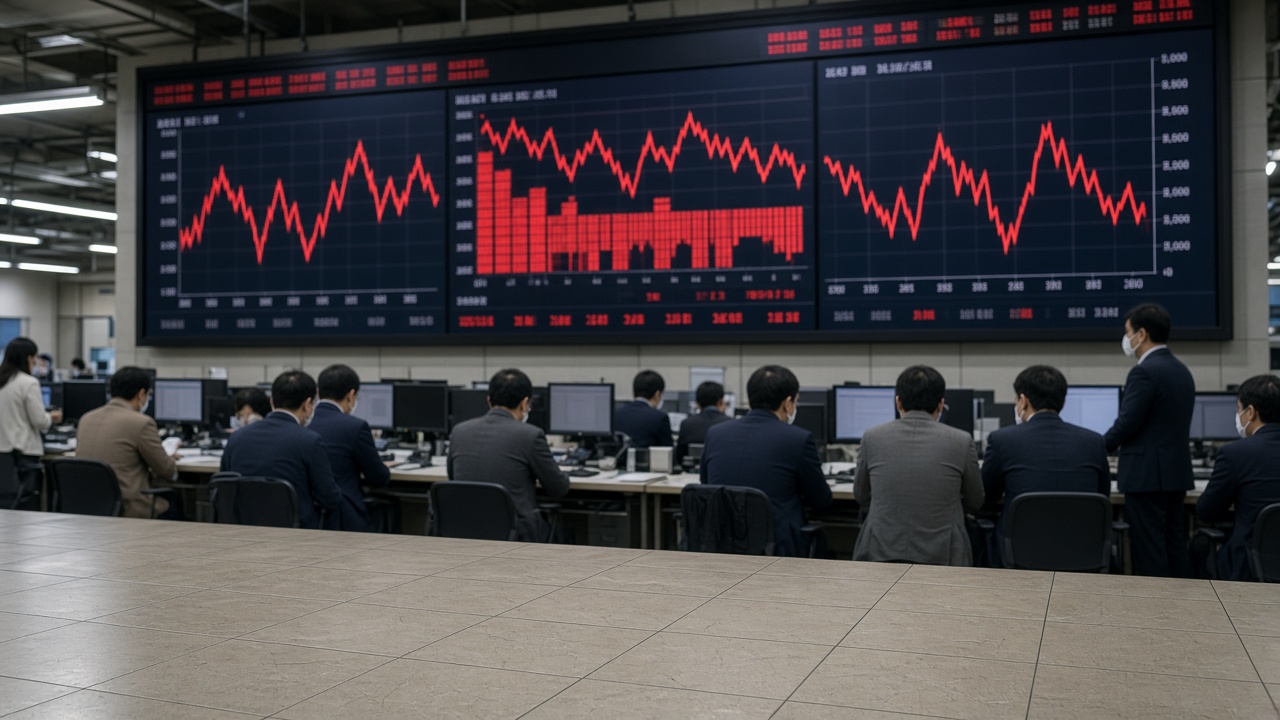
Foreign investors unloaded a net 1.9 trillion won of Korean equities Wednesday, pulling the KRX composite down 136.46 points to a 5,512.33 close as SK hynix, Samsung Electronics and other AI-supply names tracked an overnight slump in U.S. chip equities.
The session opened weaker after Nasdaq losses, then accelerated when program sell orders stacked up on the Kospi 200 futures contract. The exchange operator halted program selling for five minutes mid-morning when futures fell more than five percent below the prior close, the first such pause since April’s tariff scare.
Who sold and who bought
Institutions joined foreigners with a net 112 billion won of sales, while retail accounts bought a net 1.84 trillion won, Korea Exchange data show. Brokers said much of the retail flow went into state-backed stabilization funds and dividend ETFs as individuals tried to average down on memory makers.
Samsung Electronics fell 3.8 percent to 98,400 won. SK hynix slid 2.1 percent to 566,000 won after hitting a record last week. Hanwha Aerospace and other defense names that had rallied on export headlines also retreated as foreigners trimmed crowded trades.
Won and bonds
The won weakened to 1,347.2 per dollar in Seoul, its softest level since early April, as risk-off flows met month-end importer demand. Three-year government bond yields dipped two basis points as traders priced a slower path for Bank of Korea cuts if financial conditions tighten.
Market commentators tied the selloff to growing skepticism about AI capital spending payoffs, echoing remarks from global bank executives questioning valuations on U.S. trading floors. Samsung Securities told clients that “profit-taking in AI hardware is spilling into Seoul because foreign ownership in memory stocks is at multi-year highs.”
What the close implies
Despite the drop, the composite remains above the 5,500 line that policymakers cited during recent retail investor outreach. Exchange data show short-selling volume rose but did not breach circuit thresholds. Traders said Thursday’s focus will be on whether foreigners return after U.S. CPI revisions, and on any follow-up comments from Financial Services Commission officials about margin lending—a topic that dominated political headlines Tuesday.
Exchange-traded funds tracking the Kospi saw record creations Tuesday as advisors steered pension clients toward passive exposure, a flow that reversed partially Wednesday when foreigners sold index futures hedges. Derivatives desks said basis between cash and futures widened two ticks during the sidecar pause.
Credit strategists at two Seoul banks said they would watch overnight U.S. guidance from memory-equipment suppliers before sizing new long positions, noting that retail stabilization bids rarely offset multi-day foreign outflows.