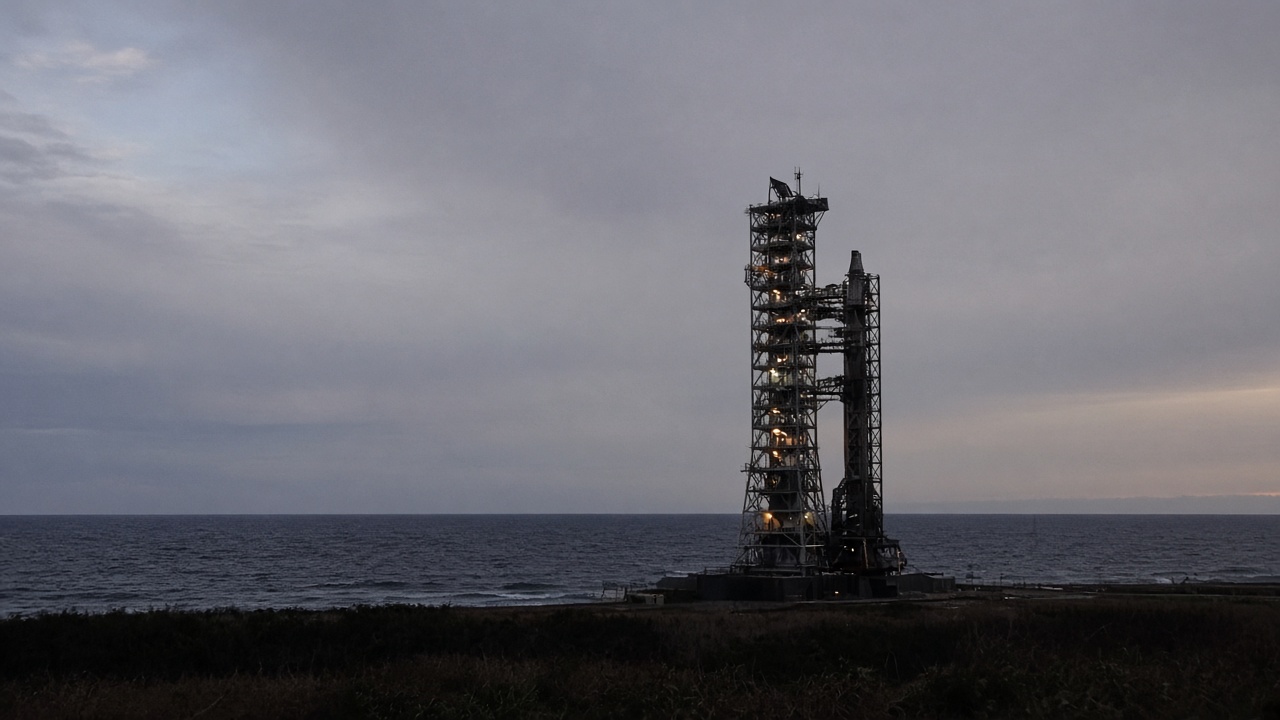
The Japan Aerospace Exploration Agency said Monday the Martian Moons eXploration spacecraft successfully separated from the H3 rocket’s second stage on Oct. 20 and has begun its cruise toward Mars, closing the backup launch window that had remained open through Nov. 9 at the Tanegashima Space Center.
Flight timeline
H3 Flight 10 lifted off at 4:41 a.m. Japan Standard Time with the MMX probe encapsulated in the long fairing configuration. JAXA’s published flight plan shows the second stage performed two burns, with spacecraft separation about one hour and eleven minutes after liftoff onto a Mars transfer trajectory. Controllers at the Tsukuba Space Center reported nominal telemetry during the first daily pass after separation.
Why the window mattered
Mars missions face tight planetary-alignment periods. Holding a reserve window through early November gave managers slack for weather or ground-system checks without rebuilding the entire campaign. Because Oct. 20 succeeded, engineers power-cycled backup range assets and redirected tracking antennas toward deep-space navigation exercises planned for December.
Science ahead
MMX will survey Phobos and Deimos before attempting a sample return from Phobos—a first for Japan. University teams participating in instrument calibration said cruise-phase checkout of the gamma-ray spectrometer will dominate November operations. Public outreach events at science museums in Saitama and Fukuoka will use model orbits updated with post-launch ephemeris data.
Industrial spillover
Successful H3 insertion keeps Mitsubishi Heavy Industries’ launch manifest on schedule for a planned QZS navigation satellite later this fiscal year. Component suppliers in Nagoya said they will shift production slots from MMX contingency builds to commercial satellite buses once JAXA declares cruise phase stable—expected mid-November if thruster firings stay within margins.
Tracking network
Deep-space antennas at Usuda and Uchinoura will carry navigation fixes through November before ESA ground stations join cooperative tracking tests. JAXA’s public timeline shows a Mars flyby rehearsal in 2027 before orbit insertion around the Martian moons in 2028 under current plans.
Student outreach programs in Kyushu will broadcast cruise-phase telemetry readings with five-minute delays to classroom displays, using data scrubbed of proprietary instrument coefficients.
Ground teams will rehearse solar-array deployment sequences in a Tsukuba clean room while cruise telemetry stays green. Any anomaly would consume part of the remaining backup window, but managers said fuel margins remain within Monte Carlo simulations run before launch.
Reader checklist
Track official filings rather than social clips. Ministry and league PDFs remain the authoritative record when timelines slip. Save receipts, ballot numbers and clinic vouchers until deadlines pass. If a vendor changes terms mid-season, ask for written confirmation before you spend against a promotion or subsidy.
Local desks will update figures when agencies publish revisions; morning numbers can move once Tokyo markets finish absorbing overnight foreign news.