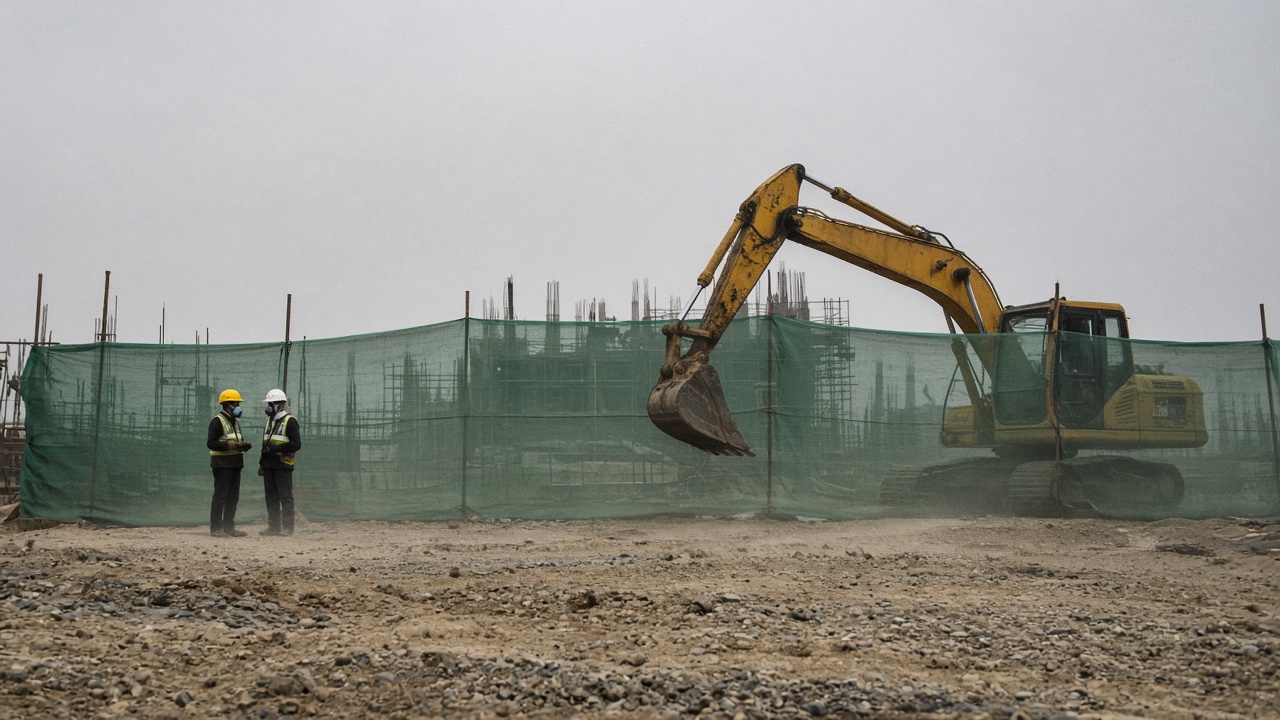
We should stop pretending that another GRAP Stage-II notification, by itself, will clear Delhi’s air. The Commission for Air Quality Management has the legal toolkit; what it lacks is visible, meter-by-meter enforcement on construction dust and truck diversion that residents can verify with a phone camera.
Orders without inspectors
Stage-II already bans non-essential construction and restricts diesel trucks on key corridors when the capital-wide air quality index crosses four hundred. Yet mobile monitoring teams still publish photos of uncovered sand piles within hours of fines being announced. That gap is not a technology problem. LiDAR and satellite hotspots already tell officials where to send crews. The failure is staffing and accountability at the municipal contractor level.
What would work
First, publish daily enforcement ledgers with geotagged photos tied to penalty receipts, not press releases. Second, link contractor payments on public projects to particulate readings at the site boundary, released weekly. Third, treat truck bypass routes like toll compliance: automatic number-plate recognition at entry points with published violation counts, not ad hoc checkpoints that snarl traffic without cutting emissions.
State governments blame stubble burning in Punjab and Haryana, and meteorology matters, but Delhi’s own construction economy contributes fine particulates year-round. Ignoring that while issuing farm fire notices is political convenience, not policy.
Our view
Residents complying with odd-even schemes and switching to cleaner fuels deserve proof that large emitters face equal scrutiny. CAQM should set a public target: eighty percent of flagged construction sites treated within two days of detection, or Stage-III triggers automatically regardless of political calendar. Without that discipline, Stage-II reads as a ritual ahead of court hearings, and the capital will breathe the same grey air next November.
Cleaner air is not a mystery. It is a maintenance job India’s richest metro still refuses to fund like one.
The court calendar trap
Every winter the same cycle repeats: AQI spikes, CAQM convenes, lawyers file affidavits, and municipal corporations promise extra water sprinklers. By the time monitors turn green after a rain spell, enforcement teams disperse to other duties. Residents remember the haze; officials remember the hearing date.
Breaking that cycle requires tying bureaucrats’ appraisal scores to particulate trends in their wards, not to the number of press notes issued. Delhi’s taxpayers already finance an elaborate monitoring grid. They should demand outcomes measured in suppressed dust events, not PowerPoint slides.