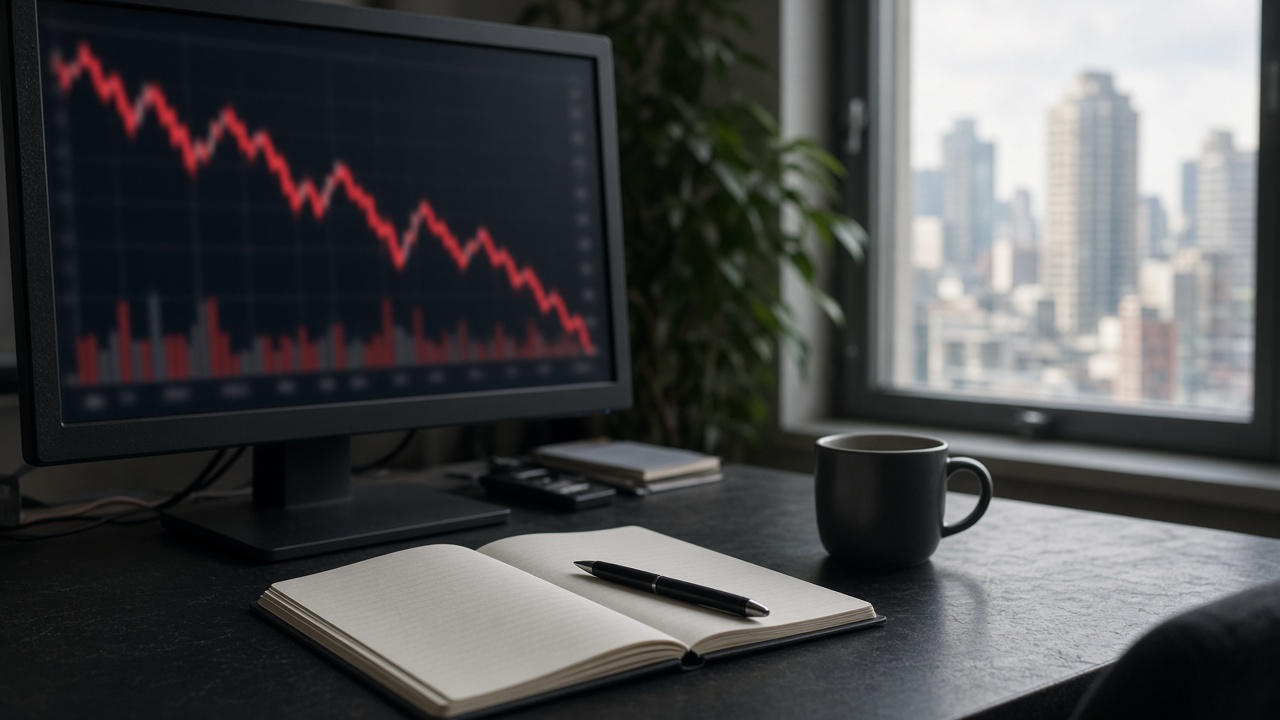
We judge that Seoul memory stocks overshot fundamentals on 5 November by treating a U.S. grid-savings bill as finished law. The Kospi’s 5.28 percent drop to 5,383.80 and foreign sales near 3.4 trillion won priced a Senate outcome that still requires committee drafts, floor time, and likely conference negotiation before any binding data-center cap reaches hyperscalers.
What actually moved
Samsung Electronics and SK hynix led losses on AI demand fear, not on published Korean export cancellations. DRAM spot indicators did not flash distress in parallel; the move was portfolio de-risking after U.S. midterm narratives, not fab guidance cuts.
Why the overreaction hurts
Retail holders who bought the AI build-out thesis saw paper losses tied to Washington rhetoric they cannot hedge on domestic holidays. Pension funds rebalance on offshore signals; when those signals are legislative noise, home-market price discovery distorts.
What would justify the rout
We would accept the selloff if U.S. committees published enforceable megawatt caps with near-term compliance dates, or if Korean customs reported November DRAM export declines beyond seasonality. Neither appeared before the close.
Policy realism
Data-center power debates are real, but U.S. federalism splits authority across states already granting permits. A grid-savings label on campaign sites is not a purchase order cancellation for HBM stacks.
Our call
Supervisors should urge disclosure of foreign-flow drivers without blocking legitimate hedging, but investors should separate bill drafts from fab order books until votes occur. Monday risk committees should mark regulation scenarios, not assume enacted law.
Institutional response
We are not asking the Bank of Korea to intervene in equities; we are asking market literacy. When bill summaries circulate on social feeds faster than committee PDFs, domestic supervisors should push issuers to flag macro sensitivity in risk factors without turning every earnings call into a Washington seminar.
Closing view
We expect volatility until U.S. legislative text is public; until then, separating draft bills from fab order books remains the disciplined read for Korea’s AI supply chain investors.
We are not asking the Bank of Korea to intervene in equities; we are asking market literacy when bill summaries circulate faster than committee PDFs.