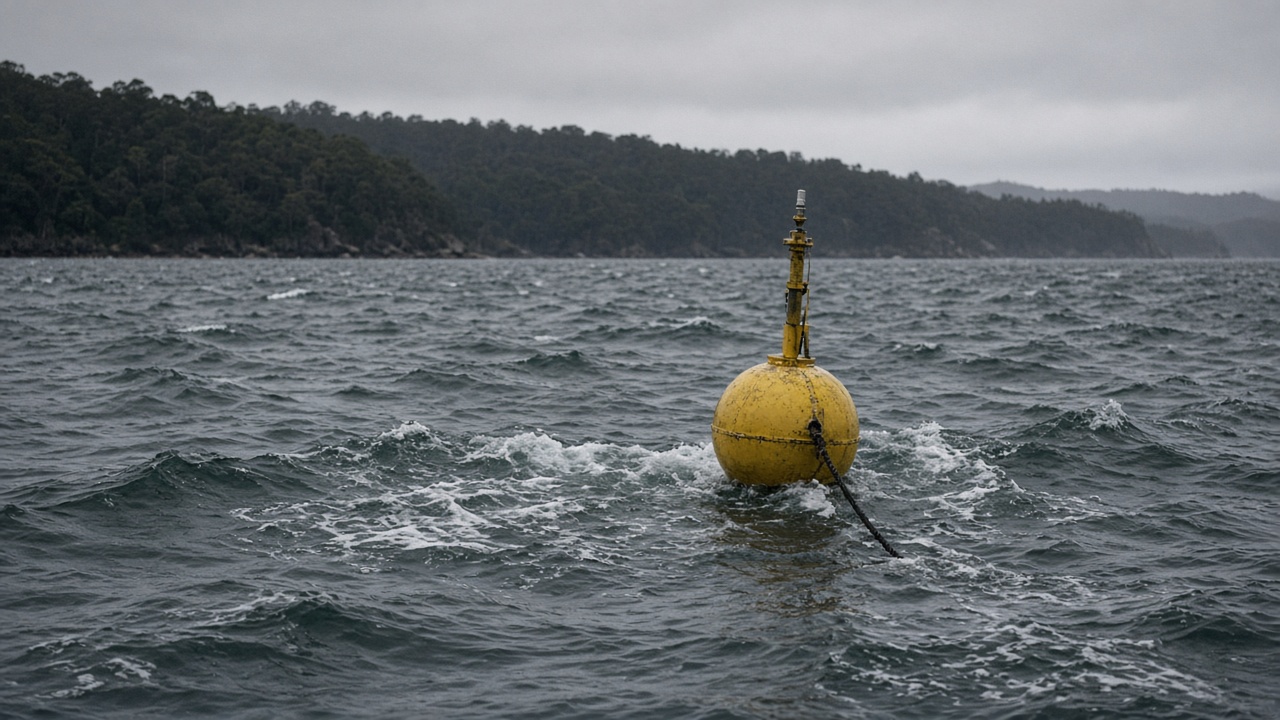
An Integrated Marine Observing System buoy moored off Maria Island logged a late-spring sea surface temperature of 18.9 degrees Celsius on Wednesday, the warmest reading for the week ending 5 November since the array began continuous logging in 2005.
Why Maria Island matters
The National Reference Station sits in eastern Tasmania's shelf waters where the East Australian Current extension meets sub-Antarctic water masses. IMOS technicians calibrate the buoy weekly by ferry from Triabunna; data feed global ocean dashboards used by the Intergovernmental Panel on Climate Change assessments.
CSIRO oceanographer Bernadette Sloyan said the spike followed a fortnight of weak southerly winds that suppressed upwelling, allowing a thin warm surface layer to persist. Sloyan cautioned against calling one week a trend, but noted it aligns with a 0.3-degree per decade warming slope in the station's November records.
Ecological knock-ons
University of Tasmania kelp researchers said giant kelp fronds off the Freycinet coast showed bleaching tips last weekend during dive surveys. Lobster fishers reported early moulting in pots set north of Schouten Island, behaviour they usually see closer to Christmas.
Salmon lease operators in Storm Bay said they increased aeration hours as dissolved oxygen dipped during calm warm nights. Huon Aquaculture told investors the event was manageable but added it to a list of climate variables monitored under its sustainability-linked loan.
Broader ocean context
Bureau of Meteorology seasonal outlooks already flagged above-median temperatures for Tasmanian waters this spring. IMOS data show the warm anomaly extends 200 kilometres offshore, not just a coastal skin effect.
Antarctic circumpolar researchers watching the 2025–26 season said low sea ice extent to the south may be contributing to warmer surface incoming, though attribution studies will take months.
What scientists watch next
If westerlies return, surface temperatures could normalise within days. If not, the Maria Island record could presage another marine heatwave like the 2015–16 event that compressed abalone fisheries.
IMOS will publish a bulletin Friday comparing the reading with satellite altimetry. For policymakers, the buoy is a early-warning wire for industries that still treat Tasmania as a cool-water refuge.
Why it matters locally
Readers across Australia are weighing these developments alongside cost-of-living pressures, mortgage resets and state budgets due before Christmas. Policy makers say the details above will feed into consultations already scheduled with industry groups, consumer advocates and regional councils. Analysts told InfoHandle they will revisit forecasts once the next official data prints land, because small revisions can shift household decisions more than headline rhetoric.