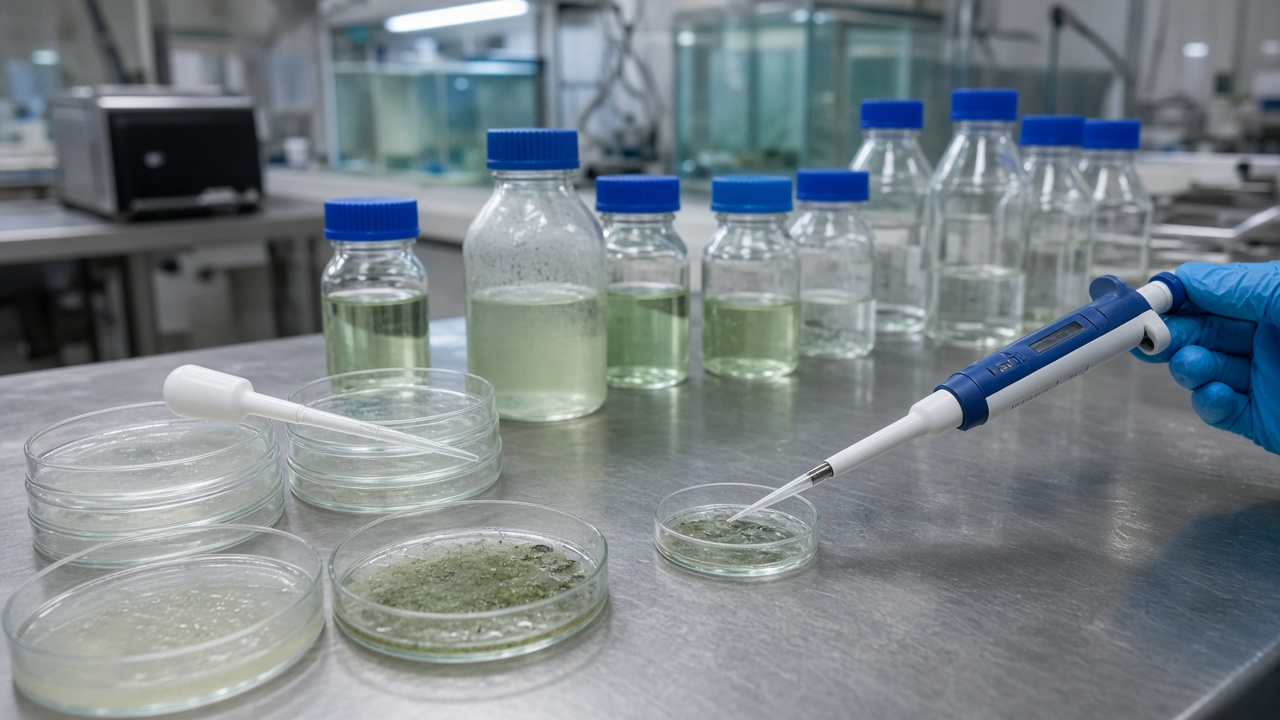
Scientists at a Nagasaki marine laboratory isolated a hydrothermal-vent bacterium that breaks down styrene packaging films in seawater tanks, offering a possible biological tool for coastal plastic waste without relying solely on incineration.
The strain, cultured from samples collected near the Okinawa Trough, produces enzymes that cleave polystyrene chains at room temperature in brine close to Japan’s coastal salinity. Peer review is pending, but the team published preliminary data through the Japan Agency for Marine-Earth Science and Technology’s open repository.
Experiment design
Researchers compared degradation rates on convenience-store bento trays and fishing-gear foam against control plastics. The vent isolate removed roughly 12 percent of film mass over 30 days without ultraviolet pretreatment—a threshold the ministry of environment considers promising for harbor cleanup pilots.
Scaling remains distant: fermentation volumes must grow before municipalities could deploy slurry treatments, and regulators will scrutinize release of modified microbes even in contained ports.
Policy link
Japan’s plastic resource circulation law pushes municipalities to cut incineration ash volumes. Nagasaki prefecture, with limited landfill space on islands, funded the work through a coastal sustainability grant tied to cruise-ship waste audits.
Commercial partners including shipping lines asked for assays on mixed waste streams containing food oils, which initially slowed enzyme activity until pretreatment filters were added.
Next steps
The lab will test consortia with existing sludge bacteria used in wastewater plants, aiming for a bench-scale reactor demonstration in 2027. If results hold, ports handling squid fleets could trial biological preprocessing before shipping refuse to mainland cement kilns.
Environmental context
Coastal municipalities logged rising styrene debris after typhoon wash-up events. Biological preprocessing could complement manual beach sweeps where incinerators face capacity limits during tourist season.