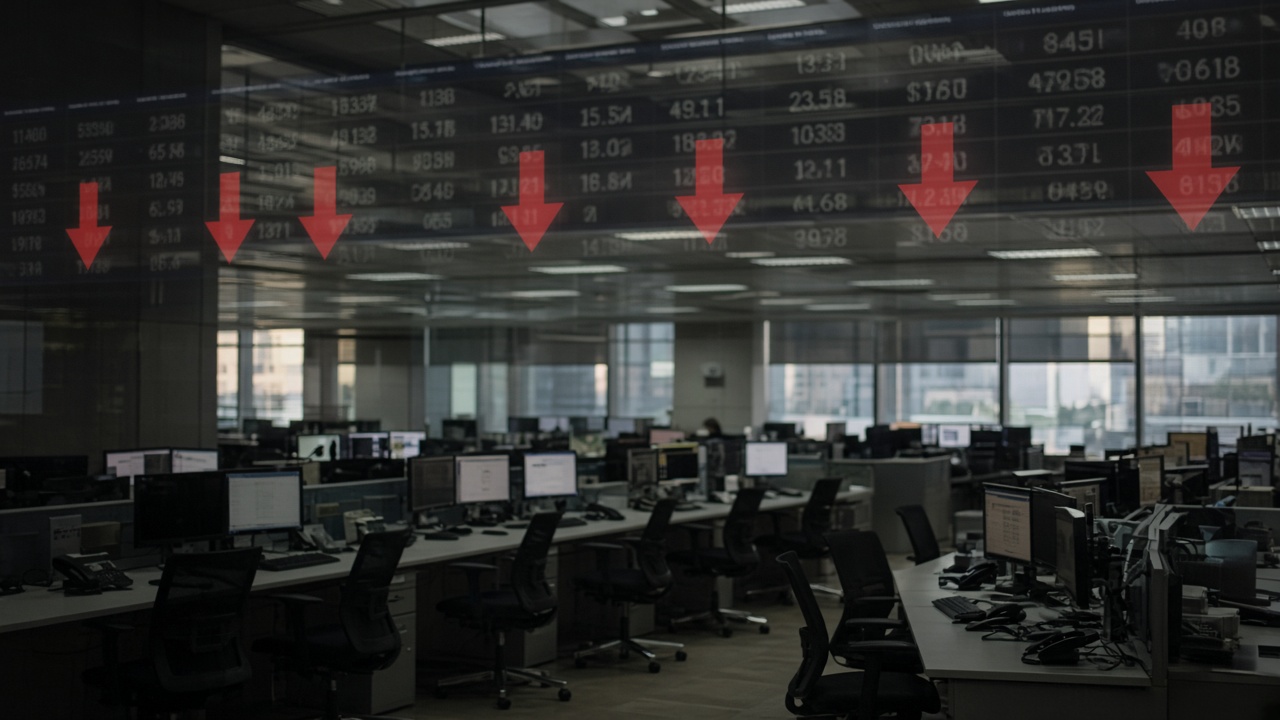
A fierce unwind in U.S. technology shares dragged major Asian benchmarks lower Friday, as fund managers priced in the possibility of tougher congressional scrutiny of artificial-intelligence spending and data-center builds after this week’s U.S. midterm results reshaped power in Washington. What began as a Wall Street repricing of richly valued chip and cloud names quickly became a region-wide risk-off session, with volatility gauges jumping and foreign investors stepping back from export-heavy equity markets that sit closest to the global semiconductor supply chain.
How the selling spread
Overnight moves on the Nasdaq Composite set the tone for the Asia trading day. Portfolio managers described a crowded trade—long duration, long AI infrastructure—suddenly facing a new political overlay: a Congress where the president’s party no longer controls the committee gavels that can slow permits, tighten disclosure, or redirect federal incentive programs tied to power, land use, and water for hyperscale facilities.
That fear is not a single bill or a scheduled vote; it is a shift in who sets hearings, markups, and oversight letters. For markets that had treated AI capex as an almost uninterrupted upward slope, even a plausible slowdown in the pace of U.S. approvals was enough to trigger de-risking.
Asia’s hardest-hit markets
Several major Asia-Pacific indexes registered outsized declines, extending a move that traders said was already feeding on itself through systematic strategies and cross-asset margin calls. South Korea’s KOSPI swung violently at the open before paring losses, reflecting both Samsung Electronics and SK hynix’s heavy weight in the index and the market’s acute sensitivity to the Philadelphia semiconductor equity basket. Japan’s Nikkei dropped sharply in yen terms, with chip-adjacent industrials and factory-automation names among the draggers in a session that observers compared to prior tariff-spooked episodes for sheer point swings.
Taiwan’s Taiex also sold off amid heavy turnover, underscoring how Taipei’s large-cap technology complex tracks global AI sentiment almost in real time. Singapore’s technology complex showed similar opening pressure, with some semiconductor equipment suppliers swinging double-digit percentages intraday before buyers nibbled at the lows—a pattern analysts cautioned could repeat while U.S. political uncertainty over AI rulemaking remains unresolved.
What investors say they are watching
Desk notes from regional brokerages focused on three channels: U.S. fiscal and permitting policy for power-hungry facilities; export-control and subsidy politics affecting gear and foundry economics; and the broader feedback loop where a weaker equity tape tightens financial conditions for private AI rounds. None of those channels produced a crisp, tradable headline in Asia’s Friday session, which may have deepened the jitters.
Currency markets added another layer of stress. As equities fell, several regional units weakened against the dollar, amplifying foreign investors’ apparent rush for liquidity. Korea’s session included commentary that implied volatility had climbed to multi-month highs, a classic sign that options-hedging flows were reinforcing cash selling.
What comes next
Without a scheduled U.S. policy catalyst, trading may remain two-way but fragile: valuations that reflected an AI-buildout boom now carry a political discount. For companies with order books tied to U.S. cloud capital expenditures, the next month of earnings commentary and supply-chain checks will matter as much as any macro print. Until Washington sketches a clearer oversight path, Asia’s tech-heavy benchmarks look likely to stay hypersensitive to overnight moves on Wall Street—especially anything that whips the Philadelphia Semiconductor Index.