Australia’s ambition to move beyond mining and exporting critical minerals has a new technical roadmap: national science agency CSIRO says two near-term manufacturing steps—prismatic battery cell cans and electrolytically deposited copper current-collector foil—line up with skills and feedstock already in the country.
The report, released at the start of November, asks a deliberately practical question: what would it take to turn more local resources into the parts inside every cell? It answers by pairing aluminium impact extrusion for prismatic cans with a foil route that builds on copper electrorefining and electrowinning expertise rather than importing every micron-thin layer.
Why cans and foils first
Cell cans look simple but must contain volatile electrochemistry through charge cycles and mechanical stress. CSIRO’s authors note prismatic aluminium cans as a credible first plant output because Australia already produces packaging-grade aluminium and understands thin-walled metal forming from industries such as aerosol manufacturing.
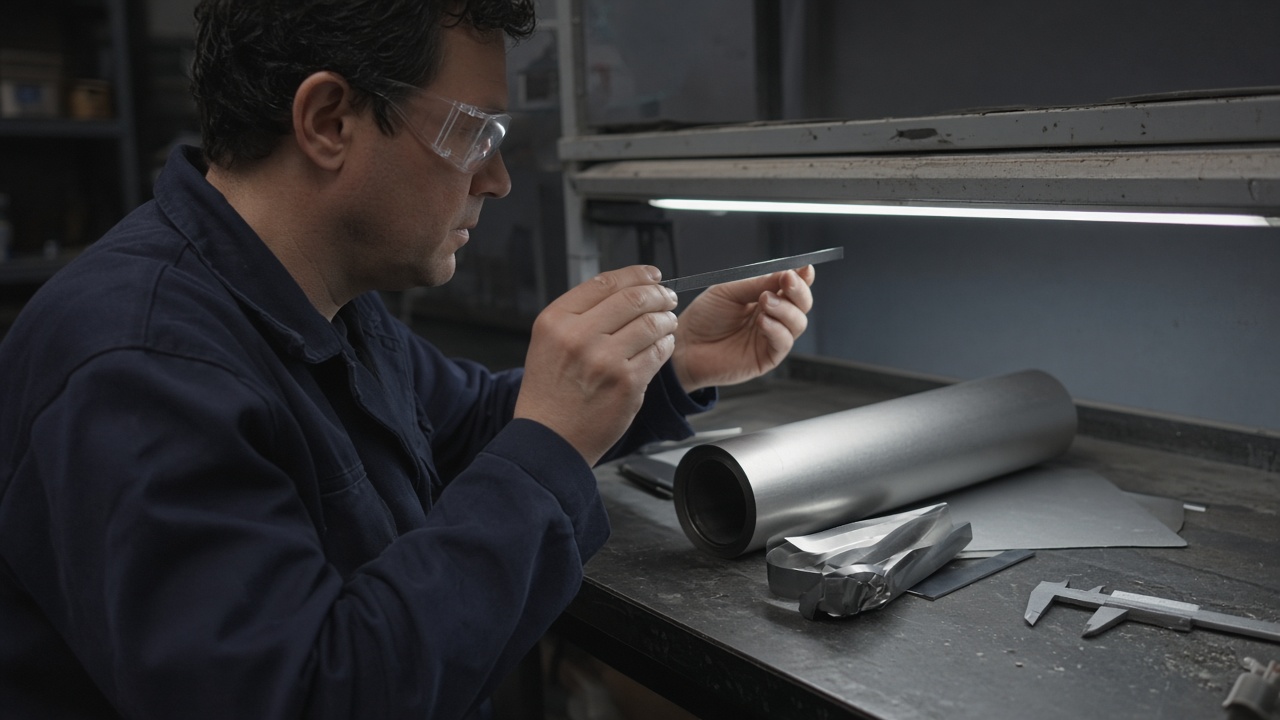
Copper foil on the anode side is typically only about six microns thick—roughly one-tenth the diameter of a human hair—while the cathode aluminium foil is about twice that thickness. Those tolerances mean yield and contamination control dominate economics. Electrolytic deposition, scaled in modular cells, is presented as a lower-capital path than some rolling-mill alternatives.
Safety infrastructure in the same envelope
CSIRO highlights its new Australian Battery Safety Facility as a companion piece: if Australia adds manufacturing steps, it needs independent test capacity for thermal runaway and abuse cases that regulators and OEM customers expect before cells ship into vehicles and stationary storage.
What success would change for workers
The politics of battery policy often stop at grant announcements. This roadmap points instead to concrete factory outputs—spooled foil and finished cans—that could sit inside pack integrators in postcode-concentrated industrial corridors in Victoria, Queensland and Western Australia.
Firms still face electricity cost, skills pipeline and offtake risks. Yet the sequencing argument is clear: Australia does not need to replicate an entire Korean or Chinese value chain on day one to capture margin that currently stays offshore.
Grid and industrial policy
Foil plants and can lines draw steady, high-quality power. That makes them natural partners for firming capacity—grid-scale batteries, demand response—or for locating beside existing aluminium smelter precincts where transmission is already sized for heavy load.
Workforce and training
Electrolytic foil lines need metallurgists, process engineers and maintenance techs familiar with thin-gauge handling. TAFE and university partnerships that treat foil defects as a first-class curriculum topic—not a footnote in general materials courses—will decide whether locals staff the line or contractors fly in.
Export angle
Domestic supply could feed Australian pack assemblers first, then export spooled foil if quality meets Korean and Japanese cell-maker specs. Meeting those tolerances is precisely why CSIRO couples the manufacturing roadmap with expanded safety testing infrastructure.