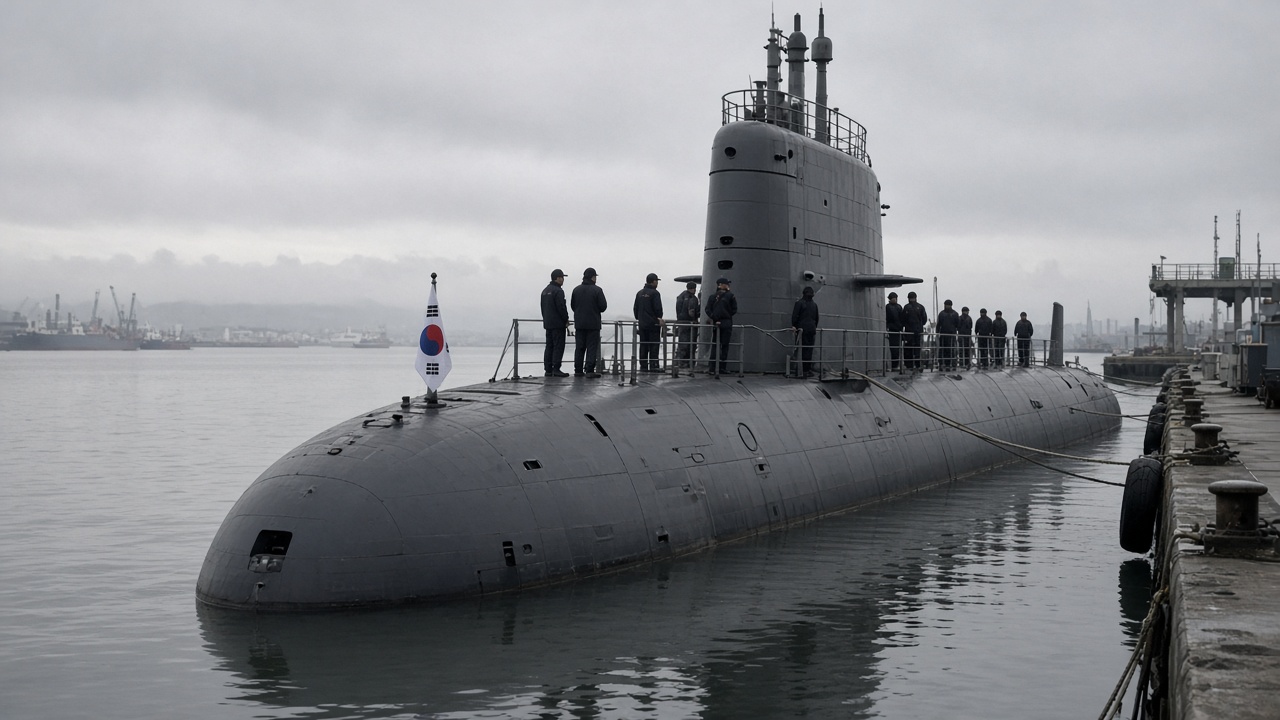
South Korea's defense acquisition review committee on Friday signed off on the basic plan for the Jang Bogo N nuclear-powered attack submarine program, moving the politically sensitive project toward a formal launch in 2027, the Defense Acquisition Program Administration said. The decision follows a May unveiling and an August exemption from the preliminary feasibility study usually required for major weapons buys.
What the panel approved
DAPA said the committee cleared the submarine's basic plan during its regular meeting, allowing planners to advance a vessel intended to be domestically developed and conventionally armed. Media reports have cited a target of at least three 8,000-ton boats with a program value of roughly 28.9 trillion won, though the agency said the budget remains under deliberation.
Officials told reporters the feasibility exemption was granted because of the project's classification level, enabling faster procurement timelines. Seoul secured U.S. consent to use high-assay, low-enriched uranium below 20 percent enrichment for propulsion—an arrangement necessary because South Korea does not enrich uranium for military use.
Industry and deterrence
DAPA plans to select a shipbuilder through open bidding in the first half of 2027 and sign a contract by year's end, with the government directly procuring small modular reactors for the hulls. The first boat is slated to launch in the mid-2030s and enter service after the late 2030s under timelines officials repeated on Friday.
The agency tied the submarine to countering North Korean nuclear and missile threats and to expanding underwater elements of the Kill Chain preemptive-strike architecture. The same meeting also approved a longer-range KTSSM-I Block-II surface-to-surface missile program and several smaller modernization items, including replacement of a presidential helicopter.
Political and alliance context
Nuclear-propelled but non-nuclear-armed submarines have been debated in Seoul for years as Pyongyang's submarine-launched missile tests improved. Washington's HALEU approval removed a key bottleneck, yet yard capacity, reactor supply chains, and parliamentary oversight of multi-decade spending will shape how quickly steel is cut.
Opposition lawmakers have previously demanded clearer cost ceilings before commitments harden; Friday's vote covers planning, not full appropriations. Hanwha Ocean and HD Hyundai Heavy Industries are among the yards expected to compete once bidding opens, though DAPA has not published draft requirements.
For now, the committee's approval gives the Lee administration a verified milestone on a capability South Korean naval strategists describe as central to persistent deterrence in contested waters. The next public checkpoint will be the National Assembly's review of multi-year funding once DAPA finalizes the price tag.