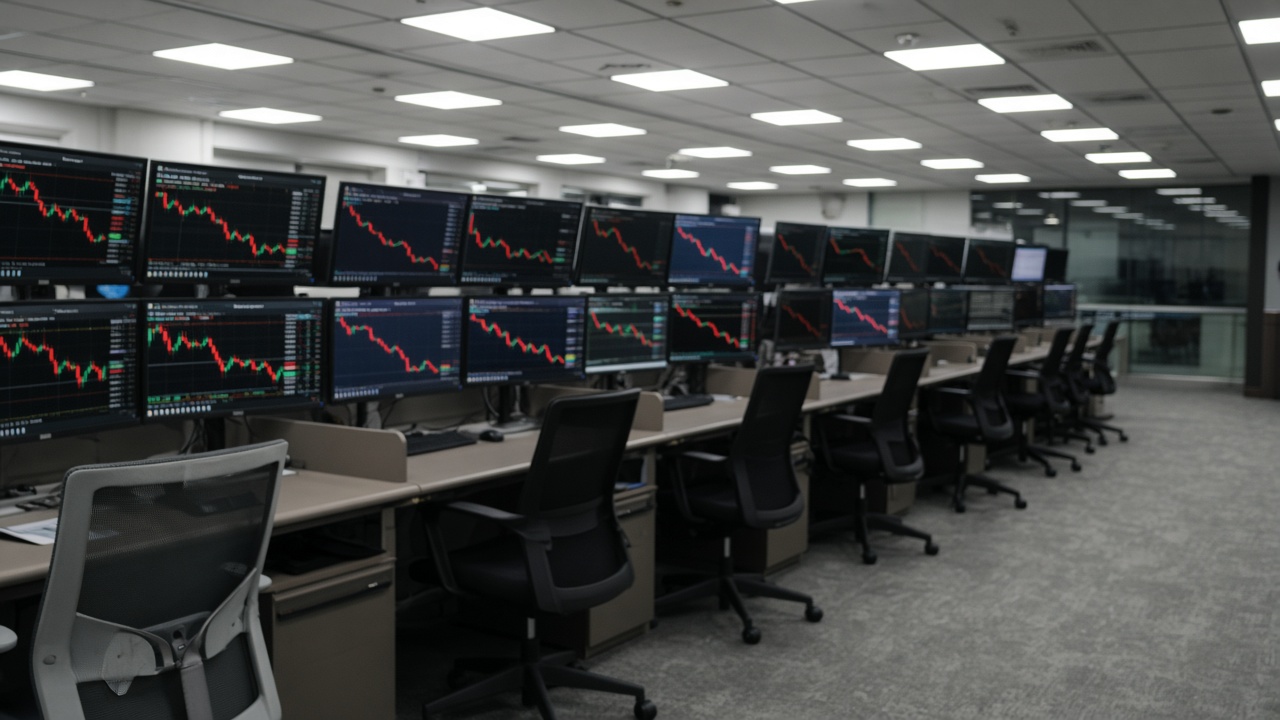
Friday’s rout was extreme enough to trigger a trading halt, but the flow picture underneath repeated an older KOSPI story: foreign desks pressed sell on the largest semiconductor weights while individual investors treated the dip as an entry ticket.
Who pressed sell
Yonhap’s market wrap quoted exchange statistics showing foreigners net-selling 2.82 trillion won of cash equities on the main board Friday, described as the heaviest daily net sale since February 26, 2021, when outflows reached a similar scale. Retail investors, by contrast, bought a net 2.3 trillion won on the same tally.
Institutional accounts were small net buyers—roughly 495.6 billion won in the same wire copy—but not large enough to bridge the gap. The imbalance helps explain why the headline index kept drifting after an early rebound attempt.
Where the orders clustered
Earlier November data sets from the Korea Exchange already showed offshore money unwinding prior months of accumulation in Samsung Electronics and SK hynix; Friday’s price moves widened that trend into names that had carried momentum metrics for most of the year.
The won’s Friday print—Yonhap noted a spot quote near 1,356.6 per dollar after official jawboning—also feeds into foreigners’ mark-to-market math when they repatriate won positions into global fund bases.
Volatility readings
The KOSPI 200 volatility gauge pushed to 64.74, described in wire copy as a three-month high. That is the kind of cross-asset signal options desks export to Tokyo and Singapore: Korea is no longer the quiet leg of a regional pair trade when the number punches above prior ranges.
Retail psychology
Korean retail brokerage apps have spent years conditioning users to buy single-name chips on red ticks when headlines cite “AI demand.” Friday’s tape tested that habit against a wall of foreign offering liquidity.
Rotation into domestic mid-caps or banks can happen fast when twin megacaps wobble, but index-level damage tends to come first because those two lines dominate calculation weights.
What comes next week
Traders will compare Friday’s close with weekly flow files and MSCI rebalance chatter. They will also listen for any additional macro stabilizers after the finance ministry’s margin-easing announcements.
Flow context from earlier in the month
November’s earlier prints already showed foreigners unwinding semiconductor overweight positions after months of buying into AI-themed rallies. Friday simply concentrated months of second-guessing into one session with higher nominal ticket sizes because absolute market caps grew over the year.
Domestic asset managers say privately that benchmark-relative tracking error budgets are exhausted: funds structurally hugging the KOSPI cannot ignore twin-line selloffs without written explanations to trustees.
Credit and derivatives channels
Prime brokerage desks noted upticks in requests to roll single-stock hedge overlays on chip names even though headline equity volumes dominated the tape. That behavior tends to lag spot selling by hours, meaning next week’s stories may include options skew shifts as much as cash-flow tallies.
For now, the arithmetic is blunt: until foreign selling slows or domestic institutions size up, individual dip-buying risks feeling brave rather than contrarian.