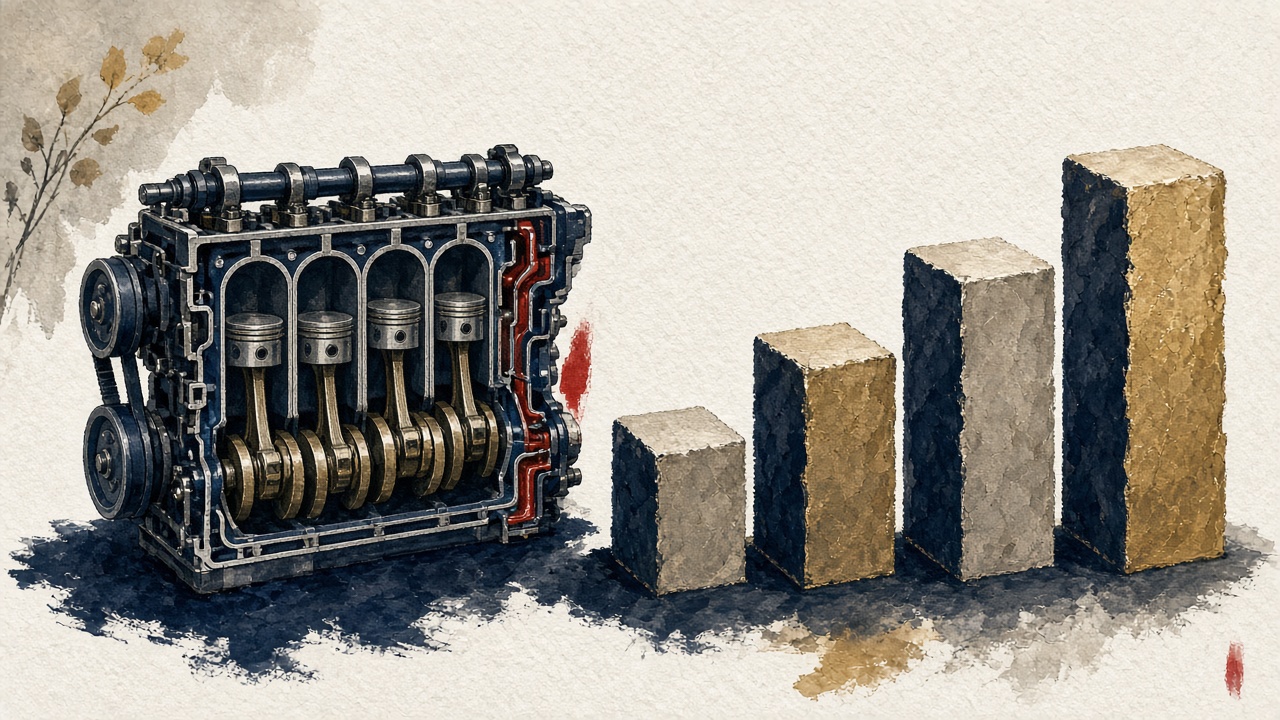
On 16 February 2021, a Tuesday Budget speech reported in The Business Times promised to narrow the cost gap between electric cars and petrol cars. Deputy Prime Minister Heng Swee Keat was quoted saying the Additional Registration Fee floor for electric cars would drop to zero for registrations from January 2022 to December 2023, and that road tax bands for electric cars would be adjusted so a mass-market electric car would sit closer to an internal-combustion equivalent. A few weeks later, LTA circular VRL/06/2021 dated 4 March 2021 wrote down what that meant in kilowatts: from 1 January 2022 the 30–90 kW and 90–230 kW brackets for electric cars would merge, and cars in the new wider bracket would use the lower bracket’s formula.
None of that rewrote the headline fact for the car park most people still drive home from the dealer: a petrol car continues to pay road tax from a schedule built on engine size in cubic centimetres, with steps at 600, 1,000, 1,600 and 3,000 cc. The same renewal screen that lands every six months was shaped on those thresholds before anyone added turbochargers and stop-start to small engines.

The line item almost every car owner pays
Parliament does not leave “road tax” as a vibe. The Road Traffic Act states that, subject to the Act and the rules, a tax must be charged for every vehicle used or kept on any road in Singapore. The tax is paid on a licence taken out by the person keeping the vehicle. The statute adds that sums accrue monthly at one-sixth of the semi-annual rate, which is why you can think of the published fees as six-month chunks that double for a full year.
Land Transport Authority’s consumer-facing “Vehicle Tax Structure” page spells out what that licence fee looks like for petrol, petrol–CNG, CNG or diesel cars: half-yearly road tax from a formula keyed to engine capacity brackets. Electric cars are keyed to motor power in kilowatts instead, and the agency tells petrol-electric owners to calculate twice and pay the higher of the engine-capacity result or the power-rating result.
Where the cubic centimetres enter the rules
The licensing rules define “cylinder capacity” the way an engine diagram would: either piston crown area times stroke times cylinder count, or swept volume per cylinder times cylinder count, expressed in cubic centimetres. That number is not an estimate from your workshop; it is the displacement stamped into the regulatory identity of the car.

Fees for many licences beginning on or after 1 January 2021 sit in the Twentieth Schedule of the Road Traffic (Motor Vehicles, Registration and Licensing) Rules. For conventional petrol cars, the half-yearly lines are written directly against cylinder capacity E: a flat amount for the smallest band, then “plus” a fixed dollar rate multiplied by (E − threshold) in each larger band. The Land Transport Authority republishes the same algebra with explicit dollar coefficients and a 0.782 multiplier in brackets on its website.
Five brackets, four different slopes
Start with the published schedule for a petrol car. At or below 600 cc the fee is $200 × 0.782 per half-year. Between 601 cc and 1,000 cc the base is $200 plus $0.125 for each cc above 600, and the bracket is scaled by 0.782. Between 1,001 cc and 1,600 cc the base becomes $250 plus $0.375 for each cc above 1,000, again scaled. Between 1,601 cc and 3,000 cc the base is $475 plus $0.75 per cc above 1,600, scaled. Above 3,000 cc the base is $1,525 plus $1 per cc above 3,000, scaled.
Multiplying the $0.125 and $0.375 coefficients by 0.782 gives a marginal half-yearly cost of about $0.09775 per cc in the 601–1,000 cc band and about $0.29325 per cc in the 1,001–1,600 cc band. Multiplying $0.75 by 0.782 yields about $0.5865 per cc between 1,601 cc and 3,000 cc. The slope after 1,600 cc is double the slope just below it.
The bracket edges bite in small dollars, not abstract “bands.” On that same consumer table, $200 × 0.782 is $156.40, so a 599 cc car and a 600 cc car both sit on the flat bottom rung at $156.40 for six months. The next cubic centimetre, 601 cc, lands in the sloped band, where one cc of margin lifts the half-yearly line to about $156.50. At 1,001 cc the calculation crosses into the next slope and lands near $195.79 for six months. At 1,601 cc it crosses again to about $372.04. None of that is dealer spin; it is arithmetic on the published coefficients.
A mid-size case keeps the ladder honest. Plug 2,000 cc into the 1,601–3,000 cc line: $475 + $0.75 × (2,000 − 1,600) = $775 inside the bracket; times 0.782 gives $606.05 for six months. The subsidiary rules state that an annual licence fee is double the half-yearly fee, which turns $606.05 into $1,212.10 per year before older-car surcharges or preferential schemes. The comparison that stings is not petrol versus diesel in this paragraph; it is what happens the moment the engine’s displacement moves from 1,600 cc to 1,601 cc, where the formula swaps in a doubled marginal rate for each subsequent cubic centimetre on that sloped segment.
Where the fleet actually lives on the ladder
Land Transport Authority’s car-by-cc table in Annual Vehicle Statistics 2025 counts passenger cars at year-end 2025 into the same buckets people argue about at dinner. There were 58,140 cars in the 1,000 cc and below band, 350,188 in the 1,001–1,600 cc band, 169,481 between 1,601 cc and 2,000 cc, 68,319 between 2,001 cc and 3,000 cc, and 13,761 in the band above 3,000 cc, for 659,889 cars total. The footnote is explicit: taxis and tax-exempted cars are out of that table.
Three hundred fifty thousand one hundred and eighty-eight divided by six hundred fifty-nine thousand eight hundred and eighty-nine is about 53.1%. In plain terms, more than half of the cars counted in that release sit in the 1,001–1,600 cc band, paying on the ~$0.29325 per cc marginal half-yearly slope until they cross 1,600 cc and the marginal rate doubles. That share is why showrooms still advertise “1,600 cc” and “2,000 cc” class cars as more than marketing copy.
Why 1,600 cc keeps showing up beside COE
Road tax is not the same instrument as the Certificate of Entitlement, but buyers see the same 1,600 cc line twice. Land Transport Authority’s motor-vehicle population note for COE categories, in the same statistical compendium as the cc table, states the quota split for cars registered with COEs from the May 2022 first bidding exercise onward: Category A covers non-fully electric cars with engines up to 1,600 cc and maximum power output up to 97 kW, while Category B covers cars above either threshold, with parallel splits for fully electric cars by kilowatts.
Road tax brackets therefore stack on top of a quota regime that already sorts many conventional cars into “up to 1,600 cc” versus “above.” A purchase decision that nudges displacement from just under that line to just above can move COE category and road-tax marginal rate in the same paperwork packet. The mechanisms are separate; the edge is shared.
What the Government said it is trying to do
In a September 2009 parliamentary reply published by the Ministry of Finance, then-Finance Minister Tharman Shanmugaratnam stated congestion control as the basic objective of road and vehicle taxes, managed through upfront ownership taxes, road tax, fuel tax, and ERP for peak congestion. The same reply adds that road taxes based on engine capacity are higher for bigger cars, which tend to use more fuel and produce more emissions than small cars.
The basic objective of our road and vehicle taxes is to control congestion on our roads. Through upfront ownership taxes, road tax and fuel tax, the Government seeks to manage road use. This is complemented by the ERP, which manages peak congestion.
Academic economists have treated the cc schedule as partly environmental. Ngee-Choon Chia and Sock-Yong Phang, writing in Environmental Economics and Policy Studies in 2001, describe progressivity by engine capacity as carrying environmental implications because larger engines tend to contribute more to urban air pollution.
This progressivity not only reflects the principle of social equity but also has environmental implications because large engine capacity vehicles, which tend to contribute more to the urban air pollution, are taxed at a higher rate.
A January 2022 white paper from the International Council on Clean Transportation notes that engine size is the most commonly used variable to calculate tax rates across the Asian and Asia-Pacific markets it surveyed. Singapore’s road tax line is ordinary in instrument choice even if the COE system next to it is not.

Land Transport Authority also reminds readers comparing electric and internal-combustion cars that ICE users typically pay on the order of $1,000 a year in fuel excise duty on 92 or 95 octane petrol, a usage charge electric road tax is designed to acknowledge differently. The policy story is layered: cc for many petrol cars, kilowatts for many electric cars, COE for the quantity cap, ERP and parking for trip timing and place.
What else stacks on the licence page
The same Vehicle Tax Structure page shows that diesel policy does not stop at engine capacity. For petrol-electric cars it still instructs you to calculate twice and take the higher road tax. For diesel and diesel-electric cars it lists separate six-monthly “special tax” lines, including a Euro IV compliant rate expressed as $0.625 per cc for six months less $100, subject to a $525 minimum each six months, on top of the capacity-based road tax route. Emission rebates or surcharges under successive schemes sit in another section of the same long document.
Readers hunting for a single villain in “road tax” often discover a shorter list of moving parts on the petrol path — brackets, slope changes, a half-year or full-year multiplier — and a longer list once diesel, plug-in or rebate lines apply. The 600/1,000/1,600/3,000 cc ladder is still the spine of the petrol formula published in plain sight.
The kilowatt half of the same form
None of this makes engine capacity a perfect map to grams of CO₂ per kilometre for every new turbo three-cylinder. It is the variable baked into the road-tax schedule most households still renew. For petrol-electrics, the agency’s instruction to calculate twice and pay the higher amount leaves both cc and kW on the same page. After the 2021 Budget headlines and the March 2021 circular, electric-car brackets moved on 1 January 2022; petrol formulas stayed anchored to displacement.

Back at the dealership spreadsheet, Deputy Prime Minister Heng’s February 2021 lines about EV road tax and the March 2021 circular sit in the same decade as small turbocharged engines that punch above their displacement on power. The renewal portal will keep asking for cubic centimetres on one line and, for plug-ins, maximum motor power on another. The thresholds at 600, 1,000, 1,600 and 3,000 cc are not market rumours; they are the rungs on the ladder the rules print next to E.