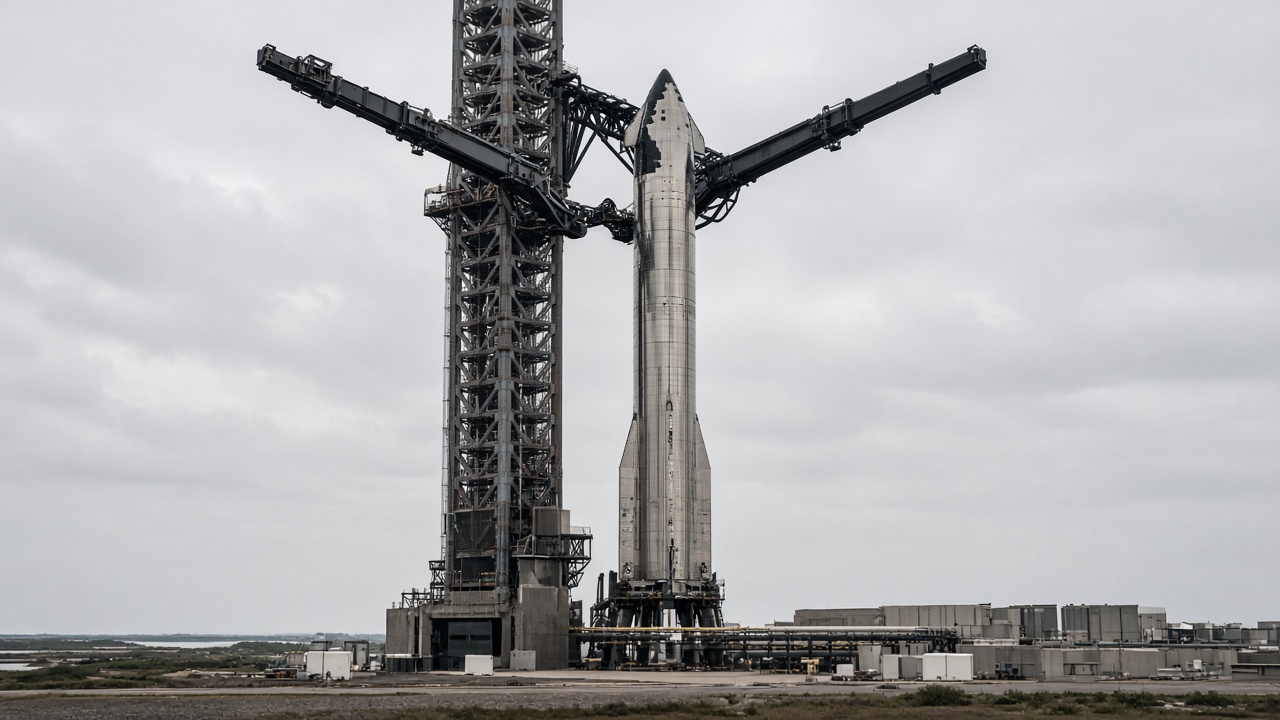
Elon Musk said SpaceX will try to catch both the Super Heavy booster and the Starship upper stage on the company’s next integrated test flight, a maneuver he framed as the missing piece in making the vehicle truly reusable. If both sections land in the launch tower’s mechanical arms intact, Musk wrote on Friday, it would be the first time every major piece of an orbital-class rocket came back from a mission without being lost to the ocean or scrapped.
SpaceX Vice President of Launch Kiko Dontchev told an industry audience on Thursday that the company is targeting November 13 for Starship Flight 15, according to reports from journalists at the UP.Summit. SpaceX has not published an official mission clock, and regulators can still shift the window, but the date is the first target tied directly to a company executive rather than FAA planning slides that had floated earlier November windows.
From booster catches to the harder ship recovery
SpaceX has already proved it can pluck the Super Heavy booster out of the sky with the Starbase tower’s chopstick arms, beginning with Flight 5 in October 2024. Flight 14, which reached orbit on September 28 and deployed 26 Starlink satellites, still ended with controlled splashdowns for both stages. The upcoming attempt would close that gap by trying to recover the ship itself after hypersonic re-entry, a belly-flop descent, a flip maneuver, and a precision hover aligned with the tower.
Musk told shareholders during SpaceX’s third-quarter earnings webcast that he puts the odds of catching the ship on this flight at “more likely than not,” while cautioning that success is not guaranteed. The company aired an animation during that call showing the ship swinging vertical above Boca Chica before settling into the arms, matching ground rehearsals SpaceX conducted with Ship 42 in September.
Hardware on the pad
Engineers spent late October putting the flight stack through its paces. Booster 22 fired all 33 Raptor engines in a full-duration static test at Pad 2 on October 25, and Ship 42 followed with engine burns simulating deorbit and ascent profiles, according to coverage from specialist launch trackers. Musk has said a double catch would clear the way for Flight 16, where both recovered sections would fly again—a milestone he has described as essential to lowering launch costs and scaling Starship for lunar and Mars ambitions.
China’s official Xinhua news service carried Musk’s announcement in its overnight world summary, underscoring how closely rival space programs and satellite operators watch Starship’s reuse campaign. A failed ship catch would not end the test series; Musk said SpaceX has additional vehicles staged and intends to accelerate flights into 2027 if Flight 15 falls short.
What changes if both stages stick the landing
Full recovery would mean SpaceX could inspect, refuel, and fly the same orbital hardware repeatedly instead of building new ships for every mission. That economics question matters beyond Starlink: NASA’s lunar lander variant and any deep-space cargo manifest depend on proving that Starship can launch often and cheaply enough to matter. Tower catches also avoid salt-water damage that complicates refurbishment after ocean landings.
For now the industry is waiting on a formal mission page and license paperwork. Until the arms close around a ship returning from orbit, Flight 15 remains a declaration of intent backed by pad tests and an executive target date—but not yet a completed feat in the logbooks.