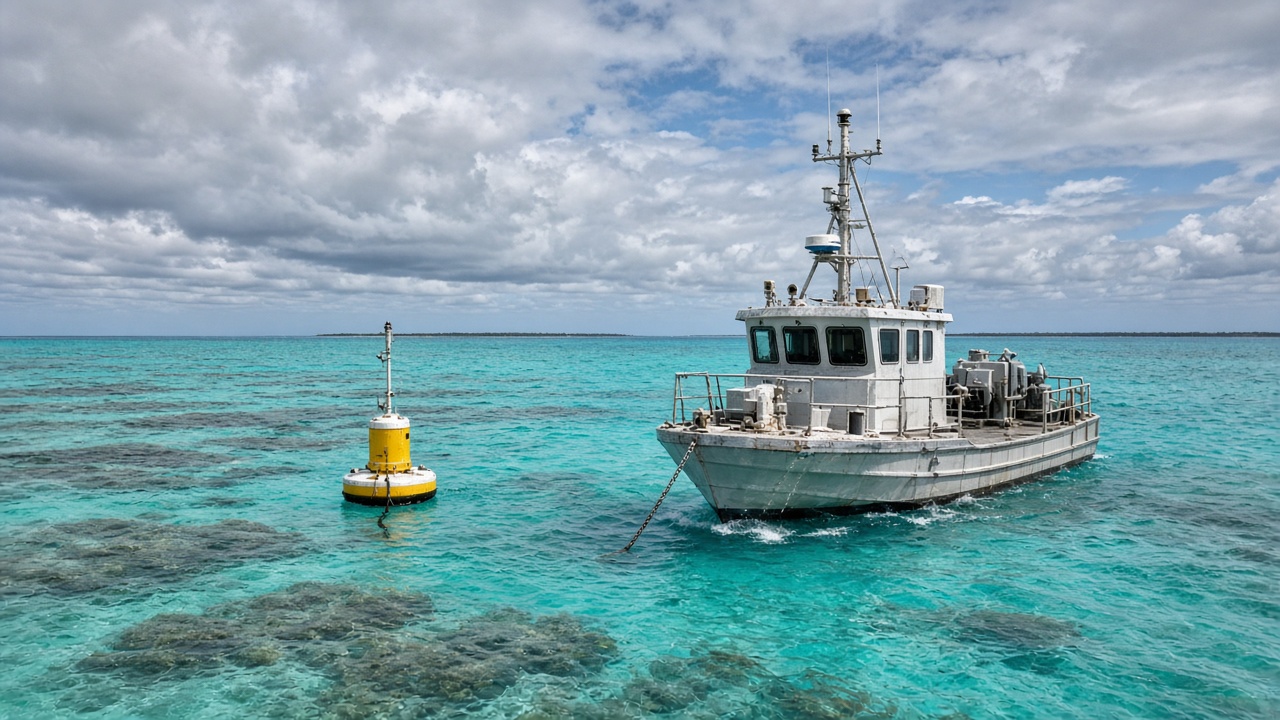
Australian Institute of Marine Science technicians deployed spawn-window acoustic sensors off Lizard Island on Monday night, hoping to log coral spawning pulses during November’s full moon and sharpen models that predict reef recovery after last summer’s bleaching.
Why sound matters
Corals release gametes in brief bursts that create crackling underwater noise detectable by hydrophones. Timing shifts with water temperature and lunar cues. Recording this year’s events gives scientists a baseline to compare with stressed reefs that spawned weakly after heat stress.
Field logistics
Crews left Cairns on Sunday, transiting outside cyclone watch zones. Sensors moor at 12 metres depth to avoid swell damage while staying within spawning layers. Data uploads via satellite each dawn so modellers in Townsville see results without waiting for the vessel’s return.
Management use
Great Barrier Reef Marine Park Authority planners use spawn maps to schedule tourism limits and research permits. Tourism operators asked for early warnings if spawning nights align with busy long-weekend charters. AIMS will publish a public blog after the week’s peak nights pass.
Climate backdrop
Sea surface temperatures off Queensland remain above long-term averages, but not at the extremes that triggered mass bleaching eighteen months ago. Scientists caution that one successful spawn does not erase structural damage on shallow flats. The sensors are one input among dive surveys and drone photogrammetry flights scheduled for December.
If acoustic peaks appear on schedule, reef funds may prioritise larval connectivity projects between Lizard Island and outer shelf reefs. Missed peaks would reinforce heat-stress warnings for the coming wet season.
Tourism coordination
Dive operators within the marine park agreed to night blackouts on spawn peaks, dimming deck lights so larvae are not pulled off reefs. Charter boats must file GPS tracks with park authorities to prove they stayed outside exclusion buffers. Violations risk permit suspensions during the lucrative winter season.
Data sharing
Acoustic files will upload to an open science repository after quality checks, letting universities calibrate reef models without chartering their own vessels. Collaborative grants already link James Cook University with AIMS on larval drift simulations that feed into crown-of-thorns control planning.
Cyclone contingency
Meteorologists flagged a low risk of late-season systems, but crews carried spare mooring lines and satellite phones in case evacuation windows narrow. Sensors detach automatically if wind thresholds trip, preventing reef damage from dragging hardware across coral heads during squalls.
Indigenous Sea Country groups received pre-spawn briefings on vessel movements, continuing a consultation pattern begun after earlier research disputes. Rangers may join night observations if weather stays calm, recording Traditional Owner knowledge alongside hydrophone timestamps.
Outreach staff will live-post only aggregate spawn numbers during peak nights, avoiding real-time maps that could draw unlicensed boats into sensitive reef zones. Compliance officers will patrol boat ramps near the island.