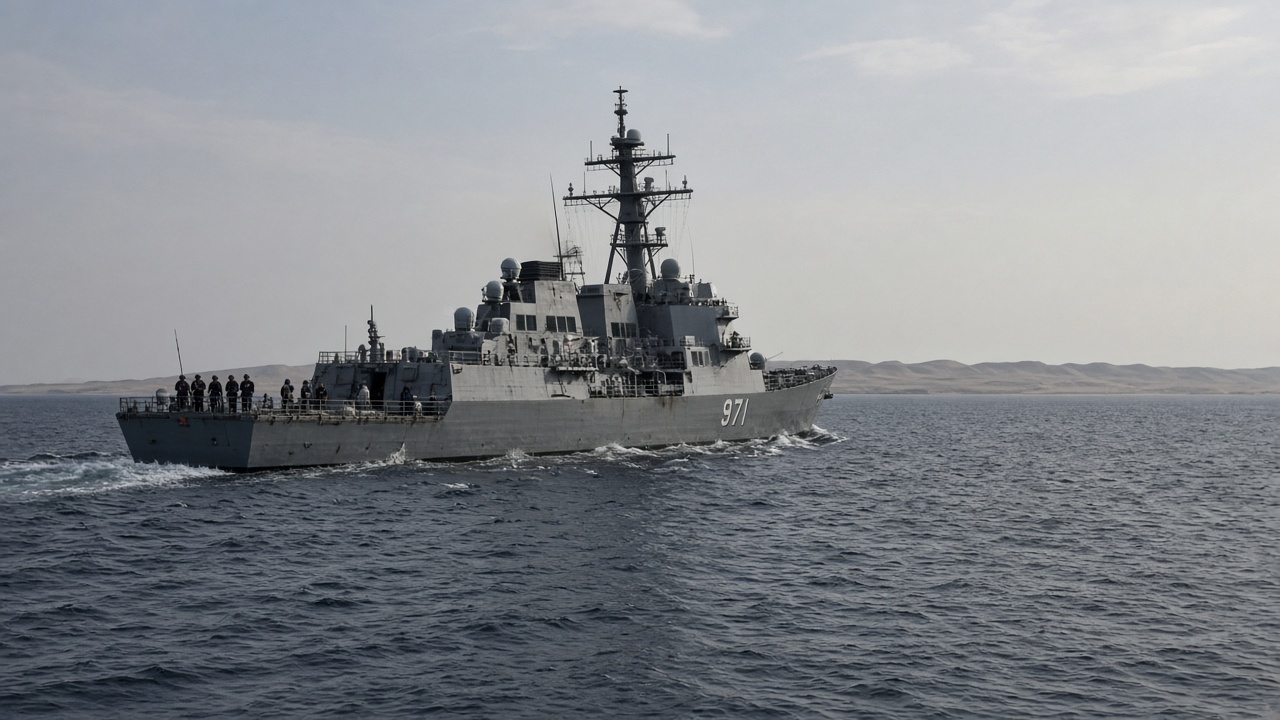
South Korea’s government cleared a revised deployment motion on Thursday that stretches the Cheonghae Unit’s operating area from the Gulf of Aden toward offshore waters south of Oman, near Port of Duqm and roughly 650 kilometres from the Strait of Hormuz, the foreign ministry said as Foreign Minister Cho Hyun flew to France for a Group of Seven ministerial session.
Seoul cast the shift as a maritime-security upgrade rather than direct entry into the U.S.-Iran fight, but the geography places the 300-strong contingent closer to the lanes where tanker fires and missile salvos have rattled Gulf markets in recent weeks.
New hardware on the table
The amended motion, which passed a vice-ministerial meeting, would add a maritime patrol aircraft, explosive-ordnance disposal personnel and unmanned mine-clearing equipment to the rotation that has focused on anti-piracy escorts since 2009. Defence officials told lawmakers the extra gear would let crews surveil wider sea space and respond to mine threats without permanently basing destroyers inside the strait.
National Assembly approval is still required, and opposition lawmakers have demanded a clearer explanation of rules of engagement if Cheonghae assets encounter Iranian or Houthi-linked traffic.
Diplomatic calendar
Cho is due in Marseille from Sunday through Wednesday for G7 talks hosted by France, with agenda items including Middle East developments, energy diversification and artificial-intelligence safety. Seoul said it accepted Paris’s invitation after joining an earlier ministerial in March.
Officials in Seoul are watching whether Cho can meet U.S. Secretary of State Marco Rubio on the sidelines to align the naval expansion with stalled consultations on nuclear-powered submarines and wider alliance burden-sharing. No meeting was confirmed before departure.
Why timing matters now
Washington has pressed allies for broader contributions to Hormuz security since commercial shipping came under repeated attack this autumn. South Korea’s move stops short of joining offensive strikes, but it signals willingness to patrol farther west as Korean refiners depend on Gulf crude and as domestic shipbuilders market mine-warfare systems abroad.
Analysts said the Duqm extension could accelerate port calls and logistics agreements with Oman while keeping the destroyer Cheonghae’s home rotations predictable for families in Jinhae. Parliament’s defense committee is expected to hold a closed briefing once the full motion text is published.
Industry groups in Ulsan and Geoje said mine-countermeasure exports could benefit if crews train on unmanned gear in the Indian Ocean, but they cautioned that publicity around Hormuz deployments can complicate commercial yard schedules already squeezed by naval refits.