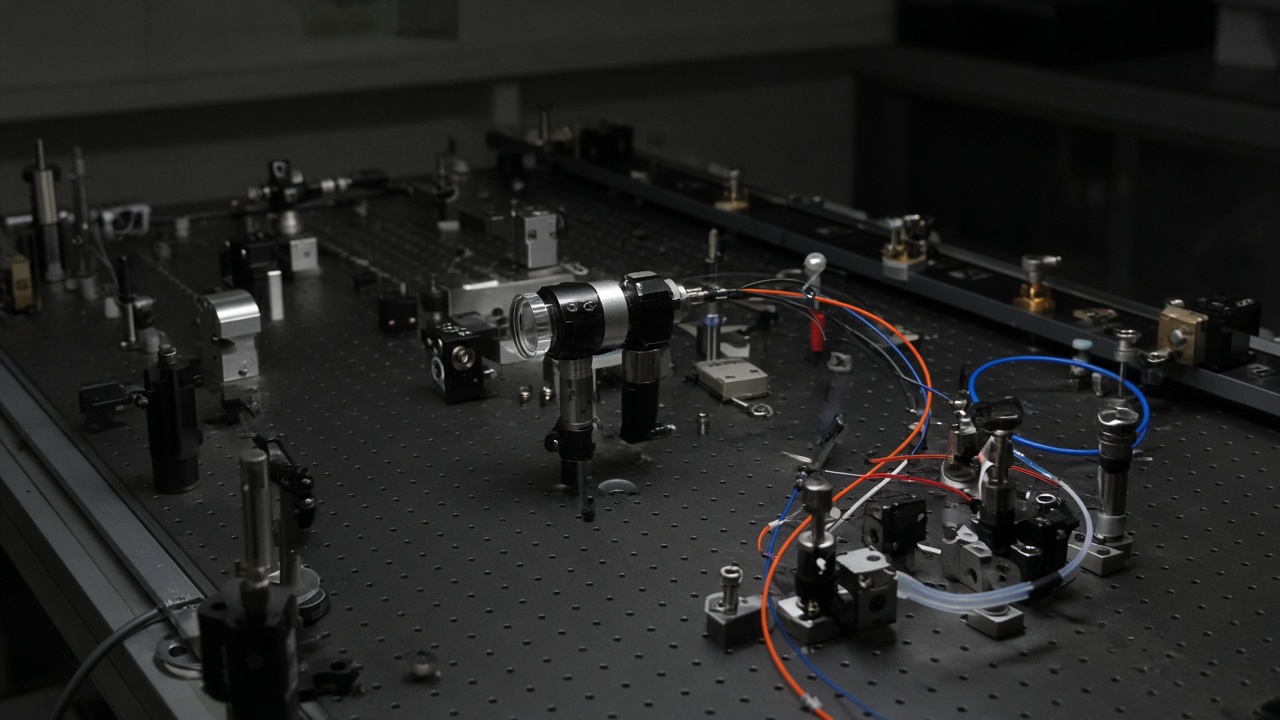
POSTECH researchers working with a domestic laser vendor published a trapped-ion qubit platform that sustained 99.92 percent single-qubit gate fidelity in Nature Electronics, targeting universities that cannot afford full dilution refrigerators for early error-correction experiments.
Why ions on a bench
Korea’s sovereign AI push focuses on GPUs, but the science ministry still funds compact quantum hardware for chemistry and materials labs. The team used ytterbium ions with fiber-delivered laser pulses stabilized by a PID loop running on commercial FPGAs, cutting the rack footprint to a single optical table.
Two-qubit gates remained lower, near 98.7 percent in the same paper, which honest reviewers noted is not yet fault-tolerant territory. The contribution is reproducibility: every component except the vacuum chamber is catalog parts available in Daejeon within a week.
Who might use it
National labs testing battery electrolytes want small quantum simulators co-located with synchrotron beamlines. POSTECH is pitching a service model: rent the table, ship ions weekly, keep graduate students away from liquid-helium bills.
Caveats
Ion traps still hate vibration from subway lines; the paper’s data came from a basement lab after midnight runs. Still, for Korean departments comparing grant dollars against U.S. imports, a credible Nature Electronics number gives administrators something firmer than a PowerPoint qubit.
Funding path
Regional universities without quantum majors can apply for paired grants that rent POSTECH bench time six months at a time. The program mirrors neutron-beam sharing already common among chemistry departments.