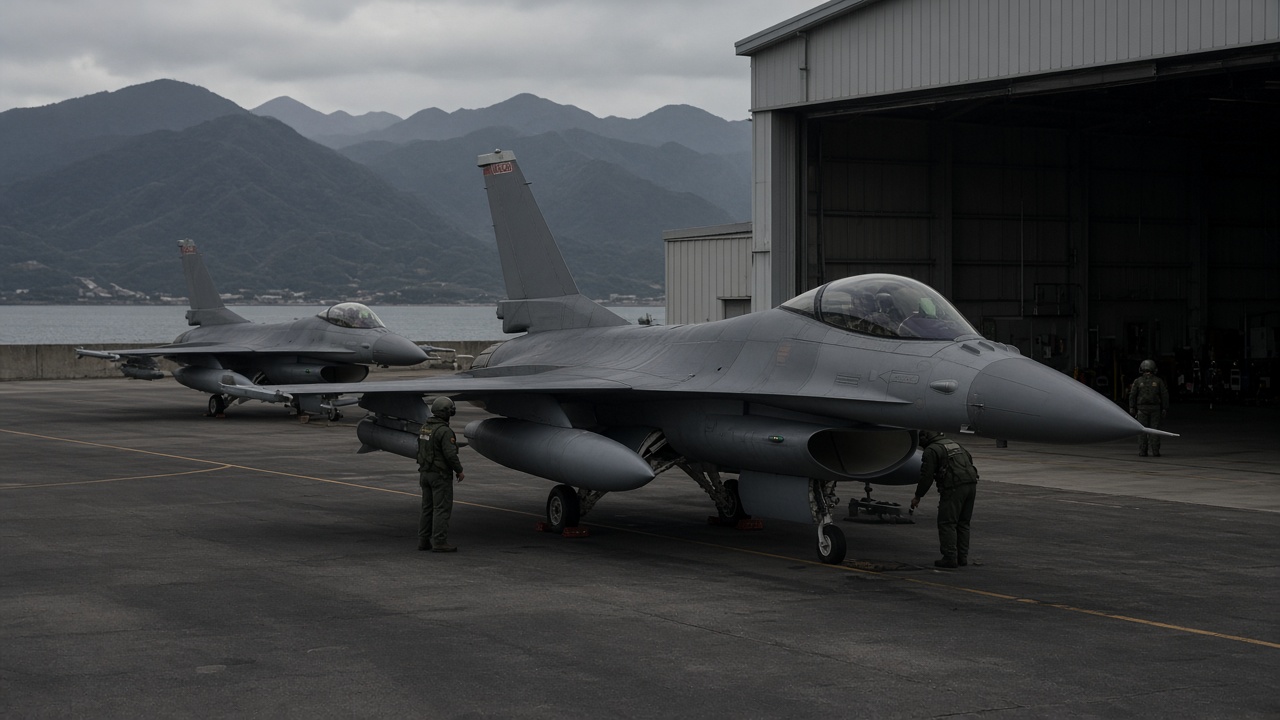
Taiwan’s Air Force said three F-16V Block 70 fighters landed at Chihhang Air Base in Taitung County on Sunday morning, the second delivery batch under the island’s multiyear purchase from the United States. The jets carried tail numbers 6729, 6731 and 6732 and arrived roughly five weeks after the first two aircraft reached the same base on October 2.
Focus Taiwan, citing military statements, said the fighters departed a Lockheed Martin plant in South Carolina earlier in November and staged through Hawaii on November 4 before the trans-Pacific ferry. The Air Force Command said it would proceed with unit induction training to reach initial operational capability on a phased schedule.
Scale of the Falcon Rising program
Taipei calls the package the Falcon Rising project. Lawmakers approved roughly NT$247.2 billion (about US$8 billion in Washington’s 2019 notification) for 66 new F-16C/D Block 70 aircraft, advertised by the manufacturer as the most advanced production variant of the venerable fighter line. Deliveries were once expected to finish by 2026, but technical and production delays pushed the timetable back.
With five of 66 jets now on island, the Air Force still must absorb airframes, spares pipelines and simulators before pilots can fly operational patrols rather than local familiarization sorties. Maintenance crews at Chihhang will also have to integrate the Block 70’s updated avionics with existing Viper upgrades across other units.
Why the timing matters
The delivery comes amid routine People’s Liberation Army activity around Taiwan. The Ministry of National Defense reported four PLA aircraft sorties and multiple naval vessels operating near the island in the 24 hours through Sunday morning, with two aircraft tracked in the southwestern air defense identification zone. Numbers remain far below spikes seen earlier in the year, but officials in Taipei treat any U.S. hardware arrival as a politically sensitive interval.
Washington approved the sale in 2019 despite objections from Beijing, which opposes foreign arms sales to Taiwan. U.S. officials describe the transfers as supporting Taiwan’s self-defense; China’s Foreign Ministry has repeatedly warned that such moves damage bilateral relations.
Training and basing
Chihhang, on Taiwan’s southeastern coast, hosts fighter wings with quick access to the Pacific training ranges while keeping jets outside the dense urban airspace around Taipei. Air Force planners have used the base for prior F-16 upgrades and will likely cycle new Block 70 crews through the same syllabus: local orientation flights, weapons certification and night operations before declaring squadrons combat ready.
Lockheed Martin and the Pentagon’s F-16 program office have not published a revised master delivery schedule since the latest delays were acknowledged in 2025. Taiwan’s legislature will watch burn rates on the special budget as additional jets arrive; opposition lawmakers may press for disclosure on spare shortages that had slowed earlier tranches.
What happens next
Additional ferries from the United States are expected on roughly monthly cadences once production stabilizes. In Taipei, the arrival shifts attention from procurement politics to readiness metrics—how quickly pilots convert from older F-16A/B fleets, and whether ground crews can keep five distinct software builds flying without cannibalizing parts.
For Washington, the next diplomatic flashpoint may be Beijing’s response to publicity around the new tail numbers. For Taiwan’s Air Force, Sunday’s landing is one step toward replacing aging fighters slated for retirement later this decade.