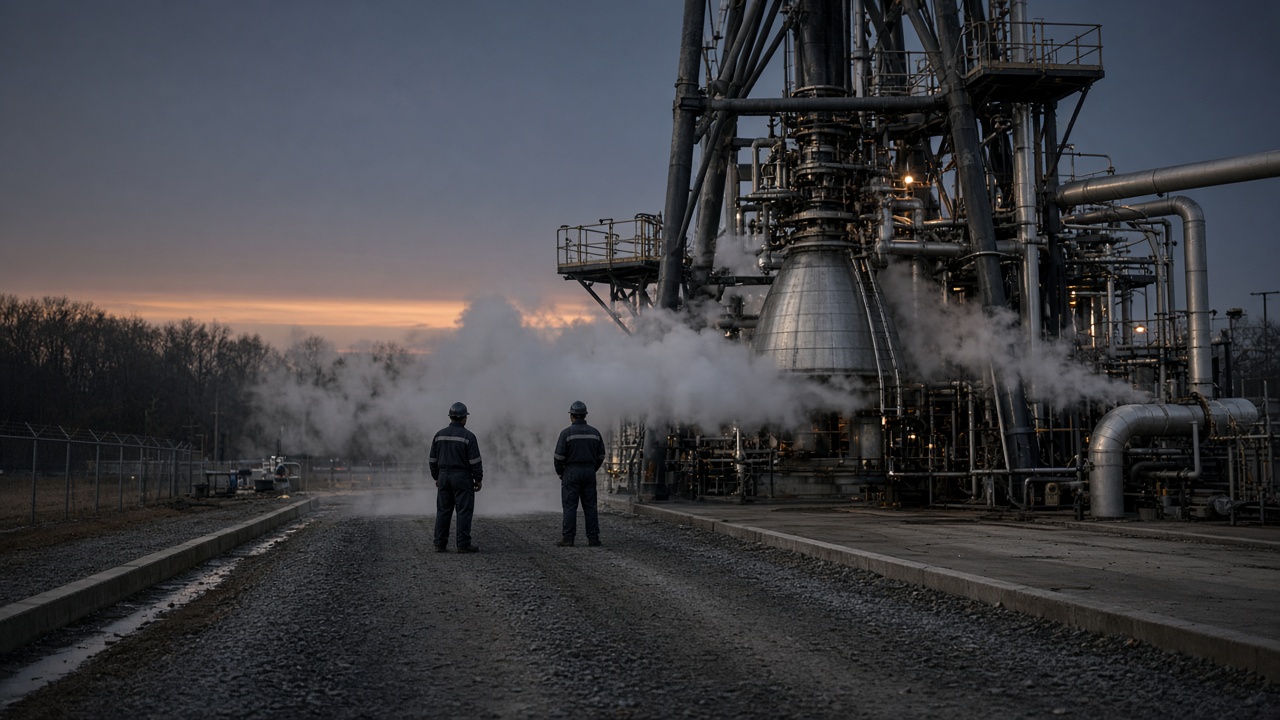
ISRO’s Vikram Sarabhai Space Centre qualified a semi-cryogenic engine stage on Monday, clearing hardware for the Gaganyaan programme’s crew escape demonstration in its committed window.
Engineers completed chill-down and gimbal checks after a hot-fire campaign on the Mahendragiri test complex. The stage couples Indian kerosene-liquid oxygen propulsion with heritage control avionics adapted from prior GSLV flights.
Abort demo stakes
Gaganyaan’s uncrewed abort sequence must prove motors can pull a capsule clear if a booster anomaly occurs low in the atmosphere. Semi-cryogenic thrust improves margins on that profile compared with earlier solid-heavy stacks. Human-rating reviews tied Monday’s sign-off to vibration data within predicted envelopes.
Mission management has not published a launch clock yet, but the demo remains on the public manifest for the current financial year.
Industrial base effects
Private suppliers fabricated new turbine shrouds under ISRO quality manuals. Failures during qualification would have cascaded into pad reservation conflicts. Monday’s clearance lets logistics teams ship the stage to the spaceport without waiving a test.
Scientists emphasised that semi-cryogenic work also feeds future heavy-lift ambitions, even if Gaganyaan is the near-term customer.
International observers
Partners watching India’s human spaceflight track asked for telemetry sharing norms ahead of the abort test. ISRO reiterated that UN registration and debris mitigation plans stay unchanged.
For the public, the milestone is invisible—a sign-off memo—but it removes one of the longest poles in the tent. The programme still faces medical selection timelines and habitat training milestones; propulsion is no longer the gating unknown.
Desk notes from Mumbai and Delhi trading rooms reinforced the same takeaway: liquidity is ample enough for selective adds, but not broad enough for indiscriminate risk. Foreign flows still lean cautious, so domestic mutual funds remain the incremental bid.
Analysts publishing morning notes cautioned that one session does not reset quarterly earnings assumptions. Input-cost commentary from peer firms in the same sector will matter more than today’s opening gap when results arrive.