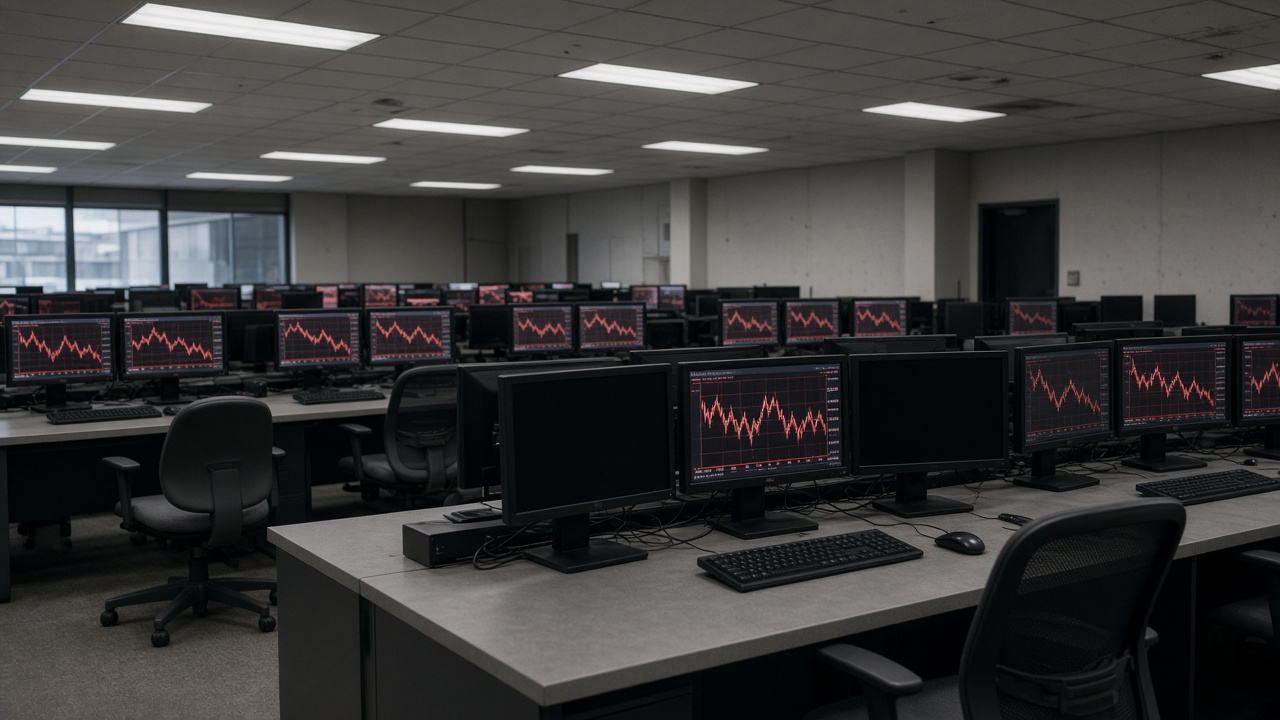
Seoul’s benchmark Kospi enters Monday’s session nursing an 11.71 percent weekly loss that pulled the index to 5,059.69, and dealing rooms say the immediate task is holding the 5,000 handle while China publishes October inflation figures and foreigners test whether last week’s circuit-breaker session marks a washout or the start of a longer reset.
Between 2 November and 6 November the Kospi fell from 5,730.74 to 5,059.69, according to Korea Exchange data cited by local securities research. Foreign investors were net sellers of about 11 trillion won on the week, overwhelming combined institutional and retail buying of 4.8 trillion and 4.2 trillion won respectively. The selling streak that began on 30 October stretched to six consecutive sessions through week’s end, with more than 6 trillion won of foreign outflows on 5–6 November alone.
Why the U.S. midterms moved Korean listings
Brokers trace the acceleration to Democratic gains in the U.S. midterm elections and subsequent calls to slow data-center construction, including remarks from Senator Bernie Sanders urging a moratorium. The Philadelphia Semiconductor Index dropped more than 12 percent on 5 November U.S. time, and Seoul followed: SK hynix fell 10.44 percent and Samsung Electronics lost 6.35 percent on heavy foreign net selling that topped 1.9 trillion won in SK hynix alone, per KB Securities compilations after the close.
On 6 November the Kospi opened down 2.24 percent, breached 5,000 intraday for the first time in nine months, and triggered a Level 1 circuit breaker plus a sell-side sidecar that paused program selling. The index touched 4,911.28 before closing above 5,000, a relief level retail investors watched on portal tickers throughout the weekend.
Monday’s checklist for Seoul
Daishin Securities and NH Investment & Securities both published 5,000–6,000 point bands for the current week, citing U.S. consumer price data due 10 November U.S. time and the release of China’s October CPI and PPI on 9 November as immediate catalysts. Researchers at Daishin warned that hotter-than-expected U.S. inflation could revive Federal Reserve hike talk, while softer prints might stabilize Treasury yields and ease financing fears for AI hyperscalers.
Some strategists also note that post-midterm windows historically saw foreign net buying in five of six cycles since 2000, according to Chosun Biz analysis of Korea Exchange data. That pattern collides with this year’s record foreign selling pace—19.14 trillion won in the twenty sessions before the election, roughly 0.4 percent of market cap—so desks are treating history as a guide, not a guarantee.
Who feels the 5,000 line
Retail message boards over the weekend mixed anxiety with bargain-hunting talk about chip-heavy leaders. Margin loan balances and structured products sold domestically reference Kospi levels for knock-in clauses, meaning a sustained break below 5,000 could force mechanical selling even if fundamentals on export orders remain solid. Pension and wrap accounts with foreign-currency hedges also recalibrated after the won moved with risk-off flows tied to Middle East headlines and U.S. tech regulation chatter.
Contract for difference and retail short books saw spikes in activity midweek, according to platform notices, but the exchange’s intervention tools showed policymakers still prefer orderly pauses to unchecked gaps. For Monday, the practical question is whether foreigners slow their exit once China’s price data and early U.S. futures paint a clearer macro picture, or whether Seoul must defend 5,000 again with domestic bid support alone.