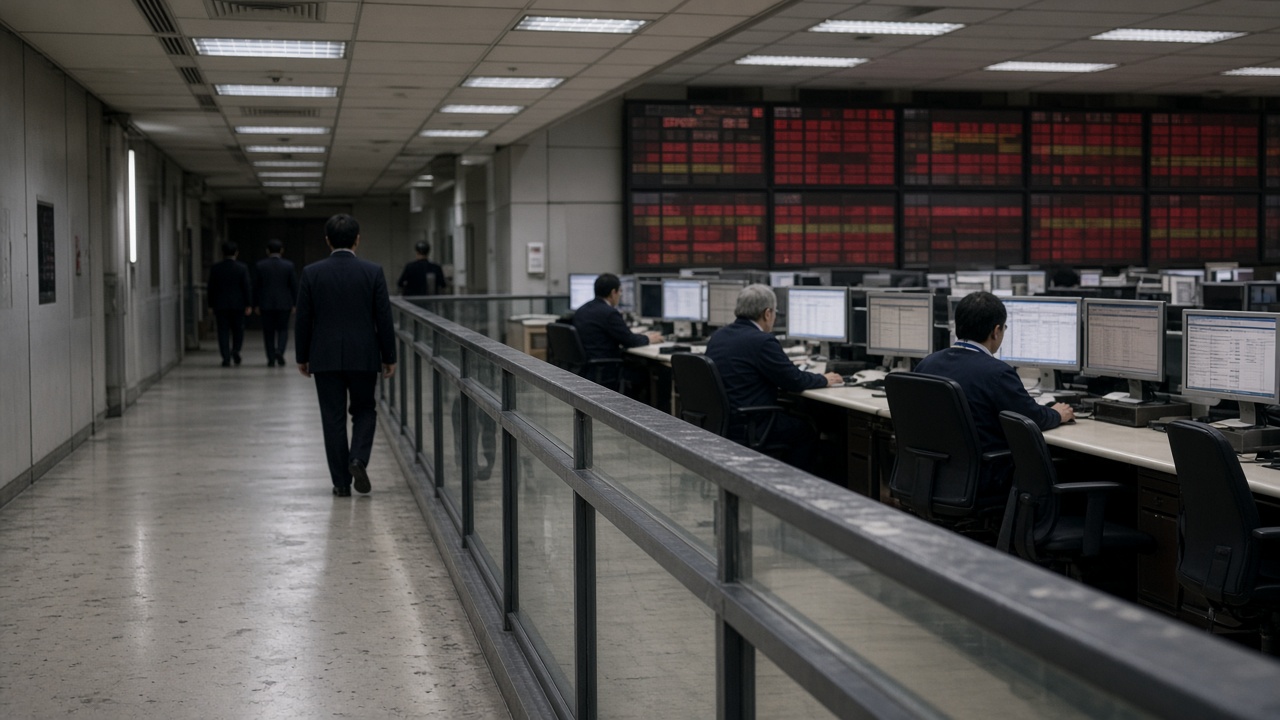
The Ministry of Finance allowed the NT$500 billion (US$15.26 billion) National Stabilization Fund to begin buying Taiwanese shares on Monday, the tenth time the cabinet has authorized the pool since it was created in 2000.
Friday’s session set the starting line. The benchmark shed 1,873.08 points, or 4.51 percent, to close at 39,701.64 after an intraday plunge of 3,737.67 points—the largest point swing on record. Foreign funds remained net sellers, margin accounts shrank by NT$42.36 billion in a single day, and Cabinet officials framed Monday’s reopening as a test of whether policy support can calm execution without reversing the deeper debate over artificial-intelligence capex returns.
What the steering committee can do
The fund’s executive secretary may purchase exchange-traded funds and large-cap shares when disorderly trading threatens market function, according to the ministry’s authorization notice. Unlike the emergency authorization issued Friday evening, Monday marks the first session in which desk buyers are expected to interact with live sell orders. Prior deployments in 2020 and 2022 leaned heavily on Taiwan 50 ETF units; dealers said they would watch whether the desk again concentrates bids in liquid, index-linked products before spreading into individual chip names.
Stabilization capital does not change company fundamentals. Hon Hai Precision Industry still reports quarterly earnings on Wednesday, and the Financial Supervisory Commission’s tighter short-selling limits also took effect at Monday’s open. The question for the business desk is whether state buying merely bridges a gap until U.S. tech earnings arrive, or whether it signals that Taipei views sub-40,000 prints as politically unacceptable heading into year-end budget talks.
Overnight cues and export calendar
Taiwan Index futures finished above 40,000 on the night session after the Philadelphia semiconductor index rebounded more than 4 percent, giving stabilization buyers a friendlier backdrop than Friday’s cash close. Even so, the weighted index remains down more than 20 percent from its October peak of 49,968.92, and the finance ministry’s statistics department plans to release October customs figures at 4 p.m., which could either reinforce the AI export narrative or sharpen questions about demand durability.
Analysts at local brokerages cautioned that fund purchases can lift openings while leaving mid-session direction to global risk appetite. “Support funds buy time, not a new narrative,” one Taipei sales desk head said in a client note reviewed by InfoHandle. “Investors still need proof that hyperscaler spending converts to purchase orders, not just press releases.”
Corporate response
The Financial Supervisory Commission separately encouraged listed companies to consider buybacks and investor briefings. Several boards had already paused repurchase authorizations during the October highs, and lawyers said Monday would show whether those programs restart now that valuations have compressed. For Taiwan’s contract manufacturers and chip suppliers, the stabilization window overlaps with a dense earnings calendar: investors will parse management guidance for any hint that customers are delaying rack builds, even as October revenue prints remain strong.
By late morning, traders were watching two numbers: net foreign selling on the cash market and the spread between onshore chips and their U.S. depositary receipts. If both stay heavy, even aggressive stabilization bids may struggle to hold an opening pop. If they lighten, the tenth deployment could mark the session where forced margin selling finally meets discretionary dip buying—a combination Taipei hoped would arrive before year-end bonus flows begin.
Historical comparisons
Past deployments in 2020 and 2022 each lasted several weeks and leaned on ETFs before dipping into individual large caps. Fund officials have never disclosed daily purchase totals in real time, so outsiders infer activity from onshore block prints and sudden spikes in Taiwan 50 unit volume. Dealers said Monday’s task is harder than prior episodes because foreign futures positioning remains near record short interest, reducing the chance that state buying sparks a short-covering rally by itself.
Pension funds and life insurers face different incentives. Many trimmed Taiwan equities in October to preserve year-end solvency ratios, and reloading exposure would require board approvals that stabilization headlines alone cannot deliver. If insurers remain on the sidelines, ETF bids may lift prices without rebuilding the diversified holder base that supported multiples above 20 times earnings in September.
Treasury traders also note that stabilization purchases do not affect currency forwards directly. The New Taiwan dollar has softened alongside the equity slide, raising import costs for energy and materials even as export invoices stay strong. A sustained NSF presence could signal policy coordination between the central bank and finance ministry, but officials have not confirmed any formal linkage.