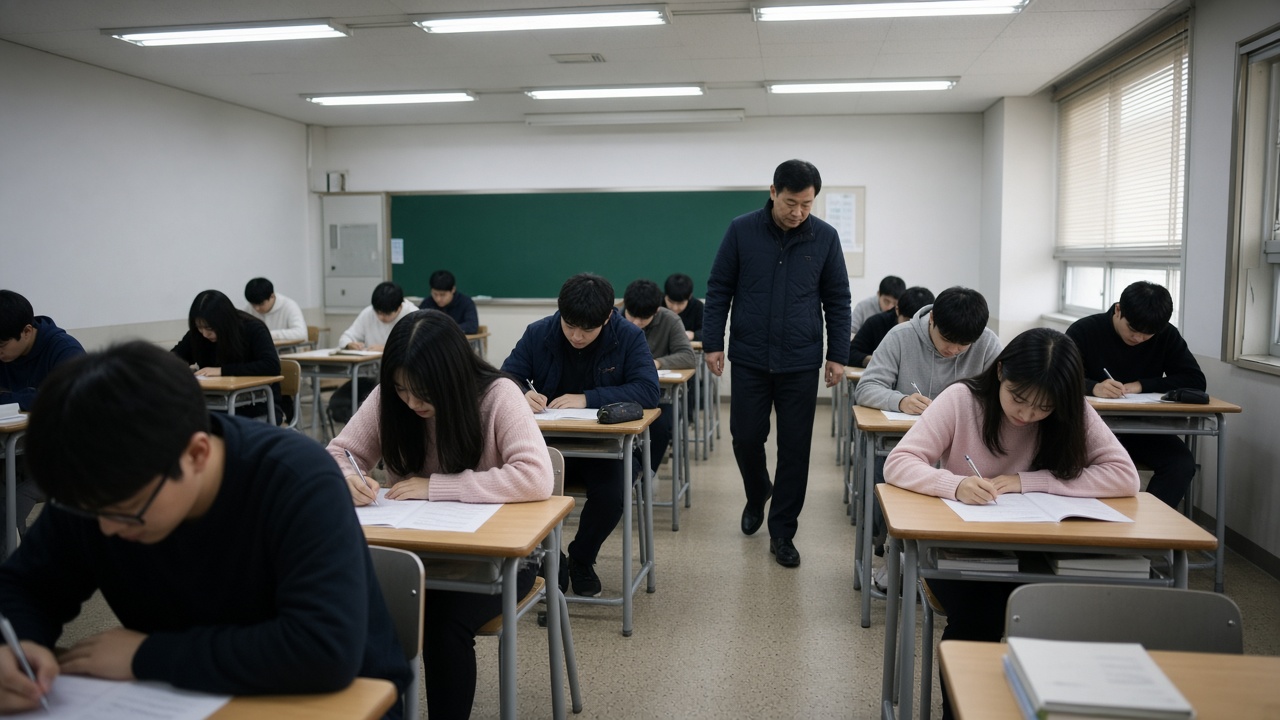
South Korea’s education ministry said Monday that four students at middle and high schools were caught using artificial-intelligence-enabled eyewear to cheat during autumn midterm and final examinations, the first cluster of such cases reported since nationwide compliance checks began late last month.
What the ministry found
According to data collected from all 5,679 middle and high schools between Oct. 27 and last Tuesday, one middle school student and three high school students were disciplined after proctors spotted wearable glasses streaming answers or prompts during tests. One middle school and one high school are in Seoul; the other two high schools are in North Jeolla Province and on Jeju Island.
Officials did not name the devices, but market analysts say several imported smart glasses now pair with chat models through bone-conduction audio, making whispered prompts nearly invisible in quiet exam halls. Unlike phone seizures—still the most common cheating vector—glasses can stay on a student’s face through bag checks, forcing schools to rely on live proctoring or radio-frequency scans that many campuses do not yet own.
Policy pressure on campuses
Education Minister Lee Ju-ho has urged regional offices to tighten test-hall protocols ahead of the university-entrance season, when even a single confirmed cheating scandal can trigger mandatory re-sits for entire cohorts. The ministry is weighing whether to treat AI wearables as electronic communication devices under existing exam rules, which would trigger automatic disqualification and a one-year ban from national tests.
Teachers’ unions want hardware bans written into school bylaws before device prices fall further. “We are seeing the same pattern as early smartphone cheating,” said a Seoul district official who requested anonymity because parents at the affected school have not been publicly identified. “The ministry survey proves the risk is real, not theoretical.”
Industry and privacy questions
Consumer electronics retailers in Seoul said demand for camera-equipped glasses spiked after major AI brands demonstrated live translation at a trade fair in September. Samsung and domestic startups are preparing lighter frames for release next year, raising the stakes for regulators who already police illegal cram-school leaks and “killer questions” in premium college-prep materials.
Privacy advocates caution that blanket bans could punish students who use prescription smart lenses for accessibility. The ministry said it would issue guidance distinguishing medical exemptions from recreational AI frames, but has not set a deadline.
Provincial offices in Jeju and North Jeolla said they would send inspectors to the implicated schools this week to review camera policies and whether current bans on earbuds should extend to all networked eyewear. National Assembly education committee aides said at least two lawmakers from opposition parties plan to call ministry officials to testify before the winter session opens. For now, the four confirmed cases offer a template: covert audio, disciplined students, and a warning that Korea’s exam-centric school system must adapt faster than the gadgets arriving in backpack pockets.