KAIST materials scientists released micro-CT maps on Tuesday that trace crack propagation in sodium-ion cathodes when cells face five-minute fast charges, giving domestic startups a benchmark as they tune electrolytes ahead of 2027 pilot production. The peer-reviewed dataset, shared through the university’s open repository, compares three nickel-manganese-oxide formulations used in Korean lab-scale pouch cells.
What the images show
High-rate charging pushed dendrite-like fractures along grain boundaries within nine minutes in the most aggressive formulation, the team reported. A secondary electrolyte additive slowed crack growth by roughly 38 percent in duplicate runs, though capacity retention still trailed lithium-ion references. Researchers stressed sodium cells remain attractive for grid storage where energy density matters less than cost.
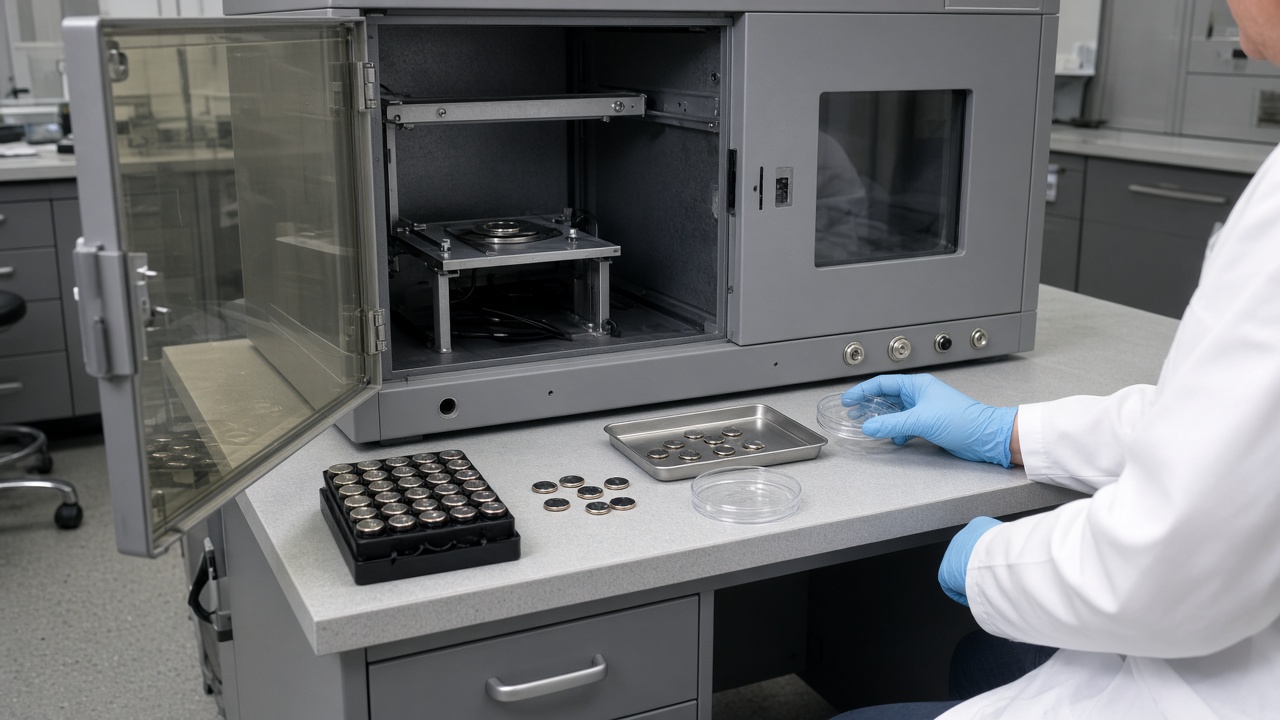
The maps use a tabletop X-ray microscope installed at KAIST’s Daejeon campus, avoiding the week-long synchrotron queues that delayed earlier industry collaborations. Graduate students posted slice-by-slice animations so engineers at startups can overlay finite-element models without traveling to campus.
Why industry cared
Korean battery firms pursuing sodium chemistry include divisions of large conglomerates and venture-backed labs near Ulsan and Pohang. They need evidence on whether fast-charge claims in investor decks survive physical inspection. The KAIST group said two unnamed cell makers already requested licensed use of the protocol in their internal quality gates.
Policy and funding
The Ministry of Science and ICT lists sodium-ion as a “secondary strategic” chemistry in its battery roadmap, with grants biased toward safety testing rather than headline energy density. Tuesday’s release fits that emphasis: it does not crown a winning chemistry but documents failure modes regulators will ask about before grid pilots scale.
Limits of the study
Tests ran on single-layer pouch cells at 25°C; cold-weather behavior remains unmapped. The team did not publish full-cell cycle life beyond 200 rounds. Commercial lines must still validate results on their own electrode coatings and drying lines.
What comes next
KAIST plans a follow-up on anode-free sodium designs in January, pairing the same imaging with acoustic emission sensors. For investors, the near-term impact is methodological: startups that cannot reproduce the micro-CT protocol may struggle to convince automakers their fast-charge claims are audit-ready. For the public, the work is another step toward cheaper stationary storage—not a promise of sodium-powered passenger cars next year.
Open data terms
Researchers published raw tomography slices under a Creative Commons license requiring attribution, a move meant to keep conglomerates from locking failure-mode data behind trade-secret walls.