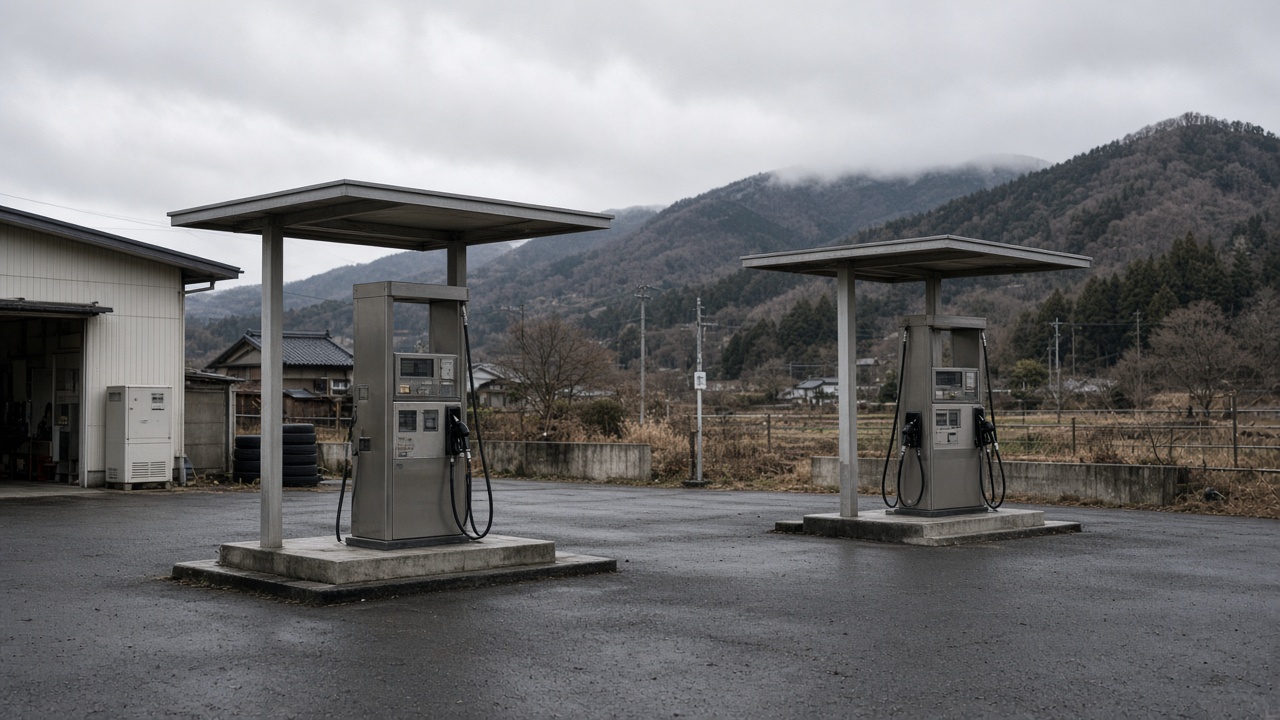
Parliament’s unanimous vote to sunset the provisional gasoline tax surcharge on December 31 has been celebrated as relief for urban commuters, but diesel’s parallel surcharge does not expire until April 1. For households running farm pickups, delivery vans, and kerosene-adjacent heating budgets, petrol politics are not diesel politics—and card statements will show both tracks at once.
Two clocks on the same fleet card
The enacted law ends a 25.1-yen gasoline add-on while keeping diesel’s 17.1-yen provisional levy in place through March. Agricultural co-ops in Hokkaido and Tohoku report members refueling light trucks on diesel while spouses run gasoline kei cars for town errands; a January petrol-price drop will not shrink diesel invoices until spring planting season begins.
Government subsidies mirror each tax: gasoline aid rises to 25.1 yen on December 11, then zeroes with the tax. Diesel subsidies follow their own staircase into April. Household finance apps that aggregate spend by fuel type, not merchant, will be the only tools that reconcile the staggered relief.
Fiscal linkage
Opposition parties forced the diesel-gas split because road-fund accounts rely differently on each levy. Editorial desks should resist treating the vote as a uniform tax cut: general-account borrowing in the supplementary budget still finances broader stimulus, meaning households may see lower pump stickers without seeing lower debt issuance.
Rural electoral map
Prefectures where LDP coalitions need farm votes will hear complaints if diesel relief lags gasoline relief by a full quarter. Municipal bus operators running mixed fleets must hedge both fuel curves when negotiating spring service contracts with boards of education.
Household advice
Drivers should photograph pump receipts when subsidies and tax components shift mid-month; ombudsman offices see dispute spikes when employers reimburse mileage using outdated per-kilometer tables. Fleet managers ought to reload HMRC-style matrices in January rather than April to avoid underpaying diesel routes.
Bottom line
Unanimous councillor votes make good headlines, but diesel’s April sunset is the binding constraint for cold-chain trucks feeding Tokyo supermarkets. Until both surcharges end, calling the package a complete fuel-tax rollback misstates the policy—and misstates household cash flow.
Card and mortgage spillover
Mortgage brokers report borrowers asking whether lower pump spending in January frees cash for accelerated principal payments; the answer depends on whether households run diesel vans for work. Revolving credit lines tied to convenience-store fuel co-brands may show lower January utilization without implying improved discretionary income if heating oil deliveries rise in parallel.
Bond desks separately note that excise relief does not shrink outstanding government debt; long-rate volatility therefore still feeds into household financing costs even when literal liter prices fall. Editorial desks should treat pump relief and debt-service relief as unrelated stories that happen to share a headline week.