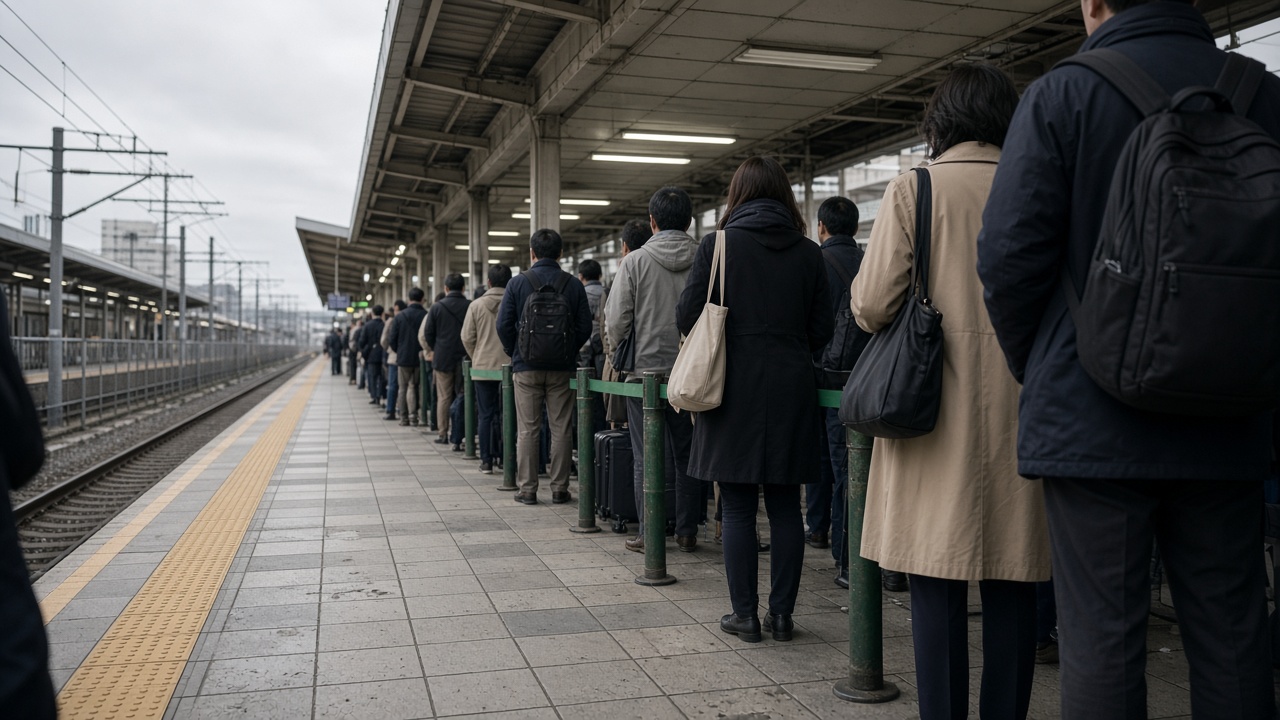
West Japan Railway has reopened internal yield targets on Sanyo Shinkansen reserved seats after Silver Week’s return wave left more empty inbound capacity than revenue managers expected, despite doubling year-on-year reservations and running every Nozomi as all-reserved through 23 September.
What changed on the desk
Revenue teams told regional controllers this week that post-holiday adjustment bands on Hakata–Shin-Osaka and Shin-Osaka–Tokyo pairs would narrow by one fare bucket until October sales close, according to people briefed on the calls. The move follows a 22 September inbound peak that booked at roughly thirty-two per cent of offered seats on Sanyo services—strong versus 2025, but below the forty per cent threshold planners set when they added 474 extra Silver Week trains.
JR West’s 4 September release counted 782,000 reserved seats against 2.687 million offered (twenty-nine per cent) across the six-day window, with outbound demand heaviest 19 September and returns concentrated 22 September. All-reserved Nozomi operations—cars that normally carry non-reserved riders on cars one and two—removed the usual walk-on buffer, which makes every empty chair visible in yield dashboards rather than absorbed by standees.
What filings and releases already show
The May extra-train plan promised 474 Silver Week services, including up to ninety-one additional runs per day on Sanyo Shinkansen, with every Nozomi sold as reserved-only. That policy aligns with JR Central’s published peak calendar and matches travel guides noting reserved-only Nozomi from 18 through 23 September while Hikari and Kodama retain ordinary non-reserved seating.
Reservation velocity at 200 per cent of the prior-year comparison sounds like a triumph until seat-kilometres are counted: total capacity rose about thirty-two per cent because of added trains, so load factors lag headline reservation growth. Controllers said Express Reservation and Smart EX channels captured most early bookings, leaving station-window inventory for late Silver Week shoppers—the cohort whose price sensitivity the revised yield bands target.
Who wins and loses inside
Station chiefs along the Sanyo corridor win flexibility to discount remaining afternoon Hakata-bound pairs without corporate approval, while tour wholesalers who pre-blocked seats at peak buckets may see allocations repriced if partners slow pickup. Tourism bureaus in Kyushu argued internally that lower last-minute fares could backfill hotels that reported softer Sunday night occupancy than Golden Week, a trade revenue finance accepted after bus operators marketed parallel returns.
On-board crews felt little change—trains still ran full leaving Hiroshima midday—but conductors logged more single-seat gaps in green cars, a pattern yield analysts tied to mixed household travel parties splitting across Hikari connections.
Brokers, agencies, and the next month
Travel agencies said JR West’s yield reset mainly affects dynamic buckets tied to Smart EX “Hayatoku” equivalents rather than published excursion fares, keeping headline regulated tariffs stable while discount depth moves. Corporate accounts with bulk Sanyo contracts were told September true-ups would ignore the temporary bands unless utilization on contracted trains fell below eighty-five per cent—a clause large insurers triggered after Obon.
Competing airlines kept domestic shoulder pricing flat on Osaka–Fukuoka routes, limiting rail’s ability to push last-minute walk-ups without matching air promo fares. Planners still prefer rail for reliability: all-reserved Nozomi eliminated platform rush, and the 22 September return count beat airline seat supply on the same corridor according to MLIT statistics cited in internal slides.
What happens before October sales
Investors will watch whether October reservation opens at ten o’clock JST one month before departure absorb the slack without deeper cuts. If inbound load factors on Friday evening Shin-Osaka departures stay under thirty-five per cent through the first October weekend, expect broader repricing on Kagawa and Ehime leisure pairs—not just Kyushu trunks.
If late-September tours sell out, the reopened yield spreadsheet will look like a one-week calibration after an all-reserved experiment, not a demand crack. Either way, JR West’s decision is to stop holding peak buckets for return-day inventory that did not materialize at the modeled fill rate—exactly the quarter-to-quarter call David Wong’s desk tracks when a press release says reservations doubled but seat kilometres still outpaced bodies on the platform.