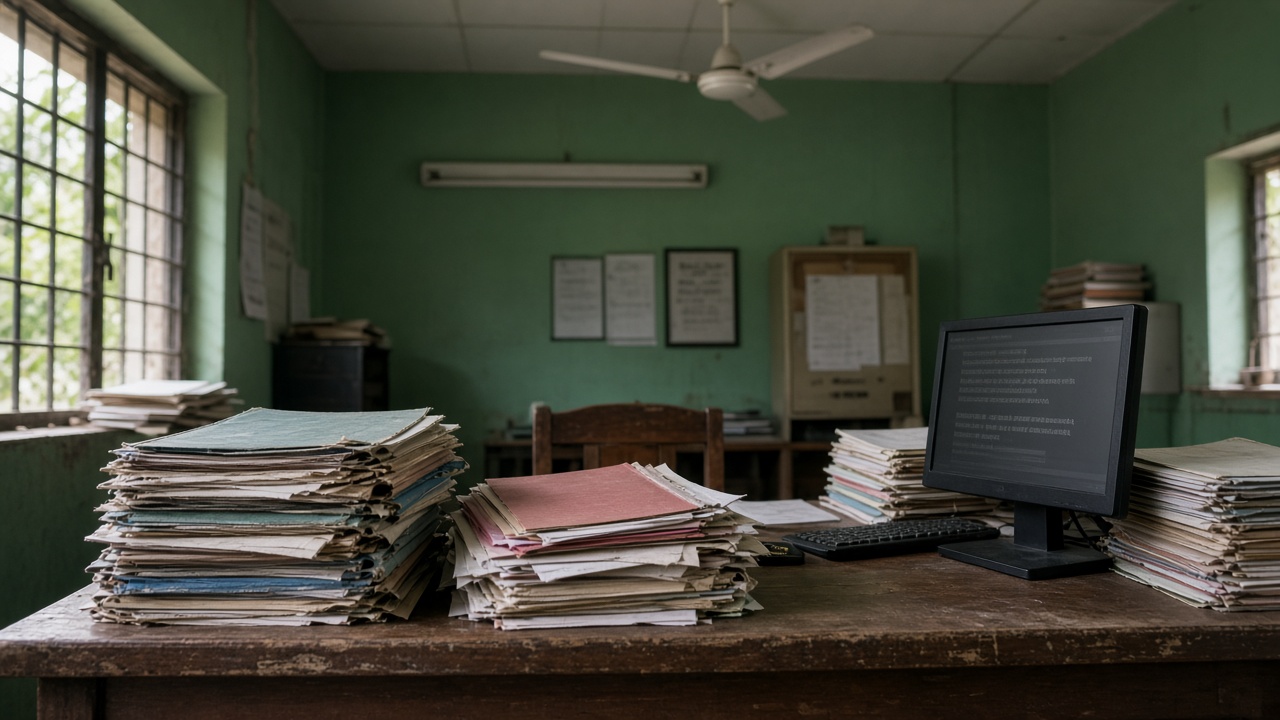
Sarvam AI began distributing Hindi legal summarizer model weights to district court IT desks this week, packaging on-prem inference containers that read eCourts filing formats and output bench-ready synopses—a narrower deployment than the company’s cloud A1 workbench, but one aligned with MeitY’s push for sovereign AI pilots inside government VLANs.
What shipped to clerks
The release bundles a 2-billion-parameter Indic encoder fine-tuned on anonymized order templates, vakalatnama headers, and cause-list tables—not full case repositories. Sarvam engineers said weights run on a single NVIDIA L40-class GPU per node, with batching capped so summarization of a fifty-page rent dispute takes under four minutes on reference hardware.
Districts in Uttar Pradesh and Madhya Pradesh received signed containers first; eCourts nodal officers must import checksum manifests before air-gapped installs proceed. Sarvam would not disclose training court counts, citing privacy commitments, but said Hindi coverage includes Devanagari citations mixed with English statute tags common in lower judiciary orders.
How this differs from A1
Sarvam’s revenue-facing A1 workbench targets law firms with regulatory chat and redaction agents. The district summarizer strips those agents, leaving a single-pass abstractive summary with pin-cited paragraph anchors clerks can paste into cause-list notes. Product managers told InfoHandle the split keeps licensing simple for government buyers uncomfortable with multi-tenant SaaS.
IndiaAI’s public catalog already lists Sarvam’s multilingual foundational models; this legal build adds domain tokenizers for Section references and “versus” party blocks. Open weights for general Indic tasks remain on Hugging Face; the legal summarizer ships under a government enterprise license with export controls on weight files.
MeitY and judiciary policy context
MeitY’s National AI Mission materials encourage pilots that keep citizen data inside India and log inference locally. Judiciary committees reviewing eCourts Phase III automation asked vendors for summarizers that do not train on live dockets by default; Sarvam’s containers run with telemetry disabled unless states opt in.
Bar associations in two districts raised concerns that machine summaries could bias bail mentions if training skewed toward disposed criminal matters. Sarvam responded with a calibration sheet requiring human sign-off on every summary before it attaches to digital cause lists—a workflow eCourts already contemplates for scanned PDF uploads.
Evaluation gaps
No independent benchmark yet scores Hindi summarizer fidelity against senior stenographer drafts. Sarvam published internal BLEU-adjacent metrics on synthetic orders, but district registrars want side-by-side trials during October sessions. InfoHandle could not verify claims that hallucinated statute numbers dropped below two percent on holdout sets; those figures came only from vendor slides shared under embargo.
Competing legal-tech startups argued cloud APIs with retrieval-augmented generation could be cheaper. Sarvam countered that district networks still lose connectivity to state capitals weekly, making on-prem weights necessary even if per-seat costs run higher.
Operational rollout
Clerks must complete a two-day training on prompt guardrails—summaries refuse to predict outcomes or recommend sentences. IT teams patch containers monthly; air-gap sites receive USB bundles signed by Sarvam and NIC certificate authorities. Backup GPUs sit cold in Lucknow and Bhopal hubs for failover when court air conditioning fails during heat waves.
Digital India Corporation liaisons said successful pilots could extend to family courts handling vernacular petitions, but marriage and guardianship records carry extra sensitivity. MeitY has not mandated adoption; it lists Sarvam among approved vendors for optional procurement.
Privacy and retention
Summaries expire from local disks after seven days unless registrars pin them to case folders, matching eCourts retention policies for draft notes. Sarvam said no weight updates will use those pinned files without written court orders—a promise auditors will test during December compliance walks.
For advocates, the immediate effect is shorter waiting periods for Hindi synopses of lengthy interim orders, not robotic judgments. For Sarvam, the deployment is a reference win in sovereign AI narratives ahead of larger state cloud tenders.
What remains unproven
Whether under-resourced districts can keep GPUs maintained without NIC field engineers visiting monthly is an open question. Funding lines for hardware sit in state judiciary budgets, not Sarvam’s contract.
If hallucination incidents appear on live cases, registrars can revert to manual abstracting with a toggle—preserving paper-era caution even as weights sit on the bench beside clerks.