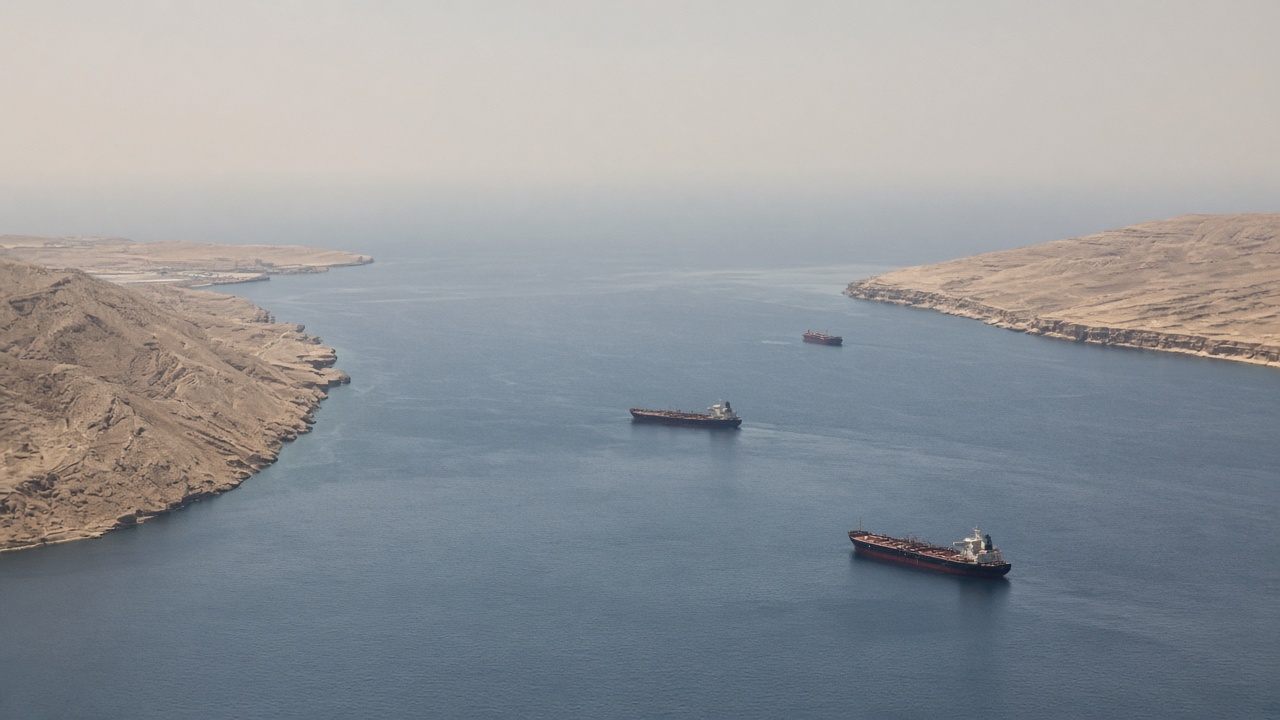
Only twelve commodity tankers and bulk carriers crossed the Strait of Hormuz over the weekend, according to shipping data summarized by Al Jazeera on Sunday — a steep drop from thirty-five such transits the previous weekend and a concrete measure of how the U.S.–Iran war is still throttling the world’s most important oil chokepoint even when Brent futures ease on headlines from mediators in Doha.
What the crossing count shows
The tally focuses on commodity vessels, not every fishing dhow or naval escort. That distinction matters for refiners: a quiet day for headline “ship counts” can still leave distillate markets tight if the cargoes that move are the wrong grade or arrive days late. Al Jazeera paired the figure with reporting that Iran’s Khatam al-Anbiya Central Headquarters — the umbrella command for Tehran’s armed forces — said it had received information that the United States is preparing to resume strikes.
Tehran warned that any renewed U.S. assault would draw retaliation against American bases and interests across the Middle East and cautioned regional governments against facilitating Washington’s campaign. The statement landed in the same news cycle as President Donald Trump’s televised remarks that his options include further military action, letting Iran “rot” economically, or reaching a deal — language insurers and charterers treat as correlated risk even when futures dip.
Why traffic stalled again
Fighting around Hormuz never fully stopped after a sixty-day memorandum in June reduced large-scale exchanges, but that truce expired in August and attacks on shipping lanes picked up again, according to Gulf reporting reviewed by InfoHandle. War-risk underwriters have kept premiums elevated for owners willing to transit under Iranian scrutiny or U.S. escort proposals, and many operators simply wait in anchorages off Fujairah or reroute around the Cape of Good Hope when voyage economics allow.
CNBC noted Sunday that traders still expect Brent to trade in a roughly ninety-to-one-hundred-ten-dollar band through year-end even if Saudi flows recover partially — a forecast that assumes Hormuz never returns to pre-war throughput. Twelve commodity crossings in a single weekend is the kind of number that shows up in refinery run-cut conversations long before it registers on retail gasoline boards.
Diplomacy in parallel
Qatar’s foreign ministry spokesperson Majed al-Ansari said Doha continues shuttling proposals between capitals and has heard U.S. assurances that Washington wants an agreement. That track sits awkwardly beside Iran’s public strike warning and Trump’s “deciding mode” interview: mediators can keep channels open while tanker markets price worst-case interruption.
Iranian envoys have told Qatari and Pakistani interlocutors that talks require an end to U.S. attacks, release of frozen Iranian funds, and lifting of the naval blockade on Iranian ports — demands that overlap with, but are not identical to, packages relayed earlier in September. None of those diplomatic lines, in the public record as of Sunday, included a verified timetable for restoring Hormuz transits to pre-February levels.
What owners watch next
Chartering desks will compare this weekend’s dozen crossings with AIS aggregates through Monday night to see whether the collapse is a holiday blip or a new floor. U.S. Central Command has not published escort schedules tied to the twelve-vessel count, and Iranian naval statements have not specified which lanes remain closed to which flags.
For readers outside the freight market, the spine is simple: the strait moved a fraction of its normal commodity traffic while both capitals talked about renewed bombing campaigns. Until crossing counts recover for more than a single week — or until a ceasefire includes verifiable lane security — Gulf barrels will keep arriving in consuming countries later, and more expensively, than paper markets alone suggest.