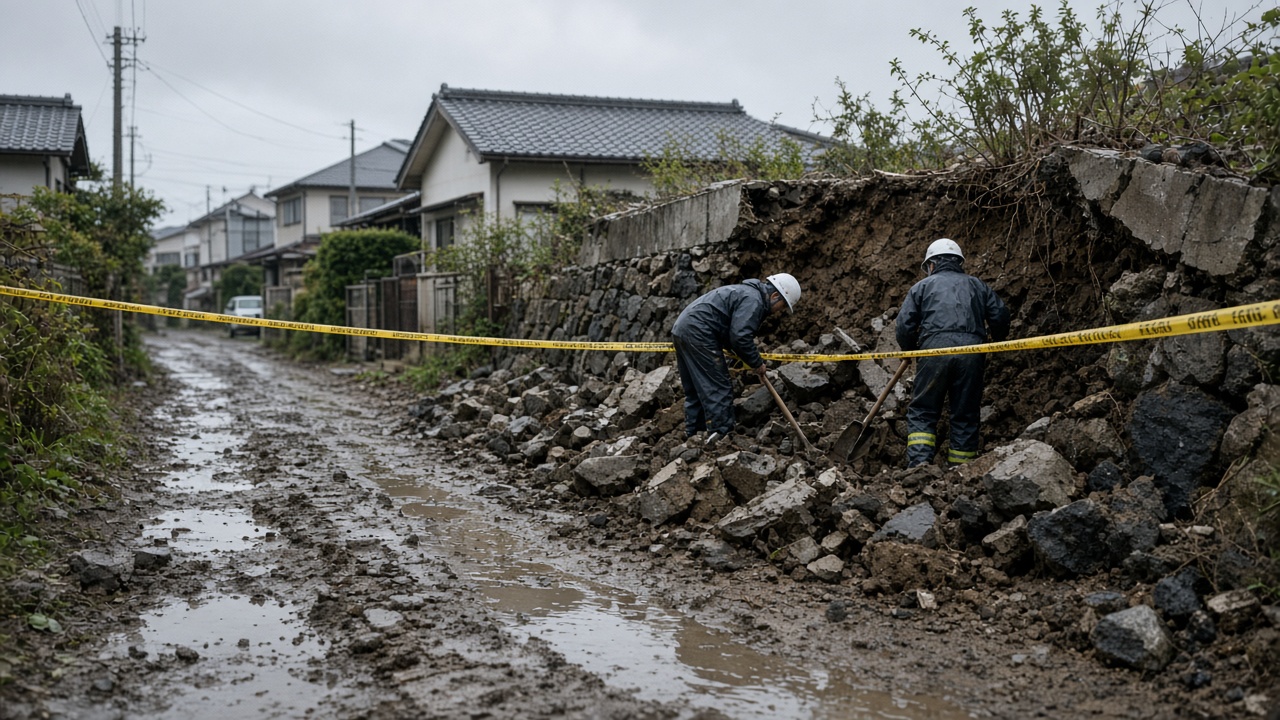
Typhoon Dujuan exited into the Pacific by Tuesday morning, but eastern Japan’s casualty toll kept climbing as rescue teams combed saturated hillsides across Chiba and Kanagawa. The Fire and Disaster Management Agency confirmed four deaths—three in Chiba and one in Kanagawa—and said six people remained missing after landslides triggered by record rainfall. More than 45,000 homes in Chiba were still without electricity Tuesday afternoon, prolonging a blackout that began when Dujuan sideswiped the Tokyo region on the first day of Silver Week.
From landfall to recovery
The Japan Meteorological Agency lifted most heavy-rain warnings as the storm tracked northeast, yet officials urged residents to stay alert for delayed mudslides on slopes that absorbed more water than soil tests predicted. On Oshima in the Izu chain, 832 millimeters fell in 48 hours—more than double the island’s average September total, NHK reported. Tokyo’s Edogawa Ward logged 282.5 millimeters in 24 hours, a local record that overwhelmed storm drains and sent floodwater across roads near Kamakura Station, a popular sightseeing stop.
Al Jazeera and The Japan Times documented cancelled Shinkansen segments, more than 270 combined flight cancellations by Japan Airlines and All Nippon Airways on Monday, and an early shutdown of the Tokyo Game Show. A Chiba baseball game and an outdoor music festival were also called off, scattering holiday plans for millions who had expected clear skies at the start of a three-day break.
Search grids and damaged housing
Police tape blocked residential streets in Tokyo’s Nakameguro district where retaining walls collapsed onto parked cars, photographs from the scene showed. The disaster agency said more than 460 houses were damaged, many with flooded first floors in Ichikawa, east of Tokyo. Self-Defense Force engineers joined municipal crews to clear mud from prefectural roads still cut in mountain towns.
Six missing persons cases are concentrated in landslide corridors where overnight evacuations were lifted too soon, according to local officials briefing NHK. Firefighters warned that secondary slides remain likely while crews work in daylight; night operations were limited to thermal scans in two Chiba valleys.
Power and water
Chiba Electric Power reported gradual restorations but could not say when the last rural feeders would energize. Hospitals switched to generator power in three municipalities; no critical-care patients were evacuated, the health ministry said. Water quality advisories were posted in two towns where intake plants flooded, though Tokyo’s central supply remained stable.
Asian Games and tourism
The typhoon clipped venues for the 20th Asian Games in central Japan, delaying some outdoor training sessions but not cancelling medal events scheduled Tuesday in Nagoya. Tourism boards in Hakone and Nikko reported cancellation spikes for ryokan bookings, a revenue hit during one of the year’s busiest domestic travel windows.
Climate context without cliché
Scientists interviewed by public broadcasters noted that warmer oceans are loading autumn typhoons with more precipitable water, amplifying rainfall totals even when peak winds moderate offshore. For prefectural planners, the lesson this week is slope management: many slides occurred on embankments last inspected before the 2019 typhoon season.
What residents should expect
Municipal offices opened extra debris drop-off sites and asked volunteers to register before entering slide zones. Train operators restored most urban services by midday, but express trains to the Izu Peninsula ran on reduced schedules while crews inspected tunnels for seepage.
Dujuan was the 25th named storm of the season. The headline now is not wind speed at landfall but the body count and the missing six, the Chiba blackouts, and hillsides too wet to trust as families return for Silver Week cleanup.