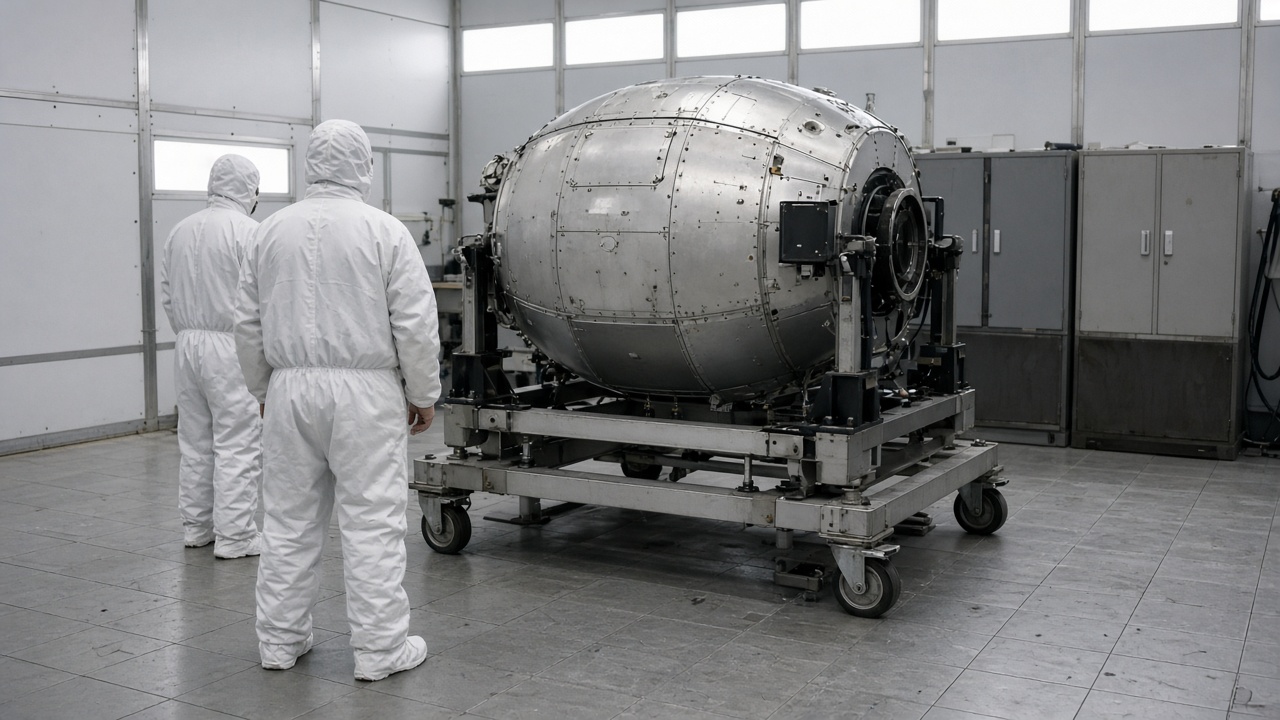
Korea Aerospace Research Institute engineers submitted fuel-margin telemetry and delta-v reserve tables to National Assembly Science, ICT, Broadcasting, and Communications Committee staff on Thursday, ahead of a markup session on the 2026 space budget that Jaemin Yoon's science desk tracked because lawmakers are debating whether to hold the lunar orbiter successor line at this year's appropriation or shave it for AI infrastructure grants.
What the packet measured
The briefing packet, described by two committee aides who received it, compares Danuri mission correction burns with projected requirements for the orbiter's extended operations phase. KARI listed propellant margins after each major maneuver in 2024–2025, then modeled a minimum reserve needed for safe deorbit planning. Engineers noted measurement uncertainty from thermal expansion in the propellant lines—not a failure, but a limit that replication labs at Korea Advanced Institute of Science and Technology would need to reproduce before signing off on stretched mission extensions.
KARI did not request a press conference; the data landed as a PDF with redacted supplier codes. That fits how the institute usually feeds oversight—methods first, politics second.
Assembly budget stakes
Science committee staff said the draft budget keeps the lunar line near 612 billion won, matching the ministry's July request, but the trade subcommittee circulated a cut scenario that would delay a fuel-margin validation test scheduled for December at the Naro Space Center. Jaemin Yoon's read: delaying the test does not cancel the orbiter, but it pushes risk into an election-year calendar when launches compete for tracking range slots with commercial rockets.
Limits and replication
KARI's annex lists sensor drift assumptions and notes that on-board fuel gauging differs from ground tank tests by roughly 1.2 percent under cold-soak conditions—small, but cumulative across multiple correction burns. Institute officials told staff they want a domestic replication campaign at Korea Astronomy and Space Science Institute before approving an extension beyond the primary mission map. That is the kind of step Seoul labs expect: publish margins, invite independent re-run, then ask for money.
What happens before the vote
Committee chairs planned a closed technical Q&A Friday with KARI propulsion leads. Opposition lawmakers asked for the PDF to enter the record; the ministry agreed if export-control redactions stay. For readers, the story is not a moon race headline—it is whether Assembly members treat fuel margins as engineering fact or as a negotiable line item. Jaemin Yoon's desk will watch whether the markup restores the December test funding or trades it for broadband subsidies with louder lobbyists.
Institute leaders reminded aides that Danuri already proved lunar orbit insertion with margins tighter than early blueprints assumed—credibility they said lawmakers should not punish when asking for the successor phase. If the December test slips to March, KARI would re-run thermal models before signing any extension contract, adding three months of idle engineering time paid whether or not a rocket flies.