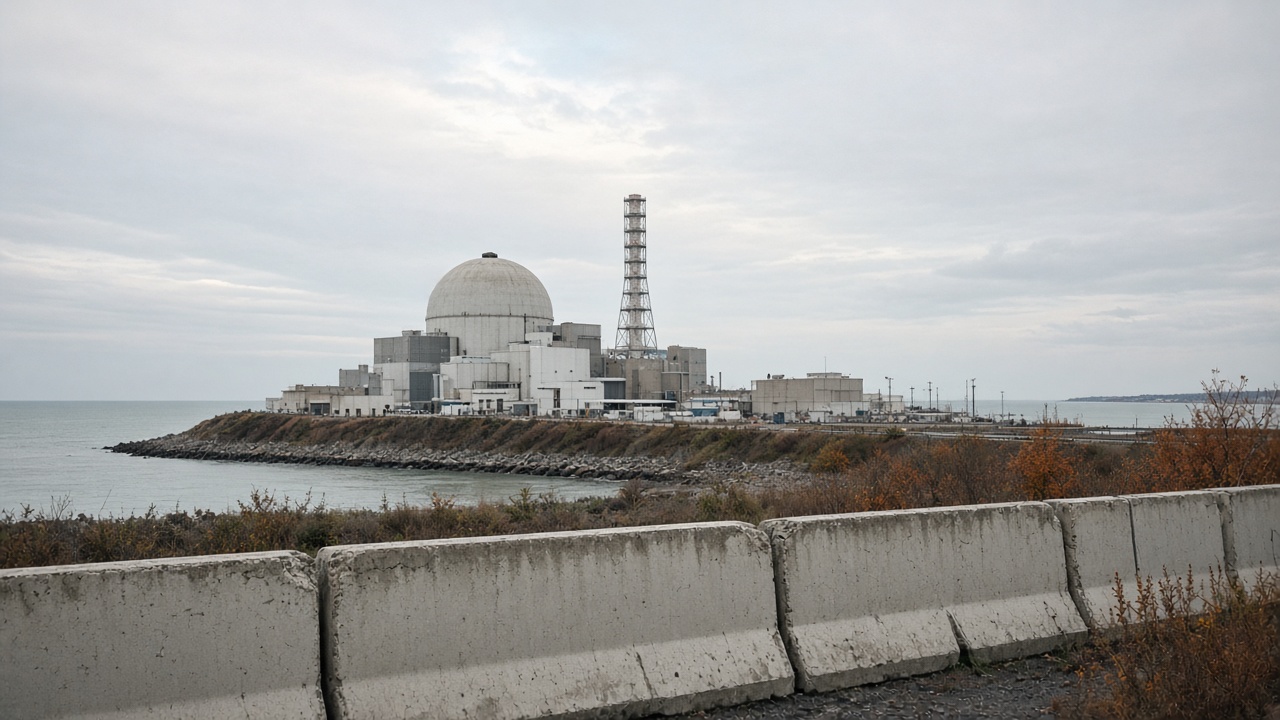
Chubu Electric Power’s decision to withdraw its Hamaoka restart applications is not a procedural pause. It is a credibility test for the Nuclear Regulation Authority, for Chubu, and for every utility that will ask Japan to trust its seismic safety case. The reported reason—seismic data manipulation—goes to the core of what a restart review is supposed to prove. If the response is a quiet resubmission after corrections, the regulator will have failed before the next application is filed.
On Sept. 25, Kyodo News reported that Chubu withdrew the applications. Earlier, The Japan Times reported that executives resigned after the data manipulation came to light, and that the company’s treatment of a whistleblower has drawn scrutiny. Those two facts belong together. A utility that alters or mishandles seismic data, and then makes life difficult for the person who flags it, has a culture problem, not just a paperwork problem. The NRA cannot verify culture with a checkbox.
The objection: withdrawal is responsible
The strongest objection is that withdrawal deserves credit. Chubu stopped the process, accepted the need to correct the record, and removed executives. That is better than pressing ahead with tainted data. But withdrawal cannot be allowed to become an accountability off-ramp. The company should not be able to pull an application, correct a few numbers, and return as if the underlying failure never happened. The public interest is not in the speed of Chubu’s resubmission. It is in whether the regulator can detect manipulation before it reaches the restart stage.
What the NRA must actually verify
The NRA’s burden is now heavier, not lighter. It should not accept a corrected dataset at face value. It should reconstruct the seismic basis from original records, including field notes, instrument logs, chain-of-custody documents, calculation files, and committee minutes. It should interview the people who produced, reviewed, and approved the data, not only current managers. It should publish a verification protocol and a timeline so the public can see what was checked and what remains uncertain.
Independent expertise matters. The NRA should commission an external seismic and forensic audit, with a mandate broad enough to test methodology, not just arithmetic. If the review finds that the manipulation was isolated, the NRA should say so with evidence. If it finds systemic pressure to produce convenient results, it must say that too. Either outcome is more useful than another closed-door correction.
The whistleblower test
The whistleblower issue is not a side plot. Nuclear safety depends on people inside the organization being able to raise concerns without retaliation. If an employee who questioned seismic data was dismissed, sidelined, or pressured, then the manipulation was not only about numbers. It was about a workplace that punished dissent. Chubu should disclose how it handled the whistleblower, preserve all related records, and submit to an independent review of its internal reporting channels. The NRA should require non-retaliation protections as a condition of any renewed review. The government should also consider stronger legal protections for nuclear safety whistleblowers, because voluntary corporate policies have clearly not been enough.
Local consent cannot be manufactured
Hamaoka sits in a seismically sensitive region, and nearby communities have lived with the plant’s risks for decades. The Sept. 24 protest in Tokyo, reported by The Other Side, shows that the issue is national, not merely local. Shizuoka Prefecture and neighboring municipalities need full access to the NRA’s findings, not summaries. They need time to consult independent experts. A restart application is not a technical formality once it leaves Tokyo. It is a question of whether people who bear the risk believe the regulator.
What should happen now
Chubu should publish the full scope of the manipulated data, preserve all records, cooperate with forensic auditors, and protect employees who speak up. The NRA should open a public verification docket, set milestones, and require a culture audit before accepting any renewed application. The Diet should strengthen whistleblower protections and give the NRA clearer authority to assess safety culture, not only hardware and documents. Local governments should demand independent experts and a clear timetable. Other utilities should treat this as a warning: data integrity is a license condition, not a public relations issue.
The test is simple. If the NRA lets Chubu withdraw, correct, and return without an independent reconstruction of the seismic case and the workplace culture that produced it, every future restart approval will carry a credibility discount. If the NRA does the harder work now, it can show that manipulation does not pay. That is the standard the public deserves—not a faster review, but a review that can be believed.