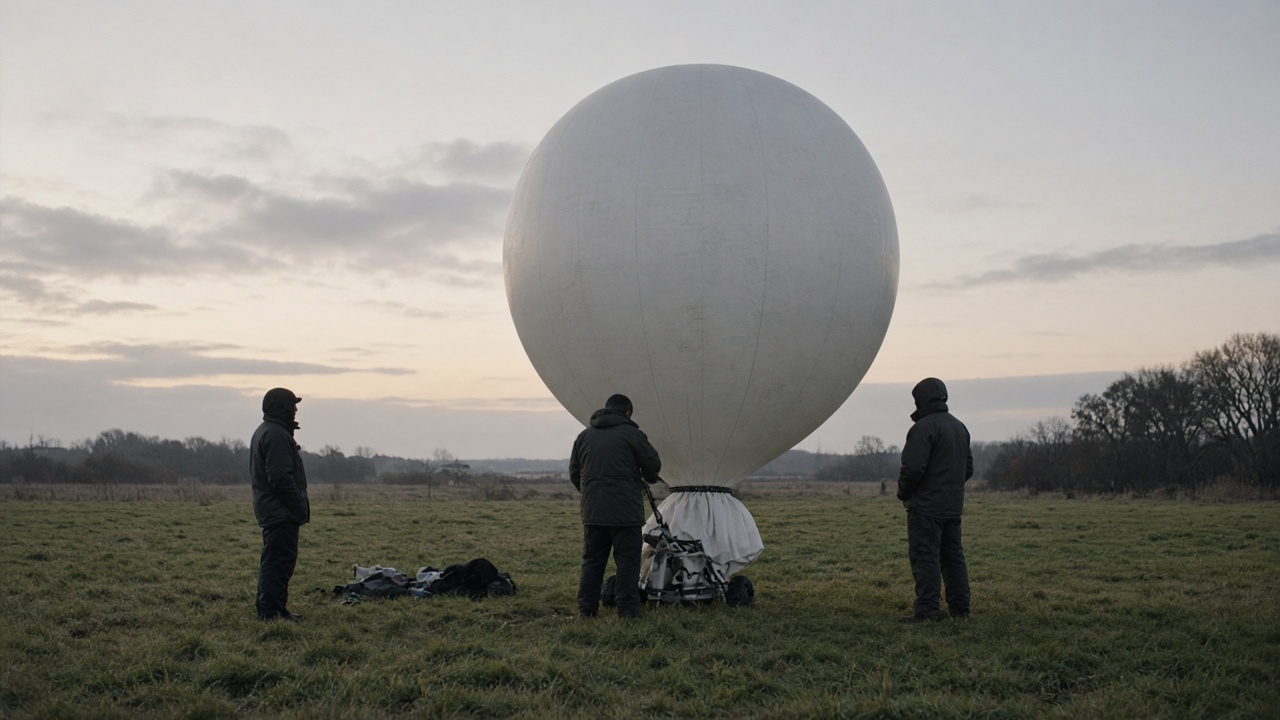
University of Tsukuba scientists recovered a stratospheric balloon payload Sunday that recorded dust concentrations up to four times background levels as wildfire plumes from North America crossed the Pacific, data they say will sharpen aviation hazard models and calibrate JAXA aerosol sensors. The flight launched from the university’s Sanuki field site and climbed to thirty-one kilometers before parachuting into the Pacific south of Choshi.
Instrument package
The gondola carried optical particle counters and a miniature impactor collecting dust on aluminum stubs for electron microscopy back in Tsukuba labs. GPS telemetry worked throughout, allowing a fisheries patrol boat to retrieve the unit within six hours. Preliminary plots show two dust peaks separated by cleaner stratospheric air, matching NASA satellite aerosol index swings reported publicly for the same week.
Why wildfire dust matters here
Autumn wildfires in western North America inject smoke and mineral dust into the stratosphere that can circle the globe. Japan’s airlines care because volcanic and smoke aerosols affect jet fuel efficiency and contrail formation on polar routes. JAXA’s upcoming EarthCARE mission will profile aerosols with lidar; balloon snapshots provide ground truth when satellites overfly at different times.
Field operations
Launch crews waited three days for westerly winds that would carry the balloon over open water rather than central Tokyo airspace. Coordination with the Japan Meteorological Agency ensured the flight did not conflict with scheduled radiosonde launches at Tateno. Students staffing the recovery hotline practiced bilingual calls with coast guard dispatchers after a 2024 drill went poorly.
Next steps
Researchers will publish open datasets after microscopy confirms particle compositions—silicate versus organic carbon. They hope to fly monthly through winter if funding from MEXT grants renews. For residents, the science is invisible; for pilots and climate modelers, it is another slice of evidence that distant fires show up in Japanese skies faster than seasonal pollen charts suggest.
Education and outreach
Undergraduate volunteers staffed social media updates during the flight, translating tracker maps for local schools. Tsukuba city hall listed the launch on its science calendar after residents called about the balloon visible at dawn.
Model integration
Climate modelers at the university will ingest dust profiles into regional simulations of autumn sunsets and nighttime cooling, phenomena residents notice even if they never read aerosol papers.
Data sharing
Researchers uploaded preliminary time series to a university repository with DOI placeholders, inviting JAXA teams to compare against satellite overpasses within forty-eight hours. Aviation meteorologists at Narita received dust alerts for contrail planning briefings.
Funding outlook
Grant renewals hinge on publishing peer-reviewed methods by March; undergraduates already drafting methods sections from this flight’s telemetry.
Balloon recovery crews practiced crane lifts on deck during calm seas so Monday retrieval would not delay returning sensors to clean rooms.