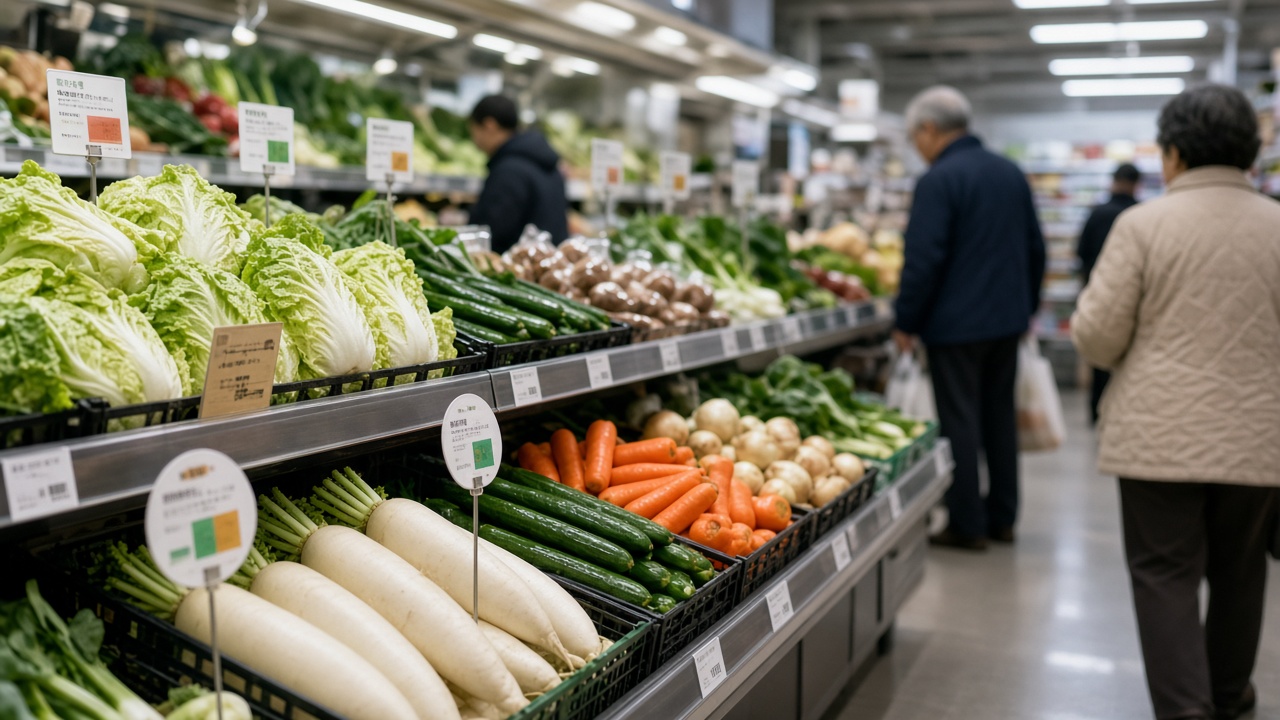
Thursday’s Tankan confirmed that large Japanese manufacturers feel better about business conditions than at any point since 2018. That confidence, however, will not show up in grocery aisles until the yen stops trading near 158 to the dollar and import costs stop resetting shelf prices every month.
We have seen this movie before: equities rally on capex plans, services firms warn about fuel, and households still pay more for rice, cooking oil, and imported fruit. The Bank of Japan’s September rate hike to 1.25 percent was meant to normalize policy, not to punish shoppers. Yet without a firmer currency, normalization simply shifts pain from savers to checkout scanners.
Manufacturers are not grocers
The Tankan’s large-manufacturing index rose to 24, but nonmanufacturers fell to 35 as input prices climbed. Supermarkets sit in that second bucket. They cannot hedge lettuce the way automakers hedge steel, and they pass through yen weakness within weeks.
Policy makers celebrating factory sentiment should ask whether downstream distributors received the same optimism. The survey’s output price diffusion indexes suggest firms still plan to raise prices, not cut them.
FX intervention is not a grocery strategy
Finance Ministry officials have resumed verbal warnings on the yen, but verbal tools have not moved the currency sustainably when the U.S.-Japan rate gap remains wide. Intervention can disrupt speculators for a day; it does not change the cost of dollar-priced wheat.
If the government wants household relief, it must accept that monetary tightening and yen stability are linked. A December rate move, priced in markets more seriously than an October follow-up, would signal that Tokyo prioritizes purchasing power over exporter convenience.
What the Diet should do instead of slogans
Gasoline tax freezes and electricity subsidies can smooth spikes, but they are fiscal bandages. Structural fixes—competition policy in logistics, transparency on middleman margins, and targeted support for low-income households—matter more than another Tankan headline.
Opposition parties are right to press for cost-of-living metrics in budget debates, even when they disagree on defense spending. A cabinet that touts factory confidence without a yen plan is asking voters to cheer a stock index they do not own.
Our view
Japan does not need weaker sentiment; it needs a policy mix that translates factory strength into stable prices. Until the BOJ and the Ministry of Finance align on that goal, Tankan optimism will remain a boardroom story, not a kitchen table one.
Households do not need another lecture on global uncertainty. They need prices that stop jumping when the dollar ticks higher on a Friday afternoon.
What households still feel
Supermarket scanner data through September show rice and cooking-oil baskets up 6 percent year on year even as the yen stabilizes near 158 to the dollar. Tankan confidence does not print those receipts; it surveys CFOs about investment mood while shelf prices reflect import costs with a lag.
The BOJ’s rate hike helps depositors with savings, but floating-rate mortgages repriced in October will absorb part of that gain for younger families. Editorial boards should separate corporate optimism from kitchen-table arithmetic when politicians cite the Tankan on campaign stops this fall.
Until wage growth consistently beats food inflation in official household surveys, cheering the Tankan alone will sound out of touch on the campaign trail.