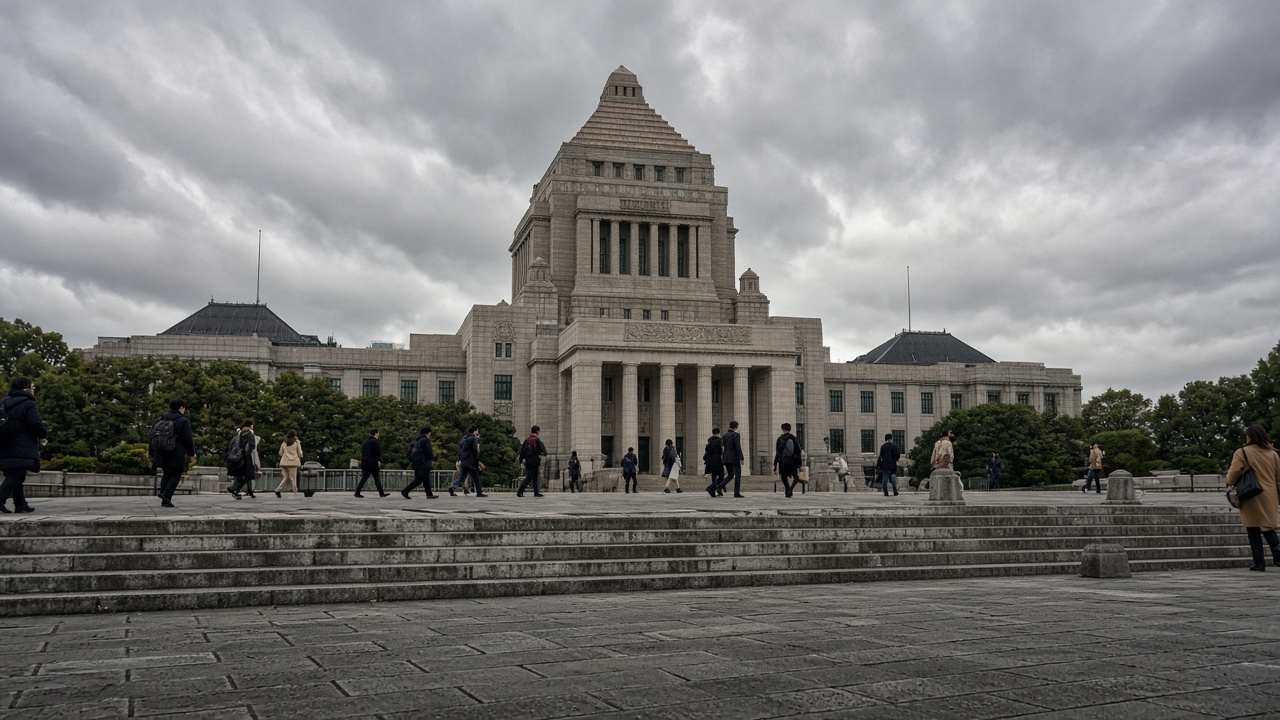
InfoHandle Editorial: Prime Minister Sanae Takaichi opened the 69-day extraordinary Diet session with a promise to cut the consumption tax on food and beverages from 8 percent to 1 percent for two years starting April 2027. The pledge sounds generous; the accounting is still opaque.
Finance Ministry tables put the annual revenue loss near ¥5 trillion. Takaichi insists the package can be funded without new deficit-covering bonds, yet opposition parties still lack a line-by-line schedule showing which spending trims or tax base expansions arrive in which month.
Upper House math
The ruling coalition lacks an Upper House majority. Constitutional Democratic Party of Japan lawmakers already plan to grill ministers on whether rebates reach households before grocery prices peak this winter. Without published offsets, the chamber would be voting on slogans, not a budget.
Market confidence clause
Katayama Satsuki’s ministry is simultaneously trying to steady the yen after the Nikkei’s run above 70,000. Bond investors tolerate social spending when credibility is high; they punish vague promises. A monthly ledger—showing when corporate tax measures, reserve fund draws, or spending delays hit—would let traders stress-test scenarios instead of guessing.
What lawmakers should demand
Publish the offset calendar before committee votes. Attach independent Fiscal System Council commentary. Separate the food-tax bill from unrelated security legislation so rural voters can see trade-offs clearly.
Households deserve relief from inflation; they also deserve proof that tomorrow’s children will not inherit another silent debt increase. The Upper House should withhold approval until the numbers are on the table, not in the footnotes.
Committee work this week
Lower House committees began distributing draft statutes on Tuesday, but opposition members said revenue offsets were still described as future cabinet orders. That sequencing matters: bond markets trade on whether financing is concrete before votes, not after enactment.