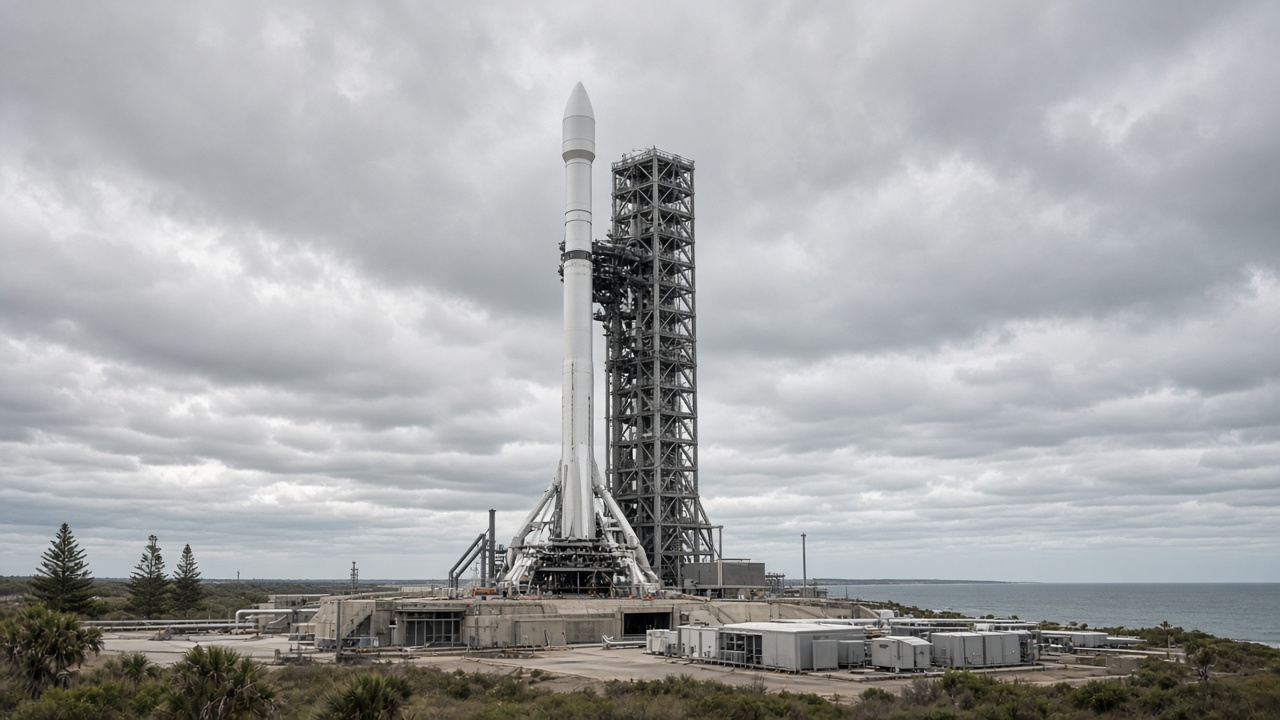
The Korea Aerospace Research Institute released final telemetry on Friday showing that the fifth Nuri launch inserted 15 CubeSats into their planned orbits, completing a rideshare cluster that included university experiments, a maritime AIS receiver, and a technology-demonstration payload for solar sail deployment. Controllers at the Naro Space Center in Goheung tracked separation events over the Pacific, with the last CubeSat signal acquired 94 minutes after liftoff.
Two university teams—Konkuk and Pusan National—reported healthy beacon tones from education satellites measuring ionospheric plasma density. A startup-built AIS receiver for fishing-zone monitoring switched to operational mode after passing thermal soak tests. One solar-sail demonstrator delayed sail deployment by 48 hours to avoid debris fields flagged by U.S. space-track alerts, a conservative choice mission managers said will not affect the six-month experiment window.
Why rideshare volume matters
Korea’s space program is judged on reliability, but also on whether Nuri can attract commercial piggyback customers that help amortize launch costs. Packing fifteen small spacecraft into one mission tests sequencing software and fairing volume in ways a single main satellite does not. KARI said every separation spring fired within spec, a relief after the fourth flight carried a smaller set of secondary payloads.
Science ministry officials tied the mission to broader goals of nurturing domestic component suppliers for reaction wheels and power boards. Several parts flew for the first time without European substitutes, though avionics still include imported radiation-hardened chips subject to export licenses.
What comes next
A sixth Nuri launch window opens in early 2027 with a heavier primary satellite for Earth observation. Before that, engineers must refurbish pad systems damaged slightly by salt air during this week’s coastal weather front. Public viewing areas at Goheung drew thousands on launch day; KARI plans a Hangul Day open house with scaled models but no engine tests out of respect for local noise ordinances.
For a country whose cash equity market is closed for the holiday, the orbital confirmations are a reminder that other clocks—launch and commissioning—keep ticking regardless of Kospi screens.
University pipelines
Konkuk’s team plans to publish plasma density maps for undergraduate thesis credit, while Pusan National will open beacon data to high-school clubs under a ministry STEM grant. The AIS payload operator signed a memorandum with the fisheries agency to test illegal-trawling alerts near Jeju, though analysts caution that single-satellite revisit times limit enforcement value without a constellation.
Industrial policy makers tied the mission to a goal of sourcing 70 percent of smallsat bus components domestically by 2028. Friday’s telemetry release included vibration spectra from fairing separation—boring to the public, gold to suppliers qualifying parts for the sixth flight.