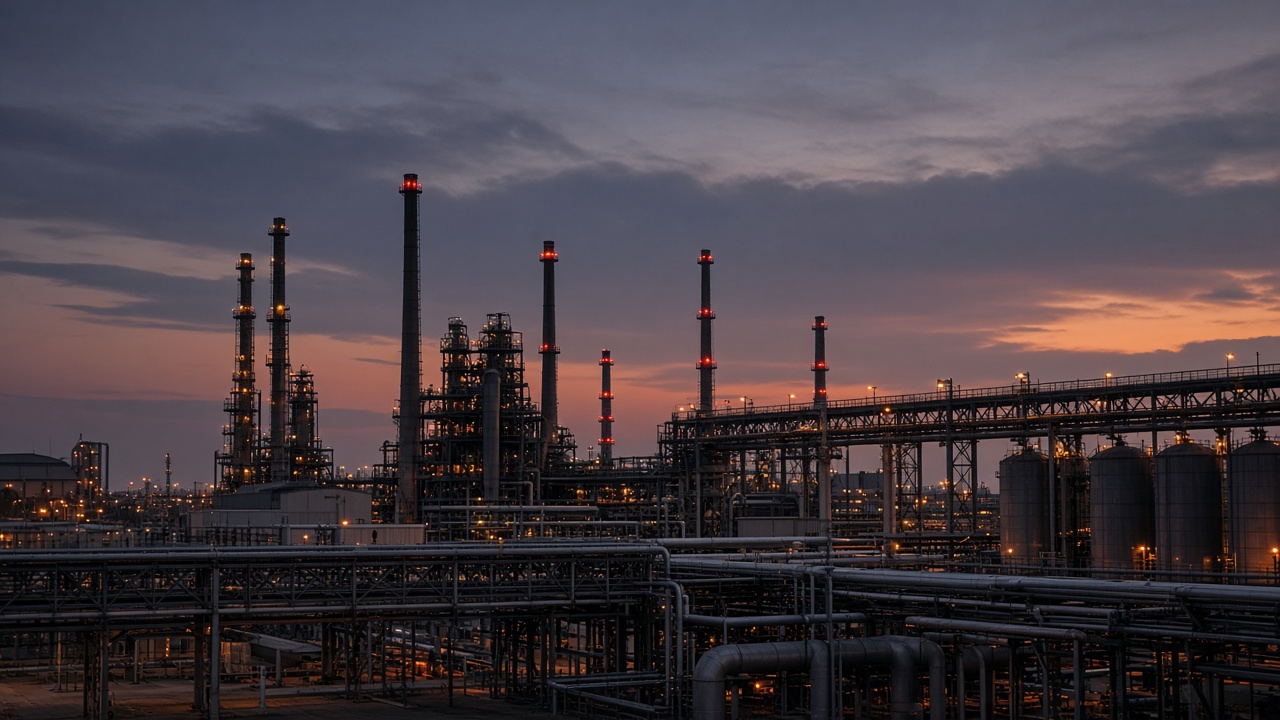
InfoHandle Editorial. South Korea's Fair Trade Commission is finally moving to sanction SK Energy and HD Hyundai Oilbank over alleged collusion on petroleum supply prices, and the case exposes a fiction policymakers have tolerated for decades: that four refiners selling indistinguishable gasoline behave like competitors.
The FTC says the two companies shared pricing information for years and, in March, twice matched actual supply prices as global crude spiked amid Middle East conflict. Related sales could reach 44 trillion won, exposing the pair to fines up to 4.6 trillion won under statute.
Oligopoly by the numbers
SK Energy and HD Hyundai Oilbank alone control roughly half the domestic refining market, with GS Caltex and S-OIL filling most of the remainder. Prosecutors indicted all four refiners in July, alleging direct coordination between SK and HD Hyundai on 14.2 trillion won of shipments. The FTC's broader calculation includes informational exchanges predating the March incidents.
Motorists do not experience brand-level competition at the pump; they experience synchronized hikes. When international prices fall, discounts arrive slowly and unevenly. Treating that market as fully competitive lets politicians praise "market discipline" while households absorb shocks.
Policy choice
Seoul does not need to nationalize refineries to fix the incentive problem. It could cap marketing margins, require cost-pass-through formulas audited by the Korea Petroleum Quality & Distribution Authority, or separate wholesale pricing from retail branding—as several European regulators do for network industries.
Opponents will warn that price caps discourage investment in cleaner fuels. Yet the alleged collusion already dulls investment by guaranteeing margins without efficiency gains. A transparent margin band would at least let voters see who profits when missiles fly over the Strait of Hormuz.
What should happen now
Parliament should fast-track hearings that force executives to testify under oath while the FTC case proceeds. If fines are merely priced into dividends, behavior will not change. Structural remedies—mandatory wholesale price publishing, independent margin monitors, and whistleblower rewards—should accompany monetary penalties.
Koreans understand that crude is global. They should not have to accept that domestic middlemen always win on the way up and stall on the way down.
Consumer trust
Commuter groups said transparent wholesale pricing would make it easier to challenge station owners who raise margins during holidays. Without structural change, fines risk becoming a predictable cost of doing business for conglomerates that can spread penalties across petrochemical divisions.