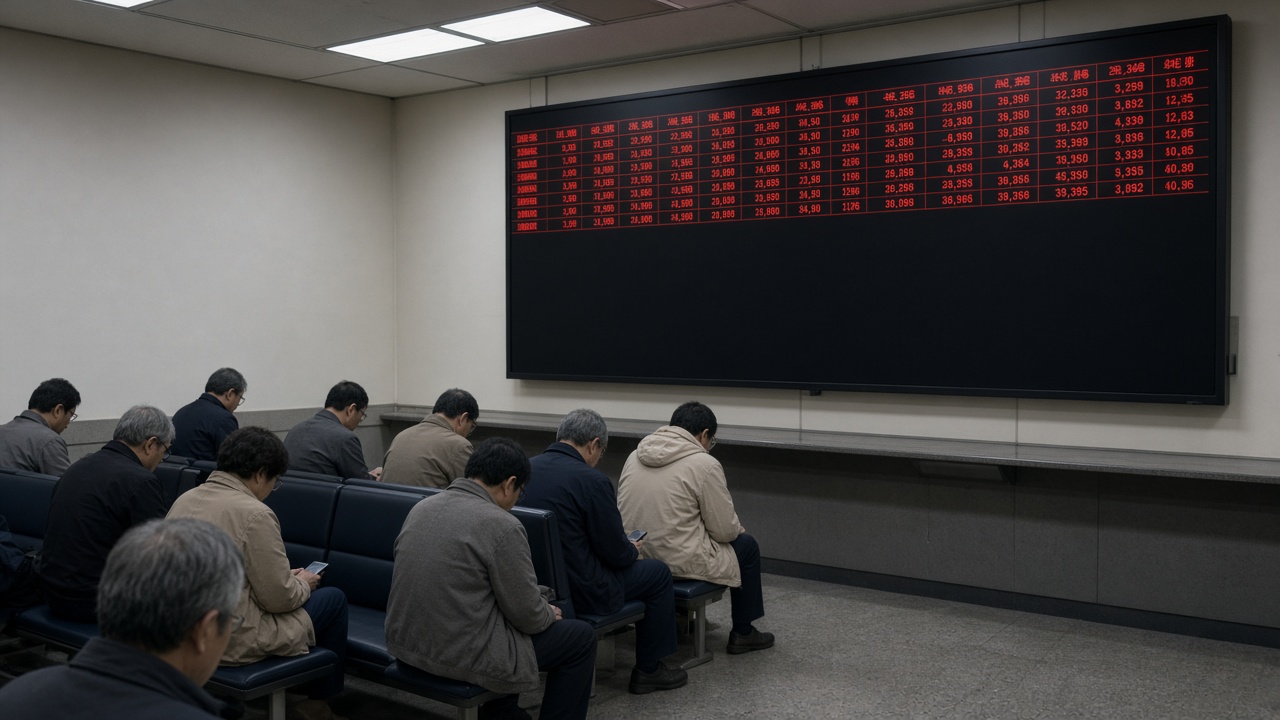
Samsung Electronics and SK Hynix led South Korea's steepest equity slide in months on Thursday, pushing the Kospi down 454.59 points to 5,554.22 as foreigners unloaded another 3.6 trillion won worth of shares.
The session opened weak and worsened after the Philadelphia Semiconductor Index fell 4.3 percent overnight. Samsung dropped 9.5 percent to 210,000 won and SK Hynix slid 11.1 percent to 1,262,000 won, according to exchange data cited by local broadcasters. Hyundai Motor and other heavyweights also fell, but chipmakers set the tone.
Circuit breaker and flows
The Kospi fell as much as 9.29 percent intraday, triggering a level-one circuit breaker that halted trading for 20 minutes — the tenth such pause this year. Foreign investors extended an eight-day selling streak, while the Kosdaq joined the rout with a comparable percentage loss.
Market capitalization on the main board shrank by roughly 375 trillion won in one session, SBS reported, pulling the index to its lowest close since April 7. The three-year Korean Treasury yield eased slightly as investors sought safer assets.
What traders watch next
Analysts at Mirae Asset Securities told Reuters that investors are questioning whether AI capital spending will convert into earnings, not just revenue. Until U.S. rate expectations stabilize, Seoul's session will likely continue to mirror overnight U.S. semiconductor futures.
Retail holders of debt-funded single-stock products, a growing force in 2026, face amplified swings when leaders gap down at the open. Thursday's print is a reminder that the same concentration that powered the year's rally can accelerate losses on the way out.
Bond and FX moves
Government bond yields edged lower as equity losses pushed domestic investors toward safer assets. The three-year Korean Treasury yield fell about 2.4 basis points to 3.861 percent, while the 10-year yield declined roughly 4.9 basis points to 4.196 percent, according to Reuters. The won weakened alongside other Asian currencies as risk appetite faded, though the move was modest compared with the equity shock.
Retail and debt-funded products
2026's retail boom in debt-funded single-stock exchange-traded funds amplified Thursday's swings. Products designed to deliver two times the daily return of Samsung or SK Hynix force mechanical selling on deep red days, adding supply even when fundamental holders stand pat. Regulators had tightened prospectus disclosures earlier in the year, but the crash tested whether those warnings changed behavior.
Foreigners' eight-day selling streak stands out because domestic pension and retail flows had offset overseas exits for much of the summer. When both groups head for the exit simultaneously, circuit breakers become more likely — Thursday was the tenth Kospi halt in 2026 and the sixteenth since the mechanism debuted.
Traders heading into Friday will watch U.S. semiconductor futures and any commentary from Korean pension funds about rebalancing. A calm overnight session could produce a technical bounce, but few strategists called the bottom on Thursday's close.